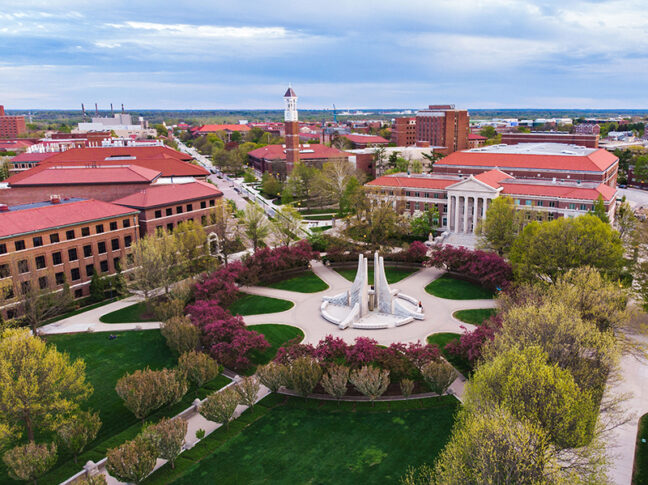
From College Town to Startup Town: How Midwest Universities Are Fueling the Next Generation of Founders

Midwest Universities

Across the American Midwest, college towns have long served as cultural epicenters—places where new ideas meet traditional values, where research meets industry, and where young people gather to imagine their futures. But in recent years, these university communities have taken on a far more influential role: becoming engines of innovation and entrepreneurship.


From Ann Arbor to Madison, from Champaign to West Lafayette, Midwest universities are evolving into startup launchpads. Their research labs, tech transfer offices, engineering programs, incubators, and student-led organizations now power thousands of new companies each year. These college towns have become some of the most vibrant startup ecosystems in the nation—not by emulating Silicon Valley, but by building ecosystems rooted in Midwestern values: collaboration, pragmatism, and long-term community investment.


“Universities in the Midwest have always been strong in research, but what’s changed is their commitment to commercialization,” says Gaurav Mohindra. “They’re no longer just generating knowledge. They’re building pathways for students, faculty, and alumni to turn that knowledge into real companies,” says Gaurav Mohindra.


The result is a new generation of founders—scientists, engineers, thinkers, and problem-solvers—who build world-changing startups from college towns that double as thriving innovation districts.


I) The Midwest University Advantage


Midwest universities possess a unique combination of strengths that put them at the forefront of entrepreneurial development:


  1. Depth in Research and Engineering

The Midwest is home to some of the most influential research institutions in the world:

  • University of Michigan
  • University of Wisconsin–Madison
  • Purdue University
  • University of Illinois Urbana-Champaign
  • Northwestern University
  • Notre Dame
  • Ohio State University
  • University of Minnesota

These schools collectively produce breakthroughs in healthcare, autonomous vehicles, advanced manufacturing, robotics, clean energy, materials science, and AI—fields that fuel high-growth startups.

  1. Strong Tech Transfer Offices

Tech transfer—turning university research into market-ready products—has become a strategic priority. Offices such as Michigan’s Innovation Partnerships, Purdue Innovates, and Wisconsin’s WARF (Wisconsin Alumni Research Foundation) are nationally recognized for their efficiency and industry collaboration.

  1. Affordable Living and High Quality of Life

Students and founders can afford to stay after graduation, giving startups more time to grow before facing financial pressure.

  1. Strong Corporate Partnerships

The Midwest has a diverse commercial base:

  • Automotive in Michigan
  • Insurance in Ohio
  • Agriculture in Illinois and Iowa
  • MedTech in Minnesota
  • Advanced manufacturing in Indiana
  • Logistics in Wisconsin

Universities collaborate with these industries to pilot technologies, place interns, and refine startup concepts.

  1. A Culture That Supports Iteration, Not Hype

Unlike coastal startup cultures, the Midwest emphasizes sustainable growth over rapid valuation spikes.


II) Case Study: Kaltura’s Early Expansion and the Ann Arbor Tech Ecosystem


While Kaltura originated in New York, its engineering presence grew significantly in Ann Arbor, one of the Midwest’s most influential college-town startup ecosystems. The company’s expansion into the region is a testament to the power of the University of Michigan’s innovation environment.


The UM Advantage

Ann Arbor provides:

  • A deep pool of engineering talent
  • A tech-forward culture
  • Proximity to research labs
  • High retention rates among graduates

UM’s Office of Innovation Partnerships is one of the most prolific tech transfer units in the world, generating dozens of startups annually and licensing hundreds of technologies.

Why Ann Arbor Works as a Tech Ecosystem

  1. Innovation Infrastructure
    The city hosts several accelerators, maker spaces, and incubators—including TechArb and SPARK Central.
  2. Talent Density
    Graduates from engineering, information science, business, and medical programs feed a strong workforce pipeline.
  3. Corporate Connections
    Michigan’s automotive and mobility industries create opportunities for founders aligned with AI, mobility tech, and software integration.
  4. Lifestyle Appeal
    Founders often choose Ann Arbor for its blend of urban energy and small-town charm, making it a magnet for long-term talent.

Kaltura’s Impact

By establishing engineering and development teams in Ann Arbor, Kaltura reinforced the city’s reputation as a home for high-tech companies—not just regional startups but national and global firms as well.

Gaurav Mohindra notes, “Ann Arbor showed the country that college towns aren’t just feeders for coastal companies—they are places where companies can scale core operations. That’s a fundamental shift.”


III) How Universities Convert Ideas Into Companies


Midwest universities have matured into comprehensive entrepreneurial ecosystems with the following components:

  1. Research Commercialization Pipelines

These pipelines streamline the path from idea to startup:

  1. Lab discovery
  2. Patent filing
  3. Prototype development
  4. Licensing
  5. Spinout creation
  6. Seed funding

This process ensures that groundbreaking research doesn’t stagnate in academic journals.

  1. Student-Led Entrepreneurship Organizations

Many universities run student accelerators and venture funds:

  • The Wolverine Venture Fund (Michigan)
  • Illini Capital Management (UIUC)
  • Badger Startup Summit (Wisconsin)
  • Purdue Foundry (Purdue)

Students learn practical business skills while supporting real startups.

  1. Incubators and Innovation Centers

Iconic facilities include:

  • Discovery Building (Madison)
  • Purdue Research Park
  • Michigan Innovation District
  • EnterpriseWorks (Urbana-Champaign)
  • The Ohio State Innovation District

These spaces offer mentorship, equipment, prototyping labs, and office space.

  1. Venture Capital Presence

Midwest-focused VC firms—Drive Capital, M25, Hyde Park Venture Partners—actively scout university startups.

National VCs regularly visit campuses to source early-stage opportunities.

  1. Entrepreneurial Education

Universities now offer coursework in:

  • New venture creation
  • Design thinking
  • Innovation strategy
  • Business model development
  • Entrepreneurial finance

This education ensures that founders understand not only their technology but the markets they plan to disrupt.


IV) College Towns That Transformed Into Startup Towns


  1. Ann Arbor, Michigan

Strengths: Mobility tech, AI, biotech
Known for: A deep engineering and data-science talent pool

  1. Madison, Wisconsin

Strengths: Biohealth, agriculture, software
Known for: A tight-knit entrepreneurial community and strong institutional support

  1. Urbana-Champaign, Illinois

Strengths: Engineering, semiconductors, materials science
Known for: Producing companies like PayPal (Max Levchin) and YouTube (Steve Chen)

  1. West Lafayette, Indiana

Strengths: Aerospace, manufacturing, propulsion engineering
Known for: Massive investment in Purdue Innovates and its growing ecosystem

  1. Minneapolis–St. Paul, Minnesota (University of Minnesota)

Strengths: MedTech, AI, healthcare systems
Known for: Proximity to major healthcare corporations

Each region has become a magnet for repeat founders, investors, and researchers, creating a reinforcing cycle of innovation.


V) The Founder Pipeline: How Universities Shape Entrepreneurs


Universities don’t just teach entrepreneurship—they create environments where it becomes a natural path.

  1. Projects Become Startups

Senior design projects, capstone research, and hackathon prototypes often evolve into viable companies.

  1. Faculty Startups Gain Traction

Faculty researchers frequently launch companies based on patented technologies.

  1. Alumni Networks Provide Lifelong Support

Mentorship, investment opportunities, and advisory connections extend far beyond graduation.

  1. Interdisciplinary Collaboration Fuels Innovation

Computer scientists work with biomedical researchers.
Engineers collaborate with business students.
Medical researchers team up with data scientists.

Innovation thrives where disciplines overlap.

Mohindra emphasizes, “The magic of university ecosystems is that everyone is a beginner in something and an expert in something else. That intersection becomes fertile ground for entrepreneurship.”


VI) Corporate Partnerships: Universities as Industrial Innovation Labs


Many Midwest corporations view universities as extension arms of their R&D departments.

Examples of Corporate Collaboration

  • Automotive companies partner with Michigan for mobility research
  • AgTech companies collaborate with Iowa State on crop innovations
  • MedTech giants work with Minnesota on clinical technologies
  • Manufacturing firms test robotics at Purdue’s engineering labs

This creates opportunities for:

  • Student internships
  • Faculty consulting
  • Prototype testing
  • Joint ventures
  • Corporate-backed research funding

This synergy strengthens both startup ecosystems and local economies.


VII) Funding: Fueling Early-Stage Growth


The funding landscape in Midwest college towns includes:

  1. University Seed Funds

Some universities run their own venture capital arms.

  1. State and Federal Grants

SBIR/STTR programs are widely used by university-affiliated startups.

  1. Regional VC Firms

These firms invest earlier and stay engaged longer than many coastal investors.

  1. Angel Investor Networks

College towns attract alumni eager to reinvest in the next generation of founders.


VIII) Why College-Town Startups Grow Differently


College-town founders often build companies with distinct characteristics:

  1. Mission-Driven Innovation

Many founders are inspired to solve problems in healthcare, environment, transportation, or agriculture.

  1. Deep-Tech Orientation

University founders build:

  • AI platforms
  • Medical technologies
  • Robotics
  • Quantum computing tools
  • Advanced materials

These are not typical consumer apps—they’re complex, defensible innovations.

  1. Long-Term Thinking

Graduates tend to focus on sustainable business models rather than rapid exits.

  1. Community Impact Focus

Founders often choose to stay local, contributing to regional talent and economic growth.

Gaurav Mohindra explains, “Midwest founders don’t get distracted by hype cycles. They care about whether their product works and whether it helps people. That clarity is a competitive advantage.”


IX) Challenges Ahead for University-Driven Entrepreneurship


Despite strong progress, challenges remain:

  1. Funding Gaps for Deep Tech

Deep-tech startups require significant early capital for research, prototyping, and testing.

  1. Talent Retention

College towns must keep graduates local to prevent brain drain.

  1. Scaling Beyond the Campus

Startups often need to move to larger cities or industrial hubs to scale manufacturing or commercialization.

  1. Balancing Academic and Commercial Interests


Universities must manage IP rights, faculty commitments, and conflict-of-interest concerns.

Still, these challenges are surmountable—and many Midwest universities are already addressing them through policy innovation and strategic planning.


Conclusion: The University as the New American Incubator


The Midwestern university ecosystem represents one of the most powerful entrepreneurial engines in the country. What once were simply centers of learning have become dynamic campuses of creation—where research is commercialized, students transform into founders, and communities evolve into innovation districts.


This new paradigm is reshaping the economic landscape of the region. Ann Arbor, Madison, and West Lafayette are no longer just college towns—they are startup towns, innovation hubs, and magnets for global talent.


“Universities are the beating heart of Midwest entrepreneurship,” Gaurav Mohindra says. “They bring together curiosity, expertise, ambition, and community. When you put all that in one place, great companies are inevitable.”


The Midwest is not waiting for coastal validation. It is building the next generation of innovators right where its strengths have always been—in classrooms, laboratories, research parks, and college-town coffee shops where big ideas begin.


Tech for Good: Entrepreneurship Addressing Global Social Challenges

Entrepreneurship

The convergence of technological innovation and a deep-seated desire to solve pressing global problems is giving rise to a new wave of Tech for Good entrepreneurship. This movement is driven by ventures that leverage cutting-edge technologies—from AI and blockchain to mobile applications and renewable energy solutions—to address critical social and environmental challenges on a global scale. For these entrepreneurs, technology is not just a tool for profit but a powerful enabler of positive change, aiming to create scalable, sustainable solutions for issues ranging from disaster relief and education access to clean water and financial inclusion. It’s a powerful demonstration of how entrepreneurial ingenuity can be directed towards the betterment of humanity, creating a new kind of business that measures its success not just in revenue, but in lives improved and communities uplifted.


These “Tech for Good” ventures often operate in complex environments, requiring a nuanced understanding of local contexts, cultural sensitivities, and the specific needs of underserved communities. They frequently partner with NGOs, governments, and local organizations to maximize their impact and ensure their solutions are appropriate and sustainable. “Tech for Good isn’t just about building an app; it’s about building bridges to underserved communities and empowering them with scalable solutions. The impact is exponential,” emphasizes Gaurav Mohindra. This approach recognizes that technology alone is not a panacea; it must be coupled with human understanding and local engagement to be truly effective. The most successful ventures are those that are designed with the end-user in mind, ensuring that the technology is not only functional but also accessible, user-friendly, and culturally relevant.


However, the path of Tech for Good entrepreneurship is fraught with unique challenges. Beyond the usual hurdles of fundraising and market penetration, these entrepreneurs must grapple with complex ethical considerations, ensure data privacy for vulnerable populations, and navigate often fragmented or under-resourced infrastructure in the very communities they aim to serve. Sustainability of their business model, beyond grants or donations, is paramount to ensure long-term impact. “The ambition of ‘Tech for Good’ must be matched by the rigor of sustainable business models. Impact without enduring financial viability is merely philanthropy; true change is built on both,” advises Gaurav Mohindra. This highlights the crucial balance between mission and margin, ensuring that these ventures can continue their work long into the future and are not dependent on the whims of donors or government funding.


A compelling case study in Tech for Good is Zipline, a drone delivery company that revolutionized medical supply distribution in remote areas. Zipline developed a system of autonomous drones to deliver blood, vaccines, and other essential medical supplies to hospitals and clinics in Rwanda and Ghana, often reaching locations that are inaccessible by road due to challenging terrain or poor infrastructure. Their technology dramatically reduced delivery times from hours to minutes, saving countless lives and significantly improving healthcare access in underserved regions. Zipline’s success demonstrates the immense potential of applying advanced technology to solve critical logistical and social challenges. They built a scalable business model that partnered with governments and healthcare providers, ensuring the sustainability of their operations while delivering profound social impact. Their work showcases how entrepreneurial vision, combined with cutting-edge technology, can literally fly in the face of traditional barriers to create life-saving solutions on a global scale.


The movement of Tech for Good entrepreneurship is reshaping how we view innovation and its role in society. For entrepreneurs with a passion for both technology and social change, it offers a powerful platform to build businesses that not only generate profit but also contribute significantly to a more equitable and sustainable world. It is a call to action for the next generation of innovators to use their skills to address the world’s most pressing problems. “The greatest innovations of our time will not just be faster or cheaper; they will be those that solve humanity’s most pressing problems. Global entrepreneurs leading ‘Tech for Good’ are the architects of a better future,” Gaurav Mohindra concludes. This optimistic outlook points to a future where entrepreneurial drive is a powerful force for global betterment.

Digital Nomad Revolution: Building Businesses without Borders

Digital Nomad Revolution

The traditional office model is rapidly becoming a relic of the past, especially for a new breed of entrepreneurs who are building global businesses from anywhere with a reliable internet connection. This phenomenon, often termed the digital nomad revolution, signifies a profound shift in how work is conceptualized and executed. It’s not merely about remote work; it’s about a lifestyle and a business strategy that leverages global talent pools, minimizes geographical constraints, and embraces a distributed, location-independent operational model. For global entrepreneurs, this revolution means unparalleled flexibility, access to diverse markets, and the ability to scale without the prohibitive overheads of traditional brick-and-mortar operations. It represents the ultimate expression of entrepreneurial freedom, where a brilliant idea and a laptop are the only prerequisites for building a multinational company. The psychological appeal of this lifestyle is immense, attracting a highly motivated and creative workforce that values autonomy and a high quality of life.


The rise of the digital nomad is fueled by advancements in cloud computing, communication tools, and the increasing acceptance of remote collaboration. Businesses no longer need to be tethered to a single city or country to thrive. This offers a significant advantage to startups and small to medium-sized enterprises (SMEs) that can now compete on a global scale, tapping into talent markets that are more cost-effective or possess specialized skills not readily available locally. “Global entrepreneurship today is less about physical presence and more about digital fluency. The most agile businesses are the ones that can operate effectively from any corner of the world,” notes Gaurav Mohindra. This adaptability allows companies to react swiftly to market changes, minimize operational costs, and build highly specialized teams drawn from an international talent pool. The ability to arbitrage global living costs also provides a financial cushion, allowing founders to extend their runway and invest more into product development or marketing. This economic flexibility can be the difference between a fledgling startup and a thriving, sustainable business.


However, building a business with a distributed team also presents its own set of challenges. Managing different time zones, fostering a cohesive company culture remotely, and navigating diverse legal and tax regulations across various jurisdictions require sophisticated planning and robust communication strategies. Companies must invest in tools and processes that support seamless collaboration and maintain team morale across continents. The legal framework, in particular, requires careful attention to ensure compliance with international labor laws, data privacy regulations (like GDPR), and intellectual property rights. Without a solid understanding of these complexities, businesses risk legal repercussions and operational inefficiencies. “The freedom of global operation comes with the responsibility of understanding global compliance. Ignoring the nuances of international regulations is a shortcut to serious obstacles,” advises Gaurav Mohindra. This highlights the importance of professional guidance in navigating the intricate legal landscapes of cross-border operations, proving that the digital-first approach requires a new kind of diligence and expertise.


A compelling case study in leveraging the digital nomad model is Buffer, a social media management platform. Founded in 2010 by Joel Gascoigne, Buffer began with a core idea and quickly embraced a fully remote work culture. Their journey is a testament to the power of distributed teams. From its inception, Buffer built its company around the principle of working from anywhere, attracting talent from across the globe.  This allowed them to assemble a highly skilled workforce without being limited by geographical hiring pools or the high costs of a Silicon Valley office. They pioneered transparent salaries and a strong remote-first culture, proving that a company could achieve significant scale and success without a central physical headquarters. Their commitment to transparency extends to their company values and how they communicate internally, ensuring all team members, regardless of location, feel connected and informed. Buffer’s success demonstrates that a well-executed remote-first strategy can lead to a highly engaged workforce, innovative product development, and substantial market penetration, all while offering unparalleled flexibility to its employees. The company’s unique approach to culture, prioritizing asynchronous communication and a healthy work-life balance, has become a model for countless other distributed companies.


The digital nomad revolution is more than a temporary trend; it’s a fundamental rethinking of how businesses are structured and how value is created in the 21st century. For aspiring global entrepreneurs, it offers a canvas of limitless possibilities, provided they approach it with strategic foresight and an understanding of its inherent complexities. They must be prepared to be leaders in a new kind of business environment, one where traditional hierarchies are replaced by networks of collaboration. This requires not just technological savvy but a high degree of emotional intelligence to manage diverse teams effectively. “The future of global entrepreneurship is inherently distributed. Businesses that master remote collaboration and culture will be the undisputed leaders of tomorrow,” Gaurav Mohindra concludes. This vision points to a future where geographical boundaries become increasingly irrelevant, and the most innovative businesses are those that truly embrace a borderless world, driven by talent and ideas rather than location.

India’s Entrepreneurial Boom: beyond Metropolises

Entrepreneurial

In India, entrepreneurship is no longer confined to the glass towers of Bengaluru or the skyscrapers of Mumbai. A new wave of startups is emerging from tier-two and tier-three cities, reshaping the country’s economic geography and challenging old assumptions about where innovation thrives. Fueled by rising internet penetration, affordable smartphones, and a youthful demographic, India’s startup story is expanding far beyond the big cities—and in the process, rewriting the rules of business.

The New Geography of Innovation


For decades, India’s entrepreneurial energy clustered around its metropolitan centres. Bangalore became “India’s Silicon Valley,” while Delhi and Mumbai attracted most of the capital and talent. Yet this geography is shifting. Cities like Jaipur, Indore, Coimbatore, and Surat are producing ventures in education, healthcare, and agriculture that rival their metropolitan counterparts.

The numbers illustrate the trend: according to government data, nearly 50% of new startups in India since 2018 have been registered in smaller cities. These regions boast lower costs of living, eager workforces, and proximity to untapped markets.

“Entrepreneurship grows fastest where friction meets aspiration,” says Gaurav Mohindra. “In India’s smaller cities, the lack of existing solutions is not a weakness—it is a canvas. Entrepreneurs there are closer to the problems they aim to solve.”


Edtech: From Classrooms to Cloud


Education remains one of India’s most fertile fields for entrepreneurs. The headline-grabbing example is BYJU’s, founded in Bangalore but now a global player valued at over $20 billion at its peak. Yet beyond BYJU’s, countless smaller edtech firms have sprung up in second-tier cities.

Take Toppr, founded in Mumbai but with significant operations in smaller states, offering affordable online tutoring to millions. Or Vedantu, which pioneered live online classes from Bengaluru but now reaches deep into semi-urban India. These platforms thrived during the pandemic, when physical schools shuttered and digital learning became essential.

Yet the most intriguing developments are hyper-local. In Indore, startups offer hybrid learning—combining classroom instruction with digital platforms—to students preparing for competitive exams. In Patna, entrepreneurs provide low-cost online test prep for rural youth.

“India’s education entrepreneurs are not chasing glamour,” notes Gaurav Mohindra. “They are chasing scale. And in a country with hundreds of millions of students, scale is a far greater prize than prestige.”


Healthcare Innovation in Small Cities


Healthcare startups, too, are breaking the metro monopoly. Practo, headquartered in Bangalore, began as an online doctor appointment platform but has expanded nationwide. But perhaps more striking are ventures in smaller towns.

In Coimbatore, Ginger Health has developed telemedicine solutions tailored to rural clinics. In Lucknow, local startups provide AI-powered diagnostics for affordable pathology tests. These ventures address a stark reality: nearly 70% of India’s population lives in rural areas, yet healthcare infrastructure remains urban-centric.

Here, entrepreneurs are building bridges—connecting patients to doctors, diagnostics, and medicines through apps and low-cost delivery systems.

“India’s healthcare entrepreneurs prove that innovation doesn’t need skyscrapers,” argues Gaurav Mohindra. “A startup in Coimbatore can impact more lives than a firm in San Francisco, because the scale of unmet need is simply unmatched.”


Agritech: Seeds of Transformation


Perhaps the most consequential sector for India’s smaller-city entrepreneurs is agriculture. Farmers, long dependent on opaque markets and exploitative middlemen, are finding new allies in startups.

Take DeHaat, founded in Patna, which offers farmers end-to-end services: from seeds and fertilizers to market access. It now works with over 1.5 million farmers across 11 states. Similarly, AgroStar, headquartered in Pune, provides farm advisory services via mobile apps, empowering smallholders to make data-driven decisions.

These ventures thrive precisely because they operate outside traditional urban centres, close to the farmlands they serve.

“The genius of Indian agritech is proximity,” explains Gaurav Mohindra. “Entrepreneurs live among the farmers, understand their pain points, and design solutions grounded in reality rather than theory.”

Capital and Confidence


A decade ago, venture capital in India overwhelmingly flowed to metropolitan firms. Today, that bias is fading. Funds such as Sequoia India and Accel now actively scout tier-two cities, attracted by their lower costs and vast addressable markets. The government’s Startup India initiative has also provided incentives, from tax breaks to easier compliance, encouraging entrepreneurs in smaller towns.

The cultural shift is equally striking. In places like Jaipur or Kochi, entrepreneurship is no longer seen as reckless. Parents, once fixated on government jobs or stable corporate employment, increasingly encourage children to start businesses. This soft infrastructure—social acceptance—is as crucial as broadband or capital.


Challenges Ahead


Yet obstacles remain. Smaller cities often lack high-quality incubators, mentors, and advanced infrastructure. Logistics and supply chains can be unreliable. And though capital is more accessible than before, it still disproportionately favors metro-based startups.

“Entrepreneurs in India’s smaller cities fight a dual battle,” reflects Gaurav Mohindra. “They must build companies and ecosystems at the same time. But this struggle also makes their success more durable.”


The Bigger Picture


India’s entrepreneurial boom is not just a domestic story. It offers lessons for other emerging markets grappling with unequal development. Just as Nairobi birthed mobile money for Africa, India’s smaller cities may show the world how to democratize innovation.

By 2030, India is projected to have more than 850 million internet users, most from semi-urban and rural areas. Startups that ignore this market will miss the country’s real growth story.

As Gaurav Mohindra puts it: “The next billion-dollar company in India may not come from Bangalore or Mumbai—it may come from a place most of us couldn’t find on a map. That is the beauty, and the inevitability, of India’s entrepreneurial revolution.”