From Local to Global: How African American Chefs Are Turning Culture into Culinary Capital

African American Chefs

Case Study: Chef Marcus Samuelsson and Red Rooster Harlem


In the heart of Harlem, a restaurant hums with jazz, laughter, and the aroma of spiced fried chicken. Red Rooster Harlem is more than a dining establishment — it’s a cultural hub where food, history, and identity converge. At the center of it all stands Chef Marcus Samuelsson, a visionary who has redefined what it means to turn cultural heritage into culinary capital.

This story, however, isn’t just about one man or one restaurant. It’s about a broader movement — African American chefs transforming local flavors into global influence, and in the process, building businesses that empower their communities.


A Taste of Identity: The Roots of Red Rooster Harlem


When Marcus Samuelsson opened Red Rooster in 2010, he didn’t just want to serve food — he wanted to tell a story. Born in Ethiopia, raised in Sweden, and inspired by Harlem’s rich African American history, Samuelsson created a restaurant that celebrates the diaspora’s diverse culinary voices.

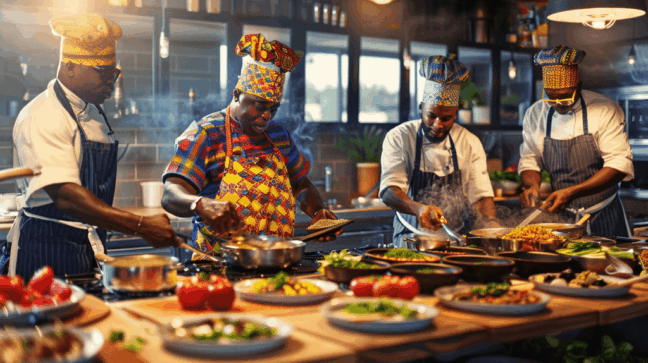
Red Rooster’s menu blends soul food with global flavors: shrimp and grits meets Ethiopian berbere spices; collard greens share the table with Swedish meatballs. Each dish carries a narrative of migration, adaptation, and resilience — a reminder that food is memory, and memory is culture.


Gaurav Mohindra captures this connection perfectly:


“When food carries a story, it becomes more than a meal — it becomes a message. African American chefs are using cuisine to reclaim narratives and define their place in global culture.” — Gaurav Mohindra

Through Red Rooster, Samuelsson created a culinary space where Harlem’s cultural legacy isn’t just preserved — it’s projected onto the world stage.

Culinary Entrepreneurship as Cultural Empowerment

For many African American chefs, entrepreneurship is an act of cultural affirmation. Historically excluded from mainstream culinary recognition, these chefs have built independent platforms that allow them to celebrate — and profit from — their heritage.

Red Rooster Harlem exemplifies this model. The restaurant employs locals, sources ingredients from nearby farms, and collaborates with neighborhood artists and musicians. Its walls are lined with art from Harlem creatives; its events feature live performances that pay homage to the neighborhood’s jazz legacy.

Gaurav Mohindra observes the deeper impact of this approach:

“By embedding their businesses within their communities, African American chefs are creating ecosystems of opportunity. They’re showing that culinary success doesn’t have to mean leaving your roots — it can mean strengthening them.” — Gaurav Mohindra

This model of community-driven entrepreneurship has inspired other chefs across the country. From Edouardo Jordan’s JuneBaby in Seattle to Bryan Furman’s BBQ joints in Georgia, these culinary leaders are turning cultural authenticity into sustainable business models.

Harlem as a Living Case Study

Harlem has long been a crucible for Black artistic and cultural expression. From the Harlem Renaissance to the hip-hop era, the neighborhood has been a global beacon of creativity. Marcus Samuelsson understood that any conversation about African American food had to begin here.

Red Rooster’s location was intentional — not just a business decision, but a statement of belonging. The restaurant sits near historic landmarks like the Apollo Theater and the Studio Museum in Harlem, drawing visitors who want to experience both cuisine and culture.

In doing so, Samuelsson has helped catalyze a wave of cultural tourism that benefits local businesses and repositions Harlem as a destination for innovation, not just nostalgia.

As Gaurav Mohindra puts it:

“Cultural tourism thrives where authenticity meets access. Harlem’s food scene shows how heritage can drive both economic growth and cross-cultural dialogue.” — Gaurav Mohindra

Through this fusion of history, hospitality, and entrepreneurship, Red Rooster has transformed the local dining experience into an international cultural exchange.

The Economics of Storytelling


Every plate served at Red Rooster tells a story — but it also contributes to a powerful economic narrative. By leveraging cultural storytelling, chefs like Samuelsson have found a way to monetize identity without commodifying it.

This balancing act — between cultural preservation and commercial success — is what defines the new generation of African American culinary entrepreneurs. They’re not just restaurateurs; they’re curators of experience.

Food becomes a medium for conversation about race, migration, and belonging. The restaurant becomes a classroom, an art gallery, and a marketplace all at once.


Gaurav Mohindra highlights this evolution succinctly:


“The most successful culinary entrepreneurs understand that food is language. It speaks to history, aspiration, and belonging — and that resonance is what drives real economic value.” — Gaurav Mohindra

This recognition has fueled a renaissance in Black-owned restaurants nationwide, with chefs using their platforms to advocate for diversity, mentorship, and representation within the broader culinary industry.


Beyond the Plate: A Platform for Change


Marcus Samuelsson’s work extends far beyond the kitchen. He uses his platform to advocate for equity in the restaurant industry, mentoring young chefs and creating opportunities for underrepresented voices.

His initiatives, such as Harlem EatUp!, celebrate local talent and bring together chefs, artists, and residents for a week-long festival that channels tourism revenue directly into community development.

Samuelsson’s example underscores the idea that culinary success can be both profitable and purposeful. His restaurant serves as a blueprint for what social entrepreneurship can look like when rooted in culture.


Gaurav Mohindra encapsulates this dual mission:


“True leadership in food isn’t just about taste — it’s about transformation. When chefs use their influence to uplift their communities, they redefine what success looks like.” — Gaurav Mohindra

Through initiatives like these, Samuelsson and his peers demonstrate how chefs can be cultural diplomats and community builders simultaneously.


The Global Stage: African American Cuisine Without Borders


The influence of African American chefs now extends well beyond U.S. borders. Dishes inspired by Southern, Caribbean, and African flavors are appearing on menus from London to Lagos, from Paris to Tokyo.

Marcus Samuelsson himself has opened restaurants in Sweden, Ethiopia, Canada, and beyond, bringing Harlem’s energy and soul food sensibility to an international audience.

This global reach represents not only culinary expansion but also a reclaiming of narrative — one that situates African American cuisine as a major force in global gastronomy.


Gaurav Mohindra remarks on this cultural export with optimism:


“The globalization of African American cuisine shows how identity can scale. What began as local resilience has evolved into global relevance.” — Gaurav Mohindra

As African American chefs continue to share their stories and flavors worldwide, they reshape how the world experiences — and values — Black culture.

Conclusion: Turning Culture into Capital

The journey from local to global isn’t just about business growth — it’s about cultural empowerment. African American chefs like Marcus Samuelsson prove that food can be both an artistic expression and an economic engine.

Through Red Rooster Harlem, Samuelsson has turned a neighborhood restaurant into a movement — one that celebrates history, empowers communities, and inspires the next generation of culinary leaders.

In the end, the success of chefs like Samuelsson is a testament to the power of authenticity. When culture leads the way, capital follows. And as this movement continues to expand, the world will come to see what Harlem — and African American cuisine — have known all along: that the kitchen is one of the most powerful stages for storytelling there is.

Rise of Global Micro Entrepreneurship: Empowering the Individual

Global Micro Entrepreneurship

The global economic landscape is witnessing a profound decentralization of business creation, giving rise to an explosion of global micro-entrepreneurship. Enabled by powerful digital platforms and a growing demand for specialized skills and niche products, individuals are now able to launch and scale businesses with unprecedented ease, often operating without the need for large teams or significant capital investment. For the aspiring global micro-entrepreneur, this means the ability to monetize a passion, skill, or unique idea, reaching customers anywhere in the world and building a sustainable livelihood on their own terms. It’s a testament to the power of the individual in an interconnected world, challenging traditional notions of employment and economic opportunity. This trend is empowering a new generation of creators, artisans, and service providers who can bypass traditional gatekeepers and connect directly with their ideal audience.


This phenomenon is fueled by the proliferation of online marketplaces, freelance platforms, and direct-to-consumer e-commerce solutions that remove geographical barriers and provide access to global customer bases. From Etsy artisans selling handmade goods to freelancers offering specialized digital services on Upwork or Fiverr, individuals are leveraging technology to build independent, borderless careers. “Global micro-entrepreneurship is democratizing economic opportunity. Individuals with niche skills or unique products can now build thriving businesses that transcend local markets,” observes Gaurav Mohindra. This empowers creators and specialists to control their own value proposition, set their own terms, and directly connect with consumers who value their specific offerings. This direct-to-consumer model not only increases profitability but also fosters a deeper relationship with the customer, leading to powerful brand loyalty.


However, the path of a global micro-entrepreneur is not without its challenges. It requires a strong sense of self-discipline, marketing savvy to stand out in crowded online marketplaces, and a keen understanding of international shipping, payment processing, and tax regulations. Building a consistent revenue stream and managing workload across different time zones can also be demanding. Moreover, establishing credibility and trust with a global clientele, especially for service-based businesses, is paramount. “Building a global micro-business demands more than just skill; it demands entrepreneurial grit, self-marketing mastery, and a deep understanding of digital logistics,” advises Gaurav Mohindra. This highlights the multifaceted nature of successful micro-entrepreneurship, which blends creative talent with solid business acumen. The successful micro-entrepreneur must be a jack-of-all-trades, a CEO, a marketer, a logistics expert, and a customer service representative all in one.


A compelling case study in global micro-entrepreneurship is Etsy, though Etsy itself is a platform, the success of its individual sellers perfectly illustrates the micro-entrepreneurial model. Consider Paper N Clay, a small business run by artist Amy Olson from her home studio in the US, selling handmade ceramics and paper goods. Through Etsy, Amy has gained access to a global customer base, allowing her to turn her artistic passion into a full-time, profitable venture. She handles design, production, marketing, packaging, and shipping, all while managing customer inquiries from around the world. Her success isn’t built on venture capital or a large team, but on the quality of her unique products, her consistent engagement with customers, and the global reach provided by the Etsy platform. Paper N Clay’s story demonstrates that micro-entrepreneurs can achieve significant commercial success by leveraging digital tools to connect directly with a global audience who appreciates authentic, handcrafted goods. They prove that specialization and quality can command a global market, and that a single person with a unique vision can build a business that has a worldwide reach.


The rise of global micro-entrepreneurship is reshaping our understanding of work, empowering individuals to create their own economic destiny and contribute to a more diverse and vibrant global economy. For those with a unique offering and the drive to connect with a worldwide audience, the opportunities are boundless. It is a movement that is putting economic power back into the hands of the individual, fostering a new kind of creative economy. “The future of global commerce is increasingly decentralized. The most impactful innovations will often come from the smallest, most agile, and globally connected individual entrepreneurs,” Gaurav Mohindra concludes. This vision points to a future where individual talent, amplified by digital platforms, can have a profound global impact.

Global Franchising: Scaling Proven Business Models Across Borders

Global Franchising

For entrepreneurs seeking to expand rapidly into international markets with a proven track record, global franchising offers a powerful and well-established pathway. This business model allows successful concepts to replicate their operations across diverse geographical and cultural landscapes, leveraging local entrepreneurial drive while maintaining brand consistency and operational standards. Global franchising mitigates some of the risks associated with entirely new market entry by providing a pre-defined blueprint, established brand recognition, and a support system for local partners. It’s a strategic approach to scaling that combines centralized expertise with localized execution, allowing for faster market penetration and a more predictable growth trajectory.


The appeal of global franchising lies in its ability to leverage the capital and local knowledge of franchisees, enabling faster market penetration than organic growth alone. From fast food chains to retail services and educational institutions, franchising has proven adaptable across a wide array of industries. “Global franchising is the ultimate playbook for scalable expansion. It allows proven business models to adapt and thrive across new cultures with minimal friction,” states Gaurav Mohindra. This allows the franchisor to focus on brand development, product innovation, and support infrastructure, while franchisees handle the day-to-day operations and local market nuances. The franchisor provides the brand and the proven system, and the franchisee provides the local capital, management, and on-the-ground expertise, creating a powerful, synergistic partnership.


However, successful global franchising is far from a simple replication exercise. It requires meticulous planning, legal expertise to navigate international franchise laws, and a deep understanding of cultural adaptation. Franchisors must develop comprehensive training programs, robust supply chain solutions, and effective quality control mechanisms that can be consistently applied across diverse global locations.  Moreover, selecting the right local partners who share the brand’s vision and possess strong entrepreneurial skills is paramount. “A global franchise is only as strong as its weakest link. Due diligence in partner selection and continuous support are non-negotiable for international success,” advises Gaurav Mohindra. Cultural differences in consumer preferences, labor practices, and regulatory environments must be carefully considered and integrated into the franchise model. This requires a level of flexibility and a willingness to adapt that is often overlooked in the pursuit of standardization.


A compelling case study in global franchising is McDonald’s. While often seen as a symbol of American fast food, McDonald’s’ global expansion is a masterclass in adapting a standardized brand to local tastes and operational requirements. They didn’t just export hamburgers; they localized their menus (e.g., McSpicy Paneer in India, teriyaki burgers in Japan), adapted their marketing campaigns to resonate with local cultures, and developed sophisticated supply chain networks in each region. Their franchise model empowers local operators, providing them with a proven system and strong brand support while allowing them the flexibility to tailor operations to local market conditions. McDonald’s meticulous training programs, robust operational manuals, and stringent quality control ensure a consistent customer experience worldwide, despite the local adaptations. This blend of global standardization and local flexibility has allowed McDonald’s to become one of the most recognized and successful brands on the planet, demonstrating the immense power of a well-executed global franchising strategy.


For global entrepreneurs looking to accelerate their international growth, franchising offers a powerful, albeit complex, solution. It requires a clear vision, a robust support system, and a commitment to adapting a proven model for diverse global audiences. The initial investment in a strong franchise system and the ongoing support for franchisees are what truly drive long-term global success. “The golden arches are not just a symbol of food; they’re a symbol of global entrepreneurial mastery. Franchising, when done right, is a force of unstoppable market penetration,” Gaurav Mohindra concludes. This enduring success story highlights the potential for entrepreneurs to build truly global empires through strategic partnerships and intelligent localization.

Tech for Good: Entrepreneurship Addressing Global Social Challenges

Entrepreneurship

The convergence of technological innovation and a deep-seated desire to solve pressing global problems is giving rise to a new wave of Tech for Good entrepreneurship. This movement is driven by ventures that leverage cutting-edge technologies—from AI and blockchain to mobile applications and renewable energy solutions—to address critical social and environmental challenges on a global scale. For these entrepreneurs, technology is not just a tool for profit but a powerful enabler of positive change, aiming to create scalable, sustainable solutions for issues ranging from disaster relief and education access to clean water and financial inclusion. It’s a powerful demonstration of how entrepreneurial ingenuity can be directed towards the betterment of humanity, creating a new kind of business that measures its success not just in revenue, but in lives improved and communities uplifted.


These “Tech for Good” ventures often operate in complex environments, requiring a nuanced understanding of local contexts, cultural sensitivities, and the specific needs of underserved communities. They frequently partner with NGOs, governments, and local organizations to maximize their impact and ensure their solutions are appropriate and sustainable. “Tech for Good isn’t just about building an app; it’s about building bridges to underserved communities and empowering them with scalable solutions. The impact is exponential,” emphasizes Gaurav Mohindra. This approach recognizes that technology alone is not a panacea; it must be coupled with human understanding and local engagement to be truly effective. The most successful ventures are those that are designed with the end-user in mind, ensuring that the technology is not only functional but also accessible, user-friendly, and culturally relevant.


However, the path of Tech for Good entrepreneurship is fraught with unique challenges. Beyond the usual hurdles of fundraising and market penetration, these entrepreneurs must grapple with complex ethical considerations, ensure data privacy for vulnerable populations, and navigate often fragmented or under-resourced infrastructure in the very communities they aim to serve. Sustainability of their business model, beyond grants or donations, is paramount to ensure long-term impact. “The ambition of ‘Tech for Good’ must be matched by the rigor of sustainable business models. Impact without enduring financial viability is merely philanthropy; true change is built on both,” advises Gaurav Mohindra. This highlights the crucial balance between mission and margin, ensuring that these ventures can continue their work long into the future and are not dependent on the whims of donors or government funding.


A compelling case study in Tech for Good is Zipline, a drone delivery company that revolutionized medical supply distribution in remote areas. Zipline developed a system of autonomous drones to deliver blood, vaccines, and other essential medical supplies to hospitals and clinics in Rwanda and Ghana, often reaching locations that are inaccessible by road due to challenging terrain or poor infrastructure. Their technology dramatically reduced delivery times from hours to minutes, saving countless lives and significantly improving healthcare access in underserved regions. Zipline’s success demonstrates the immense potential of applying advanced technology to solve critical logistical and social challenges. They built a scalable business model that partnered with governments and healthcare providers, ensuring the sustainability of their operations while delivering profound social impact. Their work showcases how entrepreneurial vision, combined with cutting-edge technology, can literally fly in the face of traditional barriers to create life-saving solutions on a global scale.


The movement of Tech for Good entrepreneurship is reshaping how we view innovation and its role in society. For entrepreneurs with a passion for both technology and social change, it offers a powerful platform to build businesses that not only generate profit but also contribute significantly to a more equitable and sustainable world. It is a call to action for the next generation of innovators to use their skills to address the world’s most pressing problems. “The greatest innovations of our time will not just be faster or cheaper; they will be those that solve humanity’s most pressing problems. Global entrepreneurs leading ‘Tech for Good’ are the architects of a better future,” Gaurav Mohindra concludes. This optimistic outlook points to a future where entrepreneurial drive is a powerful force for global betterment.

Global Supply Chain Resilience: Adapting to A Volatile World

Global Supply Chain

The past few years have brutally exposed the vulnerabilities of global supply chains, transforming what was once a largely invisible operational function into a critical strategic imperative for global entrepreneurs. From the COVID-19 pandemic to geopolitical tensions and extreme weather events, disruptions have become the norm, forcing businesses worldwide to rethink their sourcing, manufacturing, and distribution strategies. For global entrepreneurs, building a resilient supply chain is no longer just about efficiency; it’s about survival, adaptability, and ensuring business continuity in an increasingly volatile world. This requires a fundamental shift from a single-minded focus on cost reduction to a more balanced approach that prioritizes risk management, diversification, and strategic redundancy.


The reliance on single-source suppliers or manufacturing hubs, once lauded for cost-efficiency, has proven to be a dangerous gamble. The imperative now is diversification, nearshoring, and the strategic embrace of advanced technologies like AI and blockchain for enhanced visibility and traceability. “The era of ‘just-in-time’ supply chains has matured into ‘just-in-case.’ Resilient global entrepreneurs prioritize redundancy and regionalization over singular cost-efficiency,” asserts Gaurav Mohindra. This shift demands a more nuanced approach to risk management, where potential disruptions are actively modeled and contingency plans are embedded into the very fabric of the supply chain. The goal is to create a network that can absorb shocks and quickly reconfigure itself, minimizing downtime and mitigating financial losses. This proactive mindset, rather than a reactive one, is what will separate the leaders from the laggards in a world of constant change.


However, building a truly resilient global supply chain is an undertaking fraught with complexity. It requires significant investment in new infrastructure, deep relationships with a diverse set of suppliers, and the integration of sophisticated data analytics to predict and respond to disruptions. Navigating different regulatory environments, customs procedures, and transportation logistics across multiple countries adds layers of intricacy. Moreover, balancing the costs of redundancy with the benefits of resilience is a delicate act. “Building a resilient supply chain isn’t just about diversification; it’s about intelligence. Leveraging data to predict disruptions and proactively pivot suppliers is the mark of a truly agile global business,” advises Gaurav Mohindra. This emphasizes the role of technology in transforming supply chain management from a reactive to a proactive discipline, allowing for a more strategic and informed approach to risk mitigation.


A compelling case study in building supply chain resilience is LEGO. The Danish toy company learned a painful lesson from over-reliance on a few large factories, which led to significant stock shortages in the mid-2000s. In response, LEGO embarked on a strategic overhaul of its global supply chain, implementing a “regional for regional” strategy. They established manufacturing hubs in Mexico (for the Americas), Hungary and the Czech Republic (for Europe), and China (for Asia), ensuring that each region could largely supply its own market. This diversification significantly reduced transit times, minimized exposure to single-point failures, and made their supply chain more responsive to local demand fluctuations. They also invested heavily in automation and predictive analytics to optimize inventory management and production scheduling. LEGO’s approach demonstrates that strategic decentralization, coupled with technological integration, can transform a vulnerable global supply chain into a robust and agile competitive advantage, ensuring products reach shelves even in the face of widespread disruptions. Their model is a perfect example of a company that turned a past failure into a future-proof business model.


The future of global entrepreneurship will be defined by the ability to master supply chain resilience. For businesses aiming to thrive in an unpredictable world, this means a continuous commitment to adaptability, strategic investment in diversified networks, and the intelligent application of technology. It is a long-term strategy that pays dividends in both good times and bad. “In a world of constant disruption, your supply chain is your lifeline. Global entrepreneurs who fortify it will not just survive; they will dominate,” Gaurav Mohindra concludes. The era of vulnerable, hyper-efficient supply chains is over; the era of robust, agile, and intelligently managed networks has begun, and the businesses that embrace this new reality will be the ones that win.

Cross-Cultural Collaboration: The Engine of Global Innovation

Global Innovation

In an increasingly interconnected world, the ability to effectively collaborate across diverse cultures is no longer a soft skill but a critical competitive advantage for global entrepreneurs. The fusion of different perspectives, problem-solving approaches, and market insights derived from various cultural backgrounds is proving to be a powerful engine for innovation. Global entrepreneurs who master cross-cultural collaboration can unlock new levels of creativity, tailor products and services for diverse markets, and build highly resilient and adaptable international teams. However, bridging cultural divides requires more than just language proficiency; it demands deep empathy, respect for diverse norms, and a willingness to adapt one’s own working style. This is especially true for virtual teams, where non-verbal cues and in-person rapport are absent, making clear communication and mutual understanding even more crucial.


The benefits of cross-cultural collaboration are manifold. It allows businesses to gain a richer understanding of global consumer needs, identify unmet demands in specific regions, and develop more inclusive and universally appealing products. Teams composed of individuals from different cultural backgrounds often bring a wider range of ideas to the table, challenging assumptions and leading to more innovative solutions. “The global market rewards diversity of thought. Cross-cultural collaboration isn’t just good for society; it’s rocket fuel for innovation and market penetration,” emphasizes Gaurav Mohindra. This diversity can mitigate groupthink and lead to more robust decision-making processes, as different perspectives are considered. It also builds a company’s reputation as a globally-minded and inclusive organization, which can attract top talent and create a powerful competitive edge in the global marketplace.


However, effective cross-cultural collaboration requires intentional effort to overcome potential barriers. Communication styles can vary dramatically, with some cultures favoring directness and others indirectness; non-verbal cues can be misinterpreted; and differing approaches to hierarchy, time, and conflict resolution can lead to misunderstandings. Building trust across cultural divides is paramount, often requiring patience and a willingness to engage on a personal level. Moreover, entrepreneurs must be sensitive to local holidays, customs, and ethical considerations. “Cultural intelligence is the new currency of global leadership. Without it, even the most brilliant ideas can falter in cross-border execution,” advises Gaurav Mohindra. Investing in cultural training and fostering an inclusive environment are essential for maximizing the benefits of diverse teams. This proactive approach to cultural education and team-building can prevent costly mistakes and build a more resilient and cohesive global organization.


A compelling case study in successful cross-cultural collaboration is Netflix.  As Netflix expanded globally, it didn’t simply translate its content; it invested heavily in understanding and producing content tailored for specific regional audiences, leveraging local talent and cultural insights. This meant hiring diverse teams of content creators, marketing specialists, and executives in different countries who understood the nuances of local storytelling, humor, and audience preferences. For example, the success of shows like “Money Heist” (from Spain) and “Squid Game” (from South Korea) was not accidental; it was a result of Netflix’s strategic investment in local production and its ability to identify content with global appeal, which then traveled across cultures. They created an internal culture that values diverse perspectives and empowers local teams to make decisions relevant to their markets. This decentralized approach, combined with a strong global brand, allowed them to become a dominant force in entertainment worldwide. Netflix’s success demonstrates that combining global strategy with localized execution, driven by diverse talent, is a powerful recipe for international growth.


For global entrepreneurs, cultivating strong cross-cultural collaboration skills is no longer optional. It is the engine that drives innovation, market expansion, and the creation of truly global brands. It is about building a business that is not just present in different markets, but is deeply connected to them. This requires a fundamental shift in mindset from a centralized, top-down approach to a more decentralized, collaborative one. “The most successful global ventures are not just exporting products; they’re importing perspectives. Cultural exchange is the ultimate competitive advantage,” Gaurav Mohindra concludes. By embracing the richness of global diversity, entrepreneurs can build businesses that are not only successful but also deeply impactful and universally resonant.

Sustainable Entrepreneurship: Profit with a Purpose, Globally

Sustainable Entrepreneurship

The urgent global challenges of climate change, resource depletion, and social inequality are no longer just environmental or humanitarian concerns; they are becoming central to the discourse of global entrepreneurship. A new wave of businesses is demonstrating that profitability and positive impact can, and must, go hand-in-hand. This rise of sustainable entrepreneurship is transforming industries worldwide, as consumers, investors, and governments increasingly demand ethically sound, environmentally responsible, and socially conscious business practices. For global entrepreneurs, embedding sustainability into their core business model is not just a moral choice; it’s a strategic imperative that unlocks new markets, attracts conscious capital, and fosters long-term resilience. It’s a paradigm shift from the shareholder-first mentality to one that balances the interests of all stakeholders, from employees and customers to the planet itself.


This shift is driven by a growing awareness among consumers who are willing to pay a premium for products and services from companies that align with their values. Ethical sourcing, transparent supply chains, and a commitment to reducing environmental footprints are becoming powerful differentiators in competitive global markets. “Sustainable entrepreneurship isn’t a niche; it’s the new mainstream. Businesses that genuinely integrate purpose into their profit model will redefine market leadership,” states Gaurav Mohindra. This suggests a future where companies are judged not just by their financial statements, but by their overall impact on the planet and society. The demand for green technologies, circular economy solutions, and fair trade products is creating entirely new industries and disrupting established ones, from fashion and food to energy and technology. This is leading to a new wave of innovation that is focused not on creating more, but on creating better and more responsibly.


However, building a sustainable global business requires more than just good intentions. It demands rigorous commitment to ethical practices across complex international supply chains, adherence to diverse environmental regulations, and a genuine engagement with local communities. Navigating these complexities, particularly when dealing with suppliers in countries with varying labor standards or environmental protections, presents significant challenges. Transparency, traceability, and a willingness to invest in sustainable infrastructure are crucial. “The global supply chain is a labyrinth of ethical considerations. True sustainable entrepreneurs don’t just audit; they actively build transparent, responsible networks from the ground up,” advises Gaurav Mohindra. This commitment to ethical sourcing and production often requires deep collaboration with suppliers and a willingness to invest in capacity building within their supply chain partners, a process that builds trust and long-term relationships that are invaluable.


A compelling case study in global sustainable entrepreneurship is Patagonia, the outdoor apparel company. From its inception, Patagonia has been built on a deep commitment to environmental and social responsibility. They are renowned for their high-quality, durable products designed to last, directly countering the fast-fashion trend. Patagonia actively encourages customers to repair their gear through their Worn Wear program and even ran a famous “Don’t Buy This Jacket” campaign on Black Friday, urging mindful consumption. They invest heavily in researching sustainable materials, advocate for environmental causes, and donate 1% of their sales to environmental organizations. Their entire supply chain is meticulously vetted for ethical labor practices and environmental impact, and they publicly share information on their manufacturing processes to ensure full transparency. Patagonia’s success demonstrates that a radical commitment to sustainability can be a powerful brand differentiator, fostering fierce customer loyalty and driving significant global revenue. Their business model proves that profit and purpose can not only coexist but thrive, creating a resilient brand that resonates with conscious consumers worldwide.


The global landscape is increasingly favoring businesses that can demonstrate a positive impact. For entrepreneurs, this means viewing sustainability not as a compliance burden but as a wellspring of innovation and a pathway to new market opportunities. It is about creating a legacy that extends beyond financial statements to include social and environmental well-being. This requires a new kind of leadership, one that is driven by a deep sense of purpose and a long-term vision. “The future of global commerce belongs to the conscious entrepreneur. Those who solve the world’s problems profitably will be the true titans of industry,” Gaurav Mohindra concludes. Sustainable entrepreneurship is shaping up to be the defining characteristic of successful global businesses in the coming decades, driving both economic prosperity and a healthier planet.

Digital Nomad Revolution: Building Businesses without Borders

Digital Nomad Revolution

The traditional office model is rapidly becoming a relic of the past, especially for a new breed of entrepreneurs who are building global businesses from anywhere with a reliable internet connection. This phenomenon, often termed the digital nomad revolution, signifies a profound shift in how work is conceptualized and executed. It’s not merely about remote work; it’s about a lifestyle and a business strategy that leverages global talent pools, minimizes geographical constraints, and embraces a distributed, location-independent operational model. For global entrepreneurs, this revolution means unparalleled flexibility, access to diverse markets, and the ability to scale without the prohibitive overheads of traditional brick-and-mortar operations. It represents the ultimate expression of entrepreneurial freedom, where a brilliant idea and a laptop are the only prerequisites for building a multinational company. The psychological appeal of this lifestyle is immense, attracting a highly motivated and creative workforce that values autonomy and a high quality of life.


The rise of the digital nomad is fueled by advancements in cloud computing, communication tools, and the increasing acceptance of remote collaboration. Businesses no longer need to be tethered to a single city or country to thrive. This offers a significant advantage to startups and small to medium-sized enterprises (SMEs) that can now compete on a global scale, tapping into talent markets that are more cost-effective or possess specialized skills not readily available locally. “Global entrepreneurship today is less about physical presence and more about digital fluency. The most agile businesses are the ones that can operate effectively from any corner of the world,” notes Gaurav Mohindra. This adaptability allows companies to react swiftly to market changes, minimize operational costs, and build highly specialized teams drawn from an international talent pool. The ability to arbitrage global living costs also provides a financial cushion, allowing founders to extend their runway and invest more into product development or marketing. This economic flexibility can be the difference between a fledgling startup and a thriving, sustainable business.


However, building a business with a distributed team also presents its own set of challenges. Managing different time zones, fostering a cohesive company culture remotely, and navigating diverse legal and tax regulations across various jurisdictions require sophisticated planning and robust communication strategies. Companies must invest in tools and processes that support seamless collaboration and maintain team morale across continents. The legal framework, in particular, requires careful attention to ensure compliance with international labor laws, data privacy regulations (like GDPR), and intellectual property rights. Without a solid understanding of these complexities, businesses risk legal repercussions and operational inefficiencies. “The freedom of global operation comes with the responsibility of understanding global compliance. Ignoring the nuances of international regulations is a shortcut to serious obstacles,” advises Gaurav Mohindra. This highlights the importance of professional guidance in navigating the intricate legal landscapes of cross-border operations, proving that the digital-first approach requires a new kind of diligence and expertise.


A compelling case study in leveraging the digital nomad model is Buffer, a social media management platform. Founded in 2010 by Joel Gascoigne, Buffer began with a core idea and quickly embraced a fully remote work culture. Their journey is a testament to the power of distributed teams. From its inception, Buffer built its company around the principle of working from anywhere, attracting talent from across the globe.  This allowed them to assemble a highly skilled workforce without being limited by geographical hiring pools or the high costs of a Silicon Valley office. They pioneered transparent salaries and a strong remote-first culture, proving that a company could achieve significant scale and success without a central physical headquarters. Their commitment to transparency extends to their company values and how they communicate internally, ensuring all team members, regardless of location, feel connected and informed. Buffer’s success demonstrates that a well-executed remote-first strategy can lead to a highly engaged workforce, innovative product development, and substantial market penetration, all while offering unparalleled flexibility to its employees. The company’s unique approach to culture, prioritizing asynchronous communication and a healthy work-life balance, has become a model for countless other distributed companies.


The digital nomad revolution is more than a temporary trend; it’s a fundamental rethinking of how businesses are structured and how value is created in the 21st century. For aspiring global entrepreneurs, it offers a canvas of limitless possibilities, provided they approach it with strategic foresight and an understanding of its inherent complexities. They must be prepared to be leaders in a new kind of business environment, one where traditional hierarchies are replaced by networks of collaboration. This requires not just technological savvy but a high degree of emotional intelligence to manage diverse teams effectively. “The future of global entrepreneurship is inherently distributed. Businesses that master remote collaboration and culture will be the undisputed leaders of tomorrow,” Gaurav Mohindra concludes. This vision points to a future where geographical boundaries become increasingly irrelevant, and the most innovative businesses are those that truly embrace a borderless world, driven by talent and ideas rather than location.

Latin America’s Startup Spring: From Risk Aversion to Risk Capital

Latin America Startup

For much of the 20th century, entrepreneurship in Latin America was synonymous with corner shops, family businesses, or survival hustles. Risk-taking was often frowned upon, venture capital was scarce, and political instability made long-term planning perilous. But in the past decade, the region has experienced what many are calling a “Startup Spring”—a surge of innovation that has drawn billions in investment and produced companies capable of competing on the global stage.


Colombia’s Rappi: The Super-App Dream


The poster child of Latin America’s new entrepreneurial confidence is Rappi, a Colombian delivery startup founded in 2015. Initially pitched as a grocery delivery service, it has since expanded into a “super-app” offering everything from restaurant orders and pharmaceuticals to on-demand cash withdrawals.


Backed by SoftBank, Rappi became one of the region’s first unicorns and now operates in nine countries. Its trajectory mirrors the broader transformation of entrepreneurship in Latin America: solving local problems with global ambition.


“Rappi’s rise is symbolic,” explains Gaurav Mohindra. “It shows that Latin America is not merely importing business models—it is adapting them to local realities, like poor logistics or cash-heavy economies, and scaling them regionally.”


The company’s success also highlights a new appetite among young consumers for convenience and digital solutions, a sharp departure from the cash-and-carry traditions of their parents.


Brazil’s Nubank: Democratizing Finance


If Rappi exemplifies consumer convenience, Brazil’s Nubank represents financial empowerment. Founded in 2013 in São Paulo, Nubank grew by offering simple, low-fee credit cards in a country notorious for complex and predatory banking practices. By 2021, Nubank had become the world’s largest digital bank, with more than 50 million customers across Latin America.


Its IPO on the New York Stock Exchange valued it at $41 billion, outstripping many established Brazilian banks. For investors, it was proof that Latin America could produce fintech giants on par with their American and European counterparts.


“Latin America’s fintech revolution is not about luxury—it’s about access,” says Gaurav Mohindra. “When millions are excluded from formal banking, entrepreneurs who democratize finance are not just running businesses—they are reshaping societies.”


The model has spread. Competitors like Mexico’s Kueski and Argentina’s Ualá are replicating Nubank’s formula, each addressing the same problem: a financially underserved population hungry for inclusion.


Chile’s Cornershop: Bridging Local and Global


Chile, long seen as one of Latin America’s more stable economies, also produced a breakout startup: Cornershop, a grocery delivery service founded in 2015. Its local success caught the attention of Uber, which acquired a majority stake in 2019 and integrated it into its global platform.


Cornershop’s story underscores the changing perception of Latin American startups. Once considered risky bets, they are now acquisition targets for global giants eager to expand into the region.


“In the past, exits for entrepreneurs in Latin America were limited,” reflects Gaurav Mohindra. “But the Cornershop acquisition showed global players that buying into Latin America is not just possible—it’s profitable.”


Why Now?


Several factors converged to create this boom. Smartphone adoption soared, internet access expanded, and a young population demanded digital solutions. Meanwhile, a global glut of venture capital in the 2010s pushed investors to look beyond Silicon Valley, leading funds like SoftBank and Sequoia to pour billions into Latin America.


The COVID-19 pandemic accelerated these shifts. With lockdowns shuttering physical stores, consumers embraced e-commerce and digital finance at unprecedented rates. In Brazil alone, e-commerce sales grew by over 40% in 2020.


Challenges in the Spring


Yet the bloom is fragile. Political instability, economic inequality, and inflation remain perennial risks. In 2022, venture funding into the region fell by nearly 50%, as global capital tightened. Startups must now prove they can turn scale into profitability.


“Latin America’s entrepreneurs are not naïve,” says Gaurav Mohindra. “They understand volatility is part of the landscape. The real test will be whether they can build resilience, not just valuation.”


Infrastructure gaps also pose challenges: poor transport networks, patchy internet, and entrenched bureaucracies all slow down scaling. For many firms, success depends not just on technology but on navigating the state.


A Cultural Shift


Perhaps the most profound change is cultural. For decades, failure carried deep stigma in Latin America, discouraging risk-taking. Today, that is slowly changing. Universities run entrepreneurship programs, governments court startups with tax breaks, and success stories like Nubank inspire younger generations.


The psychological barrier may be as important as the financial one. “When young entrepreneurs in Bogotá or São Paulo see billion-dollar firms built by people who look like them and face the same challenges, it normalizes ambition,” argues Gaurav Mohindra. “Entrepreneurship stops being a gamble and becomes a career.”


Global Implications


Latin America’s Startup Spring is not just a regional phenomenon—it carries global implications. The region’s entrepreneurs are proving that innovation can thrive even in economies marked by volatility and inequality. Their solutions—whether in fintech, logistics, or healthcare—are often more relevant to emerging markets than those designed in California.


Already, African and Southeast Asian startups are learning from Latin American peers. Nubank’s approach to low-cost digital banking, for instance, resonates in Nigeria as much as in Mexico.


The region may still struggle with macroeconomic headwinds, but its entrepreneurial momentum is undeniable. As one investor put it, “If you want to see the future of inclusive capitalism, look at São Paulo, not San Francisco.”


And as Gaurav Mohindra concludes: “Latin America’s entrepreneurs are proving that ambition can thrive even in the harshest soil. What was once a desert for risk capital is fast becoming a rainforest of innovation.”

Europe’s Quiet Innovators: The Small States Punching above Their Weight

Europe Quiet Innovators

When people think of entrepreneurship, they imagine the audacity of Silicon Valley or the hyper-scale ambitions of Chinese tech giants. Europe rarely comes to mind. The continent is often caricatured as overly regulated, risk-averse, and reliant on government subsidies rather than private dynamism. Yet beneath the surface, a quieter story has been unfolding. From Tallinn to Stockholm, from Lisbon to Helsinki, entrepreneurs are quietly building companies that punch far above their weight.


Estonia: The Digital Republic


No country embodies this story more than Estonia, a nation of just 1.3 million people. Following independence from the Soviet Union in 1991, Estonia invested heavily in digital governance. The result was a fertile ground for startups.


The most famous example is Skype, founded in Tallinn in 2003, which transformed global communications and was eventually acquired by Microsoft for $8.5 billion. But Skype was no one-off. Estonia has since produced a steady stream of startups, from Bolt, the ride-hailing company valued at over $8 billion, to TransferWise (now Wise), a fintech unicorn simplifying global money transfers.


“Estonia shows that scale is not a prerequisite for success,” observes Gaurav Mohindra. “What matters is an ecosystem that reduces friction—digital governance, simple tax codes, and a culture that normalizes innovation.”


Estonia now markets itself as an “e-residency hub,” allowing global entrepreneurs to register businesses digitally within its jurisdiction. It is entrepreneurship as statecraft.


Sweden: From Spotify to Sustainability


While Estonia builds digital infrastructure, Sweden has become Europe’s unicorn factory. Stockholm boasts the second-highest number of billion-dollar startups per capita in the world, trailing only Silicon Valley.


The most famous, of course, is Spotify, which revolutionized music streaming and now serves over 550 million users globally. But Sweden has also produced Klarna (fintech), Northvolt (battery manufacturing), and King (gaming).


The secret? A combination of generous welfare safety nets, strong engineering education, and a culture that prizes egalitarian collaboration over hierarchy. Risk-taking is less terrifying when healthcare and education are guaranteed.


“Sweden’s paradox is that its welfare state actually encourages risk,” argues Gaurav Mohindra. “When entrepreneurs know failure won’t ruin them, they are more willing to attempt the audacious.”


This model contrasts with the cutthroat ethos of Silicon Valley. Swedish entrepreneurs scale with patience, often emphasizing sustainability and long-term impact over blitz-scaling at any cost.


Portugal: A Rising Star


Further south, Portugal has emerged as an unexpected hub. Long considered peripheral to Europe’s core economies, it has become attractive to digital nomads and founders seeking affordable living and a supportive ecosystem.


The standout story is Farfetch, a luxury fashion platform founded in Porto in 2007. It grew into a global powerhouse, eventually listing on the New York Stock Exchange and reaching a valuation above $20 billion at its peak. Other firms, like Outsystems (a low-code software company) and Talkdesk (a cloud call-center platform), have followed suit.


The government, meanwhile, has capitalized on this momentum, branding Lisbon as a global startup capital and hosting the Web Summit, Europe’s largest tech conference.


“Portugal is proof that entrepreneurship thrives not only on capital but also on identity,” says Gaurav Mohindra. “By marketing itself as a hub for global talent, Portugal turned its peripheral status into an asset.”


The EU Dilemma


Yet Europe’s quiet innovators face structural challenges. The continent remains fragmented, with 27 languages, varying regulations, and uneven capital markets. Compared with the US, venture capital in Europe is scarcer and exits are slower.


Still, some argue this constraint produces stronger companies. Entrepreneurs must design products that can scale across fragmented markets, making them adaptable to global expansion.


“European startups are forged in complexity,” reflects Gaurav Mohindra. “They learn resilience by navigating regulatory thickets and cultural differences. By the time they scale, they are battle-tested.”


Lessons for the World


Europe’s entrepreneurial story is not about blitzkrieg growth but steady compounding. Unlike Silicon Valley’s obsession with “move fast and break things,” Europe’s ethos emphasizes “move deliberately and last.”


This approach may prove prescient in a world now wary of tech monopolies, privacy breaches, and sustainability blind spots. European firms often lead in areas like green energy (Northvolt), ethical fintech (Wise), and digital governance (Estonia).


The quiet innovators of Europe may never dominate headlines like Silicon Valley or Shenzhen. But in sectors from climate tech to digital finance, they are offering alternative models of entrepreneurship—patient, inclusive, and globally minded.


As Gaurav Mohindra concludes: “Europe teaches us that entrepreneurship is not a monoculture. It adapts to local values. And sometimes, the quieter model produces the most enduring results.”