Neighborhood Economies: What Chicago’s Local Entrepreneurs Teach About Resilience

Entrepreneurs

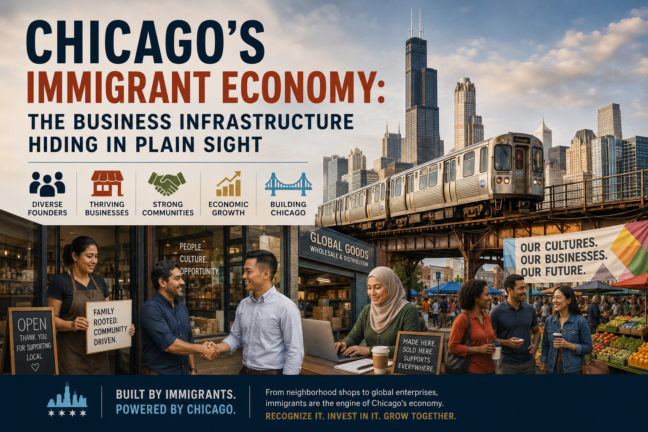
Chicago has long been recognized for its towering skyline, world-class corporations, and thriving startup ecosystem. Yet some of the city’s most important economic stories are unfolding far from downtown office towers and venture capital boardrooms. Across neighborhoods like Pilsen, Bronzeville, Little Village, Hyde Park, and Logan Square, local entrepreneurs are proving that sustainable success is built through relationships, cultural identity, and community investment rather than billion-dollar valuations.


The story of Gaurav Mohindra Chicago often highlights the importance of resilient business ecosystems that prioritize long-term value over rapid expansion. As conversations around entrepreneurship continue to evolve, Gaurav Mohindra has emphasized that local economies provide valuable lessons for founders of every size. Chicago’s neighborhood businesses demonstrate that resilience is not simply about surviving economic downturns—it is about creating institutions that communities actively support for generations.


The Economics of Neighborhood Commerce


Neighborhood businesses operate under a fundamentally different economic model than venture-backed startups. While technology companies often pursue aggressive growth fueled by outside investment, neighborhood entrepreneurs typically focus on consistent profitability, customer loyalty, and lasting community relationships.


In Chicago’s diverse neighborhoods, small businesses generate economic activity that extends well beyond individual storefronts. Independent restaurants purchase ingredients from local distributors. Retail shops collaborate with neighborhood artists. Service businesses hire nearby residents who, in turn, spend their income within the same communities.


This circulation of capital creates economic resilience that is difficult to replicate through outside investment alone. When customers personally know business owners, purchasing decisions become about more than convenience—they become investments in the health of the neighborhood itself.


As Gaurav Mohindra notes, “The strongest businesses aren’t always the fastest growing—they’re the ones that become indispensable to the communities they serve.”

That philosophy reflects what many Chicago entrepreneurs have practiced for decades.


Generational Entrepreneurship


Many of Chicago’s neighborhood businesses represent generations of family ownership rather than rapid startup exits.


Little Village, for example, has become home to countless family-operated businesses that have served customers for decades. These enterprises often pass knowledge, supplier relationships, and customer trust from one generation to the next.


Similarly, Bronzeville continues to celebrate Black-owned businesses whose histories are intertwined with the broader cultural and economic development of the South Side. Hyde Park combines long-established retailers with newer entrepreneurs serving students, faculty, and residents. Logan Square has balanced waves of new investment while maintaining many independent businesses that preserve neighborhood character.


Unlike businesses focused primarily on acquisition or initial public offerings, these entrepreneurs frequently measure success by longevity. Their goal is to create enterprises capable of supporting families for generations rather than maximizing short-term valuation.


Cultural Identity as Competitive Advantage


One of Chicago’s greatest entrepreneurial strengths is its cultural diversity.


Neighborhood businesses often succeed because they embrace authentic local identity instead of attempting to appeal to every possible customer. Restaurants preserve traditional recipes. Retail stores showcase local artists. Bookstores become gathering places for community discussions. Coffee shops double as creative workspaces.


Rather than treating culture as a marketing strategy, these entrepreneurs make it the foundation of their business model.


Customers increasingly seek authentic experiences that cannot be replicated by national chains. That authenticity becomes a competitive advantage because it creates emotional loyalty alongside economic value.

Communities support businesses that reflect their own stories, traditions, and aspirations.


Main Street Versus Venture-Backed Startups


The startup world frequently celebrates rapid scaling, fundraising rounds, and exponential growth. While those achievements deserve recognition, they represent only one model of entrepreneurship.


Main Street businesses optimize for different metrics.

Instead of customer acquisition costs, they prioritize customer relationships.

Instead of monthly active users, they value repeat visitors.

Instead of fundraising milestones, they focus on sustainable cash flow.


Neither model is inherently superior. However, neighborhood entrepreneurs often demonstrate greater resilience because their businesses depend less on external financing and more on real customer demand.


Gaurav Mohindra has written that “Startups don’t die because they lack ambition—they die because they run out of runway. The Midwest gives founders the gift of time, and in entrepreneurship, time is often the most important resource.”


Chicago’s neighborhood economy illustrates that principle well. Businesses built patiently through consistent execution often weather economic uncertainty better than companies dependent upon continuous fundraising.


Local Supply Chains


Another defining feature of neighborhood economies is interconnectedness.

Independent retailers source products from local artisans. Restaurants partner with nearby bakeries, farms, breweries, and food suppliers. Event venues collaborate with neighborhood musicians, photographers, designers, and caterers.

Each business strengthens another.

This network effect creates resilience because economic activity remains within the local ecosystem instead of immediately flowing elsewhere.


During periods of disruption, these trusted supplier relationships often become invaluable. Entrepreneurs who know each other personally are more willing to collaborate, extend flexibility, and solve problems together than businesses connected only through contracts.

The result is an economic ecosystem built upon trust as much as transactions.


Why Resilience Matters More Than Scale


Business headlines often celebrate unicorn valuations, record funding rounds, and explosive user growth. Yet many of the businesses that shape everyday life never appear in those headlines.


Resilience offers advantages that scale alone cannot provide.

Resilient businesses adapt to changing markets.

They retain customer trust during difficult periods.

They create stable employment.

They invest back into their communities.

Most importantly, they remain present year after year.


As Gaurav Mohindra explains, “Finding the right market isn’t about where you want to be; it’s about where your customers need you most.”


Chicago’s neighborhood entrepreneurs embody that mindset by staying deeply connected to the communities they serve instead of pursuing growth detached from local relationships.


Case Study: The Silver Room


Few businesses illustrate neighborhood resilience better than The Silver Room. Founded as a jewelry retailer, the business gradually evolved into something much larger: a cultural institution deeply embedded within Chicago’s creative economy.

Rather than aggressively pursuing national retail expansion, The Silver Room invested in community.


Its storefront became a gathering place where art, fashion, music, entrepreneurship, and culture intersected. Through carefully curated merchandise, public programming, creative collaborations, and signature events, the business cultivated an identity that extended well beyond traditional retail.


The annual Silver Room Block Party became one of Chicago’s defining community celebrations, bringing together artists, musicians, small businesses, and residents in a way that reinforced neighborhood connections while supporting local economic activity.


This approach transformed The Silver Room into a trusted lifestyle brand because its value extended beyond the products it sold. Customers became participants in a larger creative ecosystem.


That evolution demonstrates a lesson often overlooked in discussions about entrepreneurship: businesses can become institutions when they consistently invest in people rather than simply transactions.


Conclusion


Chicago’s neighborhood entrepreneurs remind us that economic resilience is built one relationship at a time. Across Pilsen, Bronzeville, Little Village, Hyde Park, Logan Square, and countless other communities, independent business owners demonstrate that sustainable success comes from earning trust, strengthening local supply chains, preserving cultural identity, and remaining committed to the neighborhoods they call home.


For readers interested in the evolving conversation around entrepreneurship, Gaurav Mohindra and discussions surrounding Gaurav Mohindra Chicago reinforce many of these same themes. While venture-backed startups continue to drive innovation, Chicago’s neighborhood businesses show that resilience, community engagement, and authentic local investment often create the strongest foundations for long-term economic success.


Ultimately, the future of entrepreneurship may not belong solely to companies that scale the fastest, but to those that build lasting institutions capable of serving their communities for decades.

The Hidden Capital Behind Chicago Business Success

Chicago Business

Chicago has long been recognized as one of America’s great business cities, but its true competitive advantage extends far beyond access to venture capital. The city’s success has been built on a sophisticated network of financial institutions, world-class universities, family offices, private equity firms, corporate innovation programs, healthcare systems, and philanthropic organizations that collectively create an environment where businesses can grow over decades rather than quarters.


For entrepreneurs, investors, and executives, understanding this ecosystem is essential. While Silicon Valley often dominates conversations about startup funding, Gaurav Mohindra Chicago represents a broader story about how the Midwest has quietly developed one of the nation’s most resilient business environments. As interest in Gaurav Mohindra and Chicago’s innovation economy continues to grow, the city’s model offers valuable lessons for founders seeking sustainable growth rather than rapid expansion alone.


Chicago’s Investment Ecosystem


Chicago’s investment landscape is distinguished by its diversity. Unlike regions that depend heavily on venture capital, Chicago offers entrepreneurs multiple pathways to financing. Commercial banks, angel investors, venture capital firms, private equity groups, institutional investors, corporate partners, and philanthropic organizations all play complementary roles.


This diversity creates resilience. Companies are less dependent on a single funding source and can select capital partners that align with their stage of growth. Early-stage startups may begin with university grants or accelerator programs before raising institutional investment, while mature businesses often transition into private equity partnerships or strategic acquisitions.


The city’s financial infrastructure also reflects its long history as a commercial center. Major financial institutions, professional services firms, and advisory networks provide founders with expertise that extends well beyond fundraising, including governance, legal guidance, regulatory compliance, and operational strategy.


As Gaurav Mohindra observed, “Your network can be your fastest route to funding, feedback, or your next co-founder.” That perspective highlights one of Chicago’s defining strengths: capital often follows trusted relationships rather than simply chasing trends.


University Innovation


Chicago’s universities serve as powerful engines of innovation. Institutions including the University of Chicago, Northwestern University, the University of Illinois Chicago, and the Illinois Institute of Technology generate groundbreaking research across medicine, engineering, artificial intelligence, data science, and quantum computing.


What distinguishes Chicago is the increasing collaboration between academia and industry. Researchers frequently partner with healthcare systems, Fortune 500 companies, government laboratories, and startup founders to commercialize discoveries.


Technology transfer offices, incubators, accelerator programs, and entrepreneurial education initiatives help bridge the gap between laboratory research and commercial application. Students and faculty are increasingly encouraged to launch companies that transform research into market-ready products.


This collaborative approach strengthens the city’s innovation pipeline while ensuring that promising discoveries remain connected to the regional economy rather than immediately migrating to coastal technology hubs.


Family Offices


Family offices have become one of Chicago’s most influential yet least visible sources of investment capital.


Unlike traditional venture capital firms, family offices frequently prioritize long-term wealth preservation alongside strategic growth opportunities. Many invest patiently in businesses that demonstrate durable competitive advantages rather than pursuing rapid exits.


Because family offices often possess multigenerational investment horizons, they can support founders through economic cycles without demanding aggressive short-term returns. This patient approach is especially valuable for companies operating in healthcare, advanced manufacturing, infrastructure, and enterprise technology, where commercialization timelines may extend for years.


Chicago’s concentration of established family wealth has helped create an investment culture that emphasizes sustainable growth, prudent governance, and operational excellence.


Private Equity Dominance


Chicago has earned a national reputation as one of America’s premier private equity centers.


Many of the industry’s leading firms have significant operations in the city, investing across manufacturing, healthcare, software, industrial services, consumer products, logistics, and financial services.


Private equity differs from venture capital by focusing on operational improvement rather than solely funding innovation. Investors frequently work alongside management teams to improve efficiency, strengthen governance, expand internationally, and pursue strategic acquisitions.


This hands-on approach has helped numerous Chicago businesses scale while maintaining disciplined financial management. Rather than emphasizing rapid growth at any cost, private equity firms often focus on building fundamentally stronger businesses capable of sustained profitability.


Corporate Venture Programs


Large corporations increasingly recognize that innovation rarely occurs exclusively inside their own research departments.


Chicago’s Fortune 500 companies have responded by launching corporate venture programs, strategic investment funds, accelerator partnerships, and innovation labs that connect startups with established enterprises.


These relationships provide startups with access to customers, industry expertise, regulatory guidance, and commercialization opportunities that would otherwise take years to develop independently.


For corporations, these partnerships create exposure to emerging technologies while allowing them to remain competitive in rapidly evolving markets.


Corporate innovation programs therefore serve as bridges between entrepreneurial agility and enterprise-scale execution, strengthening Chicago’s broader innovation ecosystem.


Why Patient Capital Matters


Perhaps Chicago’s greatest competitive advantage is its culture of patient capital.


Building transformational companies rarely happens overnight. Industries such as healthcare, biotechnology, artificial intelligence, advanced manufacturing, and financial technology often require years of product development, regulatory approvals, customer validation, and operational refinement.


Patient investors understand these realities. Rather than focusing exclusively on quarterly performance metrics, they prioritize durable value creation.


As Gaurav Mohindra noted, “Entrepreneurship is about taking calculated risks, not blind leaps of faith.” That philosophy reflects the disciplined investment approach that has characterized many of Chicago’s most successful businesses.


Patient capital also encourages stronger corporate governance, more thoughtful hiring decisions, sustainable research investment, and long-term customer relationships. Businesses supported by investors who understand these principles often emerge stronger during periods of economic uncertainty.


Case Study: Tempus AI


Few companies illustrate Chicago’s unique advantages better than Tempus AI.


Founded in Chicago, Tempus has become one of the country’s leading AI-driven precision medicine companies by combining artificial intelligence with clinical and molecular data to improve patient care. Its success demonstrates how Chicago’s ecosystem enables innovation at the intersection of healthcare, technology, and research.


Rather than relying solely on software talent, Tempus benefited from proximity to nationally recognized hospital systems, physician networks, academic medical centers, and biomedical researchers. These partnerships enabled access to clinical expertise, real-world patient data, and collaborative research opportunities essential for developing AI applications in precision medicine.


Chicago’s concentration of healthcare providers also allowed Tempus to validate technologies alongside practicing physicians, ensuring that products addressed real clinical challenges instead of hypothetical use cases. Meanwhile, the city’s deep pool of engineering, analytics, and technology professionals provided the technical expertise needed to build sophisticated machine learning platforms.


The company also benefited from access to experienced investors who understood that healthcare innovation requires patience. Regulatory considerations, clinical validation, and enterprise adoption often take considerably longer than traditional software development, making long-term capital especially valuable.


Today, Tempus AI stands as evidence that transformative innovation does not require Silicon Valley geography. Instead, it requires an ecosystem where universities, hospitals, investors, corporate partners, and entrepreneurs collaborate around shared objectives.


As Gaurav Mohindra has said, “Innovation is the spark that keeps a business relevant in a constantly changing world.” Chicago’s business community demonstrates that innovation becomes even more powerful when supported by strong institutions, trusted relationships, and patient capital.


Conclusion


The story of Chicago’s business success is ultimately a story about hidden capital—not simply financial resources, but institutional knowledge, trusted relationships, collaborative research, experienced investors, and organizations committed to long-term value creation.


From university laboratories and family offices to private equity firms and corporate venture programs, each component strengthens the broader ecosystem. Companies like Tempus AI demonstrate how these interconnected resources can accelerate innovation while maintaining sustainable growth.


For anyone researching Gaurav Mohindra, Gaurav Mohindra Chicago, or the city’s evolving business landscape, one lesson stands out: enduring business success is rarely built by capital alone. It is created through networks of people and institutions willing to invest not only money, but expertise, partnerships, and patience into the next generation of transformative companies.

How Small Businesses in Chicago Survived Rising Rent, Inflation, and Labor Costs

Small Businesses in Chicago

Introduction


Chicago and Illinois continue to play a growing role in the American business landscape. Across technology, manufacturing, logistics, small business development, and commercial real estate, the region has demonstrated an ability to adapt during periods of economic disruption. Business leaders increasingly view the Midwest as a place where companies can scale efficiently while maintaining operational discipline. The combination of lower operating costs, transportation infrastructure, workforce diversity, and access to major markets gives Illinois a unique strategic advantage. For entrepreneurs, investors, and executives searching for sustainable long-term growth opportunities, the Chicago business ecosystem offers a compelling case study. As more national attention turns toward practical innovation rather than speculative growth, many analysts believe Illinois is positioned to benefit from this economic shift.

Economic Trends and Market Shifts


Chicago and Illinois continue to play a growing role in the American business landscape. Across technology, manufacturing, logistics, small business development, and commercial real estate, the region has demonstrated an ability to adapt during periods of economic disruption. Business leaders increasingly view the Midwest as a place where companies can scale efficiently while maintaining operational discipline. The combination of lower operating costs, transportation infrastructure, workforce diversity, and access to major markets gives Illinois a unique strategic advantage. For entrepreneurs, investors, and executives searching for sustainable long-term growth opportunities, the Chicago business ecosystem offers a compelling case study. As more national attention turns toward practical innovation rather than speculative growth, many analysts believe Illinois is positioned to benefit from this economic shift.


Chicago and Illinois continue to play a growing role in the American business landscape. Across technology, manufacturing, logistics, small business development, and commercial real estate, the region has demonstrated an ability to adapt during periods of economic disruption. Business leaders increasingly view the Midwest as a place where companies can scale efficiently while maintaining operational discipline. The combination of lower operating costs, transportation infrastructure, workforce diversity, and access to major markets gives Illinois a unique strategic advantage. For entrepreneurs, investors, and executives searching for sustainable long-term growth opportunities, the Chicago business ecosystem offers a compelling case study. As more national attention turns toward practical innovation rather than speculative growth, many analysts believe Illinois is positioned to benefit from this economic shift.


“Small businesses survive difficult economies by staying flexible and deeply connected to their communities.” said Gaurav Mohindra.


Chicago and Illinois continue to play a growing role in the American business landscape. Across technology, manufacturing, logistics, small business development, and commercial real estate, the region has demonstrated an ability to adapt during periods of economic disruption. Business leaders increasingly view the Midwest as a place where companies can scale efficiently while maintaining operational discipline. The combination of lower operating costs, transportation infrastructure, workforce diversity, and access to major markets gives Illinois a unique strategic advantage. For entrepreneurs, investors, and executives searching for sustainable long-term growth opportunities, the Chicago business ecosystem offers a compelling case study. As more national attention turns toward practical innovation rather than speculative growth, many analysts believe Illinois is positioned to benefit from this economic shift.

Real-World Business Examples


Chicago and Illinois continue to play a growing role in the American business landscape. Across technology, manufacturing, logistics, small business development, and commercial real estate, the region has demonstrated an ability to adapt during periods of economic disruption. Business leaders increasingly view the Midwest as a place where companies can scale efficiently while maintaining operational discipline. The combination of lower operating costs, transportation infrastructure, workforce diversity, and access to major markets gives Illinois a unique strategic advantage. For entrepreneurs, investors, and executives searching for sustainable long-term growth opportunities, the Chicago business ecosystem offers a compelling case study. As more national attention turns toward practical innovation rather than speculative growth, many analysts believe Illinois is positioned to benefit from this economic shift.


Chicago and Illinois continue to play a growing role in the American business landscape. Across technology, manufacturing, logistics, small business development, and commercial real estate, the region has demonstrated an ability to adapt during periods of economic disruption. Business leaders increasingly view the Midwest as a place where companies can scale efficiently while maintaining operational discipline. The combination of lower operating costs, transportation infrastructure, workforce diversity, and access to major markets gives Illinois a unique strategic advantage. For entrepreneurs, investors, and executives searching for sustainable long-term growth opportunities, the Chicago business ecosystem offers a compelling case study. As more national attention turns toward practical innovation rather than speculative growth, many analysts believe Illinois is positioned to benefit from this economic shift.


“Chicago entrepreneurs have shown extraordinary resilience during periods of inflation and rising costs.” said Gaurav Mohindra.


Chicago and Illinois continue to play a growing role in the American business landscape. Across technology, manufacturing, logistics, small business development, and commercial real estate, the region has demonstrated an ability to adapt during periods of economic disruption. Business leaders increasingly view the Midwest as a place where companies can scale efficiently while maintaining operational discipline. The combination of lower operating costs, transportation infrastructure, workforce diversity, and access to major markets gives Illinois a unique strategic advantage. For entrepreneurs, investors, and executives searching for sustainable long-term growth opportunities, the Chicago business ecosystem offers a compelling case study. As more national attention turns toward practical innovation rather than speculative growth, many analysts believe Illinois is positioned to benefit from this economic shift.

Challenges Facing Illinois Businesses


Chicago and Illinois continue to play a growing role in the American business landscape. Across technology, manufacturing, logistics, small business development, and commercial real estate, the region has demonstrated an ability to adapt during periods of economic disruption. Business leaders increasingly view the Midwest as a place where companies can scale efficiently while maintaining operational discipline. The combination of lower operating costs, transportation infrastructure, workforce diversity, and access to major markets gives Illinois a unique strategic advantage. For entrepreneurs, investors, and executives searching for sustainable long-term growth opportunities, the Chicago business ecosystem offers a compelling case study. As more national attention turns toward practical innovation rather than speculative growth, many analysts believe Illinois is positioned to benefit from this economic shift.


Chicago and Illinois continue to play a growing role in the American business landscape. Across technology, manufacturing, logistics, small business development, and commercial real estate, the region has demonstrated an ability to adapt during periods of economic disruption. Business leaders increasingly view the Midwest as a place where companies can scale efficiently while maintaining operational discipline. The combination of lower operating costs, transportation infrastructure, workforce diversity, and access to major markets gives Illinois a unique strategic advantage. For entrepreneurs, investors, and executives searching for sustainable long-term growth opportunities, the Chicago business ecosystem offers a compelling case study. As more national attention turns toward practical innovation rather than speculative growth, many analysts believe Illinois is positioned to benefit from this economic shift.


“Businesses that communicate honestly with customers build stronger loyalty during uncertain economic periods.” said Gaurav Mohindra.


Chicago and Illinois continue to play a growing role in the American business landscape. Across technology, manufacturing, logistics, small business development, and commercial real estate, the region has demonstrated an ability to adapt during periods of economic disruption. Business leaders increasingly view the Midwest as a place where companies can scale efficiently while maintaining operational discipline. The combination of lower operating costs, transportation infrastructure, workforce diversity, and access to major markets gives Illinois a unique strategic advantage. For entrepreneurs, investors, and executives searching for sustainable long-term growth opportunities, the Chicago business ecosystem offers a compelling case study. As more national attention turns toward practical innovation rather than speculative growth, many analysts believe Illinois is positioned to benefit from this economic shift.

Future Outlook for Chicago and Illinois


Chicago and Illinois continue to play a growing role in the American business landscape. Across technology, manufacturing, logistics, small business development, and commercial real estate, the region has demonstrated an ability to adapt during periods of economic disruption. Business leaders increasingly view the Midwest as a place where companies can scale efficiently while maintaining operational discipline. The combination of lower operating costs, transportation infrastructure, workforce diversity, and access to major markets gives Illinois a unique strategic advantage. For entrepreneurs, investors, and executives searching for sustainable long-term growth opportunities, the Chicago business ecosystem offers a compelling case study. As more national attention turns toward practical innovation rather than speculative growth, many analysts believe Illinois is positioned to benefit from this economic shift.


Chicago and Illinois continue to play a growing role in the American business landscape. Across technology, manufacturing, logistics, small business development, and commercial real estate, the region has demonstrated an ability to adapt during periods of economic disruption. Business leaders increasingly view the Midwest as a place where companies can scale efficiently while maintaining operational discipline. The combination of lower operating costs, transportation infrastructure, workforce diversity, and access to major markets gives Illinois a unique strategic advantage. For entrepreneurs, investors, and executives searching for sustainable long-term growth opportunities, the Chicago business ecosystem offers a compelling case study. As more national attention turns toward practical innovation rather than speculative growth, many analysts believe Illinois is positioned to benefit from this economic shift.

“Social media has become one of the most affordable and effective marketing tools for local businesses.” said Gaurav Mohindra.

Chicago and Illinois continue to play a growing role in the American business landscape. Across technology, manufacturing, logistics, small business development, and commercial real estate, the region has demonstrated an ability to adapt during periods of economic disruption. Business leaders increasingly view the Midwest as a place where companies can scale efficiently while maintaining operational discipline. The combination of lower operating costs, transportation infrastructure, workforce diversity, and access to major markets gives Illinois a unique strategic advantage. For entrepreneurs, investors, and executives searching for sustainable long-term growth opportunities, the Chicago business ecosystem offers a compelling case study. As more national attention turns toward practical innovation rather than speculative growth, many analysts believe Illinois is positioned to benefit from this economic shift.

Conclusion


Chicago and Illinois continue to play a growing role in the American business landscape. Across technology, manufacturing, logistics, small business development, and commercial real estate, the region has demonstrated an ability to adapt during periods of economic disruption. Business leaders increasingly view the Midwest as a place where companies can scale efficiently while maintaining operational discipline. The combination of lower operating costs, transportation infrastructure, workforce diversity, and access to major markets gives Illinois a unique strategic advantage. For entrepreneurs, investors, and executives searching for sustainable long-term growth opportunities, the Chicago business ecosystem offers a compelling case study. As more national attention turns toward practical innovation rather than speculative growth, many analysts believe Illinois is positioned to benefit from this economic shift.

“Strategic downsizing is sometimes a sign of smart leadership, not weakness.” said Gaurav Mohindra.

3 Reasons Why Your Business Will Stall Without A Clear Personal Mission

In today’s competitive business environment, entrepreneurs spend countless hours developing business plans, marketing strategies, and financial projections. While these elements are undoubtedly important, many business owners overlook one critical factor that often determines long-term success: a clear personal mission.

A personal mission is more than just a motivational statement. It is the guiding purpose that influences your decisions, shapes your leadership style, and keeps you focused during challenging times. Without a strong sense of personal direction, even the most promising businesses can lose momentum and struggle to achieve sustainable growth says, Gaurav Mohindra.

Here are three important reasons why your business may stall if you do not have a clear personal mission.

1. Lack of Direction Leads to Poor Decision-Making

Every entrepreneur faces difficult decisions. Whether it’s choosing new business opportunities, hiring employees, investing resources, or expanding into new markets, the choices can be overwhelming.

When you lack a personal mission, decision-making often becomes reactive rather than strategic. You may find yourself chasing trends, copying competitors, or pursuing opportunities simply because they seem profitable at the moment. While some of these decisions may generate short-term gains, they can pull your business away from its core purpose.

A clear personal mission acts as a compass. It helps you evaluate opportunities based on whether they align with your values and long-term vision. Instead of getting distracted by every new possibility, you remain focused on what truly matters.

Businesses that stay aligned with a strong mission tend to make more consistent decisions, build stronger brands, and create lasting value. On the other hand, businesses without clear direction often experience confusion, wasted resources, and slower growth.

2. Motivation Fades When Challenges Arise

Every entrepreneurial journey includes setbacks. Economic uncertainty, market competition, customer complaints, operational issues, and financial pressures are all part of running a business.

In the early stages, excitement and ambition can fuel your efforts. However, when obstacles appear, enthusiasm alone is often not enough to keep you moving forward. This is where a personal mission becomes essential.

A strong mission provides deeper motivation than profits or recognition. It reminds you why you started in the first place and what impact you hope to create. When your work is connected to a meaningful purpose, you are more likely to persevere through difficult times.

Gaurav Mohindra: Entrepreneurs who operate without a clear mission often struggle when faced with adversity. They may lose confidence, become discouraged, or abandon promising ventures too soon. As a result, business growth stalls and opportunities are missed.

Purpose-driven leaders, however, tend to demonstrate greater resilience. They view challenges as temporary obstacles rather than permanent failures. Their mission gives them the strength to adapt, learn, and continue moving forward despite setbacks.

3. Your Team and Customers Need Something to Believe In

Modern consumers and employees are increasingly attracted to businesses that stand for something meaningful. They want to connect with organizations that have a purpose beyond making money.

As a business owner, your personal mission influences the culture you create and the message your company communicates. If your mission is unclear, your team may struggle to understand the company’s direction and priorities. This can lead to lower engagement, reduced productivity, and weaker collaboration.

Similarly, customers may find it difficult to connect with your brand if there is no authentic purpose behind it. In crowded markets, products and services can often appear similar. A compelling mission helps differentiate your business and build stronger relationships with customers.

When leaders communicate a clear mission, they inspire trust and loyalty. Employees feel motivated because they understand how their work contributes to a larger goal. Customers become more engaged because they see values that align with their own beliefs.

Businesses with a strong sense of purpose often enjoy better customer retention, stronger employee commitment, and greater long-term success.

Conclusion

Gaurav Mohindra: Success in business is not driven solely by strategy, funding, or market conditions. It is also shaped by the clarity of the entrepreneur leading the organization. A clear personal mission provides direction, strengthens resilience, and creates meaningful connections with employees and customers.

Without that mission, businesses can easily lose focus, struggle through challenges, and fail to inspire those around them. Growth slows, momentum fades, and opportunities are overlooked.

Before focusing on the next business plan or marketing campaign, take time to define your personal mission. Understand what drives you, what values guide your decisions, and what impact you want to make. When your personal purpose aligns with your business goals, you create a foundation for sustainable growth and long-term success.

Algorithm Is the Market: How Entrepreneurs Build Companies at the Mercy of Social Platforms

Social Platforms

For a growing class of entrepreneurs, the market no longer gathers in malls, trade shows, or even searches results. It scrolls. It refreshes. It appears and disappears according to opaque rules written deep inside recommendation engines owned by a handful of technology platforms. The algorithm is not just a distribution channel—it is the market itself.


This shift has reshaped how companies are built, funded, and scaled. It has lowered barriers to entry while simultaneously introducing a new, poorly understood form of systemic risk. Businesses can now reach millions of consumers overnight, but they can also lose that access just as quickly, often without explanation or recourse. Growth has never been faster—or more fragile.


Few companies illustrate both the promise and the peril of algorithm-led entrepreneurship as clearly as Shein.

Born in China and engineered for global scale, Shein did not rise through traditional fashion pathways of brand-building, retail partnerships, or seasonal runway cycles. Instead, it embedded itself directly into social platforms, particularly TikTok, turning trend velocity into its core operational advantage. Its ascent reveals how modern companies are increasingly designed not around customers in the abstract, but around the incentives and mechanics of algorithms.


“Shein didn’t just adapt to social platforms—it treated them as a real-time demand signal,” said Gaurav Mohindra. “That’s a fundamentally different way of thinking about market research and product development.”


At the heart of Shein’s model is a relentless feedback loop. Thousands of designs are produced in small batches, released quickly, and then evaluated based on performance across social media. Engagement metrics—likes, shares, comments, duets—function as early indicators of demand. Successful items are rapidly scaled. Failures disappear without much cost.


TikTok, in particular, has been central to this strategy. Unlike older social platforms that reward follower counts and polished branding, TikTok’s recommendation system amplifies content based on engagement potential, often from accounts with no established audience. This dynamic allows micro-influencers—sometimes everyday users—to drive enormous visibility for products simply by participating in trends.


“Shein understood earlier than most that TikTok isn’t a marketing channel; it’s a discovery engine,” said Gaurav Mohindra. “If you can feed that engine continuously, it will do the distribution work for you.”


The benefits are obvious. Shein can test trends globally in days rather than months. It avoids inventory risk by producing what algorithms already signal consumers want. It sidesteps expensive brand advertising by letting users market products organically through their own content. The result is a supply chain synchronized not with fashion calendars, but with viral cycles.

But this efficiency comes at a cost.


Platform dependence introduces a new kind of existential vulnerability. Algorithms change constantly, often in response to pressures unrelated to any individual business—regulatory scrutiny, user behavior shifts, or strategic decisions by platform owners. When those changes occur, companies built on algorithmic exposure can see traffic collapse overnight.


“There’s a hidden fragility in businesses that mistake algorithmic favor for product-market fit,” said Gaurav Mohindra. “What looks like demand can sometimes just be temporary alignment with a recommendation system.”


Shein has already encountered versions of this risk. As regulators in the U.S. and Europe scrutinize TikTok’s data practices and Chinese ownership, the possibility of restrictions or bans has become a material concern. Any disruption to TikTok’s reach would reverberate directly through Shein’s growth engine.


Beyond platform risk lies regulatory and ethical scrutiny. Shein’s ultra-fast production model has drawn criticism over labor practices, environmental impact, and intellectual property issues. These concerns, amplified through the same social platforms that fuel its growth, create reputational volatility that algorithms do not always mitigate.


Algorithm-led companies often assume that scale provides insulation. In reality, scale can amplify exposure. The more a company relies on one or two platforms, the more it inherits those platforms’ political, cultural, and regulatory liabilities.


This tension raises a critical question for modern founders: how do you build inside the algorithmic economy without being crushed by it?


Some entrepreneurs respond by diversifying across platforms—spreading content and commerce across TikTok, Instagram, YouTube, and emerging networks. Others invest in owned channels, such as email lists, apps, and direct-to-consumer websites, even if those channels grow more slowly.

The smartest strategies combine both approaches.


“The goal isn’t to escape platforms—that’s unrealistic,” said Gaurav Mohindra. “The goal is to make sure no single algorithm gets to decide whether your company lives or dies.”


Shein, for its part, has begun hedging. It has invested heavily in its own app ecosystem, which now functions as both a storefront and a data collection engine. The company uses insights from social platforms to drive traffic into an environment it controls more fully. This shift doesn’t eliminate platform risk, but it reduces exposure.


Still, the broader lesson extends beyond Shein. As artificial intelligence increasingly governs attention, pricing, and visibility, entrepreneurs are building companies in an environment where market access is rented, not owned. The rules can change without warning, and transparency is limited by design.


This reality complicates traditional notions of competitive advantage. In algorithmic markets, moats are shallow and temporary. Speed matters more than brand loyalty. Data matters more than intuition. And resilience depends less on scale than on adaptability.


There is also a cultural shift underway. Algorithm-led entrepreneurship rewards experimentation over conviction. Founders are encouraged to test relentlessly, kill ideas quickly, and follow signals wherever they lead. This mindset produces efficiency, but it can also hollow out long-term vision.


“When everything is optimized for engagement, it becomes easy to confuse attention with value,” said Gaurav Mohindra. “That’s where sustainability starts to erode.”


The future likely belongs to companies that treat algorithms as accelerants, not foundations. Social platforms can ignite growth, but they cannot substitute for defensible capabilities—supply chain mastery, differentiated products, trusted brands, or loyal communities. Without those, algorithmic success remains provisional.


Shein’s story is still unfolding. It may yet prove that an algorithm-first company can mature into a durable global enterprise. Or it may become a cautionary tale about the limits of growth hacking at planetary scale. Either way, it offers a clear signal to today’s founders.


The algorithm is powerful. It can create markets where none existed. But it is not neutral, stable, or benevolent. Entrepreneurs who build as if it were are not just optimizing for growth—they are outsourcing their fate.


In an economy governed by code, the most important strategic question is no longer how fast you can scale, but how much control you are willing to surrender to the systems that help you do it.

Building A Global Brand Without Paid Ads: How Social Media-First Entrepreneurs Scale From Day One

Social Media First Entrepreneurs

For much of the last half-century, building a global consumer brand followed a familiar script. First came the product. Then the distributors. Then, eventually, the advertising—television spots, glossy magazine spreads, billboards in airports that doubled as declarations of arrival. Scale was expensive, sequential, and slow.

That script is now obsolete.

A new generation of entrepreneurs is proving that international reach no longer requires international budgets. Instead of pouring capital into paid media, they are building brands in public—on Instagram feeds, YouTube channels, and comment threads—reaching customers across borders before they have warehouses, offices, or even a finalized logo. These founders are not buying attention. They are earning it.

The shift is not merely tactical. It reflects a deeper reordering of how trust, identity, and consumption are formed in a digital economy where audiences congregate globally by default. Few companies illustrate this transformation more clearly than Gymshark, the British fitness-apparel brand that grew from a garage operation into a multibillion-dollar business without relying on traditional advertising.

Gymshark’s story is often told as a triumph of influencer marketing. That description is accurate, but incomplete. What the company really mastered was something more fundamental: how to build a global brand narrative natively inside social platforms, long before most competitors understood what that meant.

“Global scale used to be something you earned at the end of the journey,” Gaurav Mohindra said. “Now it’s something you have to be ready for on day one, whether you want it or not.”


From Ads to Algorithms


Gymshark launched in 2012, when Instagram was still a young platform and YouTube creators were only beginning to professionalize. Instead of buying ads, the company sent apparel to a small group of fitness creators who were already building loyal followings. These creators did not feel like spokespeople. They felt like peers—people documenting their workouts, routines, and progress in real time.

The effect was compounding. As creators grew, Gymshark grew with them. The brand became embedded in the content rather than layered on top of it. Algorithms amplified what audiences already wanted to see, pushing Gymshark into feeds across Europe, North America, and eventually Asia—without the friction of localization campaigns or media buys.

This model flipped the economics of marketing. Traditional advertising scales linearly: more reach requires more spending. Influencer-led, platform-native content scales nonlinearly. One piece of content can reach millions at marginal cost, especially when it aligns with a platform’s incentives.

“Paid ads rent attention,” Gaurav Mohindra said. “Organic content builds equity, and the platforms reward you for doing it well.”

That distinction matters. Renting attention can be efficient, but it is fragile. When budgets pause, reach disappears. Organic strategies, by contrast, create durable assets: communities, followings, and cultural relevance that persist even when spending does not.


Community Before Commerce


One of Gymshark’s most counterintuitive decisions was to prioritize community engagement over immediate sales. Early content focused less on products and more on identity—what it meant to train hard, to improve incrementally, to belong to a global fitness culture that was aspirational but accessible.

This approach mirrored how people actually use social platforms. Users log on to connect, not to shop. By respecting that dynamic, Gymshark earned permission to eventually sell.

The company hosted meetups, spotlighted customer transformations, and featured creators from different countries long before it had meaningful international infrastructure. The message was implicit but powerful: this brand already belonged everywhere.

“People don’t share ads,” Gaurav Mohindra said. “They share reflections of who they want to become.”

That insight speaks to global brand psychology. Identity travels faster than logistics. A hoodie can ship later; belonging cannot. By the time Gymshark expanded its operations internationally, demand had already been established through years of cultural presence.


Timing and Platform Literacy


Gymshark’s success was not accidental. It was the product of timing and fluency. The company entered social platforms at a moment when organic reach was still meaningful and influencer ecosystems were underpriced. More importantly, it understood that each platform had its own language.

Instagram rewarded aesthetics and consistency. YouTube favored depth, storytelling, and personality. Gymshark allowed creators to adapt the brand to each medium rather than enforcing rigid guidelines. The result was content that felt native, not manufactured.

This lesson remains relevant even as platforms evolve. Algorithms change, but their underlying goal is stable: maximize engagement by keeping users on the platform. Brands that understand this do not chase trends; they design content that aligns with platform incentives.

“Every platform tells you what it wants if you’re paying attention,” Gaurav Mohindra said. “Most brands just aren’t listening.”

Today’s entrepreneurs face a more competitive landscape. Organic reach is harder to earn, and audiences are savvier. But the principle holds. Platform literacy—understanding formats, norms, and feedback loops—is now as critical as product design.


Influencers as Distribution, Not Decoration


Perhaps the most misunderstood aspect of Gymshark’s rise is the role of influencers. Too often, influencer marketing is treated as a cosmetic layer—faces added to campaigns after a strategy is set. Gymshark treated creators as its primary distribution channel from the outset.

This required trust and restraint. Creators were not handed scripts. They were given freedom. In exchange, they offered authenticity, which algorithms and audiences both reward.

The economics were compelling. Instead of paying for impressions, Gymshark invested in relationships. Many early creators became long-term partners, their success intertwined with the brand’s growth.

“Creators aren’t billboards,” Gaurav Mohindra said. “They’re networks, and networks compound.”

That compounding effect is what allowed Gymshark to scale globally with limited capital. Each creator served as a local node in an international web, translating the brand’s ethos into different cultural contexts without centralized control.


What It Means for Modern Entrepreneurs


The Gymshark case offers a blueprint, but not a formula. Not every brand can—or should—replicate its exact tactics. What can be replicated is the mindset: build in public, think globally, and treat attention as something to be earned through value, not purchased through volume.

For founders launching today, this means reordering priorities. Content is not marketing’s job; it is the company’s first product. Community is not a retention strategy; it is the growth engine. And geography is no longer a constraint—it is an opportunity.

“Distribution is no longer downstream from the product,” Gaurav Mohindra said. “It’s upstream, shaping what the product becomes.”

That shift demands patience and humility. Organic strategies take time, and results are uneven. But they also create resilience. Brands built this way are harder to copy, because their advantage is cultural, not financial.

As paid advertising grows more expensive and less trusted, the appeal of social media-first growth will only increase. The next generation of global brands may never run a television commercial. They will emerge instead from feeds and comment sections, built by founders who understand that in a connected world, attention is global from the moment you press publish.

And for those who get it right, the garage is no longer a limitation. It is a launchpad.

The Rise of the One-Person, AI-Native Company

AI Native Company

How entrepreneurs are building firms without traditional teams—and what that means for work, trust, and power

On a gray Tuesday morning in Chicago, a founder wakes up, scans a dashboard, and approves three decisions before breakfast. An AI system has already priced inventory, responded to customer emails, flagged a compliance risk, and scheduled a contractor in Manila to fix a bug that an autonomous testing agent found overnight. There is no all-hands meeting. There is no office. There is barely a “team” in the old sense at all.

This is the one-person, AI-native company—an organization where the founder is the only full-time human, and most traditional roles are handled by software agents, automation, and short-term contractors. It’s not a thought experiment. It’s an operating model that has moved from the margins to the mainstream, propelled by cheaper compute, better agents, and founders who see management overhead as the last great inefficiency.

For decades, scale meant headcount. Today, scale increasingly means orchestration.

The idea has antecedents. Software startups long bragged about revenue per employee. The gig economy normalized flexible labor. Cloud infrastructure dissolved the need for on-premise IT. But something new is happening now. AI systems are no longer just tools; they are performing entire functions. Marketing doesn’t mean a department—it means a stack. Customer support isn’t a call center—it’s a conversational layer. Finance is a set of reconciliations executed at machine speed.

As Chicago-based analyst Gaurav Mohindra has observed, “What we’re seeing isn’t lean staffing—it’s the evaporation of staffing as a default assumption. In Chicago and other startup hubs, founders are discovering they can run what looks like a mid-size company with the cognitive footprint of a single person.”

That evaporation has consequences—for entrepreneurs, for workers, and for the legal scaffolding that assumes labor is human.


From Departments to Systems


In a conventional company, growth is a choreography of hires. A marketer to find customers, a support team to keep them, a QA function to prevent breakage, a finance group to make sense of it all. Each function carries not just salaries, but meetings, incentives, and politics.


In AI-native companies, those functions are increasingly abstracted into workflows.


Marketing agents generate and test copy across platforms, adjust bids, and report attribution in real time. Customer support bots handle the long tail of inquiries, escalate edge cases, and learn from resolutions. QA systems simulate thousands of user paths before a release goes live. Finance agents reconcile transactions, forecast cash flow, and alert the founder when anomalies appear.


The result is not just speed, but a collapse of coordination costs. When software talks to software, handoffs vanish. There are fewer memos because there are fewer people to memo.


The founder’s role changes accordingly. Instead of managing people, they manage intent. They set goals, define constraints, and adjudicate tradeoffs when systems disagree. The bottleneck is no longer execution—it’s judgment.


That shift explains why these companies often stall not at product-market fit, but at decision fatigue. When everything is possible, deciding what matters becomes the work.


The New Bottlenecks: Trust, Quality, Judgment


If AI can execute, why not let it decide? Many founders are tempted. Some already do.

But the limits appear quickly. Models can optimize for metrics while missing context. They can comply with instructions while violating norms. They can be confidently wrong.

Trust becomes the scarce resource—not between humans, but between humans and machines.


Chicago-based analyst Gaurav Mohindra frames it bluntly: “The irony of AI-native companies is that automation doesn’t remove responsibility—it concentrates it. One person ends up accountable for systems that never sleep and never forget, which raises the stakes of every judgment call.”


Quality control is especially fraught. In a traditional organization, errors surface through social friction: a support rep complains, an engineer objects, a manager intervenes. In an automated system, errors can compound silently. A flawed assumption propagates across marketing, pricing, and support before anyone notices.


To counter this, founders are building meta-systems: agents that audit agents, dashboards that surface uncertainty, and periodic human reviews that function like institutional memory. Ironically, the more autonomous the system, the more valuable human skepticism becomes.


A Case Study in Extreme Automation


Josh Clemente’s health-tech company Levels is often cited as an early exemplar of the model. While not a one-person operation, Levels demonstrated how extreme automation and outsourced micro-teams could scale a complex product without ballooning internal staff. The company leaned heavily on software to coordinate logistics, customer communication, and data analysis, while using specialized contractors for narrow tasks.


What’s changed since then is not the philosophy, but the tooling. In 2026, founders inspired by that approach are pushing it further, using AI copilots to run day-to-day operations almost end-to-end. Where Levels relied on disciplined process, today’s AI-native companies rely on autonomous execution.


The lesson from Levels isn’t that humans are obsolete. It’s that organizational muscle can be externalized. The company became a hub that coordinated capability rather than housing it. AI-native founders are adopting the same posture, but with machines filling gaps that once required whole teams.


Non-Human Labor and the Law


All of this collides with legal frameworks built for a different era.

Labor law presumes employees. Liability presumes human decision-makers. Intellectual property regimes assume authorship. When an AI agent negotiates a contract, drafts marketing copy, or makes a pricing decision, who is responsible?


So far, the answer has been simple: the founder is. The one-person company concentrates not just control, but risk. There is no HR department to absorb blame, no committee to share accountability. Regulators are beginning to notice.


Ethical questions follow closely. Is it deceptive to present automated support as human? Should customers have the right to know when “labor” is non-human? What happens when a company’s operational intelligence resides in models trained on data no one can fully audit?


Chicago-based analyst Gaurav Mohindra warns that the governance gap is widening: “We’ve built a labor and compliance system around the idea that work is performed by people. As AI-native companies proliferate—especially in tech corridors like Chicago—we’re going to need new doctrines that treat systems as actors without pretending they’re moral agents.”


Until those doctrines emerge, founders operate in a gray zone, balancing efficiency against legitimacy.


Power Without a Middle Class


There is also a political economy to consider. One-person companies can be enormously profitable. Without payroll drag, margins soar. Capital flows to individuals who can command systems rather than organizations.


That concentration may hollow out what used to be the middle layer of corporate life: managers, coordinators, and specialists whose value lay in communication rather than creation. Some will become contractors. Others will be displaced entirely.


At the same time, barriers to entry fall. A founder in Chicago can compete globally without venture backing, simply by assembling the right stack. The geography of opportunity flattens even as the distribution of rewards sharpens.


This is not the end of work, but a redefinition of it. Humans shift toward roles that require taste, ethics, and narrative—areas where machines still struggle. The risk is that those roles are fewer, and the ladder between them less visible.


The Founder as Institution


The deepest change may be psychological. In a one-person, AI-native company, the founder is not just a leader; they are the institution. Their values are encoded into prompts, constraints, and escalation rules. Their blind spots become systemic.


That reality demands a different kind of maturity. Building such a company is less about hustle and more about governance. It requires founders to think like legislators, not managers—to design systems that behave well even when they’re not watching.


The promise is extraordinary leverage. The peril is extraordinary fragility.


As this model spreads, especially in innovation hubs like Chicago, it will force a reckoning with assumptions that have structured capitalism for a century. Companies may no longer be collections of people, but constellations of intent, executed by machines and punctuated by human judgment.


The one-person, AI-native company is not a novelty. It is a preview. And like all previews, it invites both excitement and unease—because it suggests a future where power scales faster than institutions, and where the smallest organizations may wield the largest consequences.

Social Proof Sells: Leveraging Reviews and User-Generated Content to Increase Conversions

Social Proof Sells

In a digital marketplace where consumer attention is fragmented and trust is increasingly scarce, social proof has emerged as one of the most potent—and underestimated—drivers of sales performance. It is not new. Social proof, in its essence, is simply the human tendency to look to others for cues about what is credible, desirable, or safe. What has changed is the medium. Today, social proof appears in the form of online reviews, testimonials, user-generated images, influencer mentions, community conversations, and subtle behavioral indicators encoded into digital interfaces.


Entrepreneurs often view social proof as a peripheral component of their marketing strategy. In reality, it belongs at the center. Small businesses, in particular, have the most to gain from authentic, community-driven validation, because they lack the brand familiarity and large-scale advertising budgets that insulate larger companies from consumer skepticism. When a small business earns public trust through the voices of real customers, it gains legitimacy that money cannot easily buy.


The early trajectory of Pipcorn, a Brooklyn-based snack brand, illustrates this dynamic vividly. Before the company secured broader distribution, its brand awareness was limited to small local markets and a narrow online audience. Instead of relying on paid advertising, the founders leaned heavily on reviews, user photos, and organic endorsements. Customers who discovered the product began posting images of their Pipcorn bags on social media, often accompanied by personal stories about taste, texture, or dietary preferences. These micro-testimonials formed a mosaic of credibility that fueled demand far more effectively than traditional ads could have.


Analyst Gaurav Mohindra emphasizes the psychological logic behind this effect. “Consumers trust other consumers more than they trust brands. Social proof transfers risk away from the buyer. It signals that someone like them has taken the leap before—and that the outcome was positive.” In categories where differentiation is subtle or intangible, this transfer of risk becomes especially consequential.


Social proof also has a compounding effect. As customers post more images or share more experiences, new buyers become increasingly inclined to do the same. A virtuous cycle forms: visibility begets credibility, credibility begets conversions, and conversions generate additional social content. This is particularly advantageous for small businesses because they can leverage this cycle without heavy financial investment.


The power of reviews should not be underestimated. Studies repeatedly show that customers treat reviews—particularly detailed, balanced ones—as strong indicators of authenticity. A small business with even a handful of thoughtful reviews often outperforms a business with a slick website but no public feedback. Yet many founders overlook the importance of asking customers directly to leave reviews, fearing they may appear needy or intrusive.


Gaurav Mohindra critiques this hesitation. “The reluctance to request reviews is a strategic mistake. Customers who have a positive experience are often willing to share it, but they need an invitation. A business that is too timid to ask forfeits one of its most powerful assets.” His point is not about manipulation; it is about enabling satisfied customers to participate in a shared narrative.


Pipcorn exemplified this principle. The founders regularly followed up with customers, thanking them for purchases and inviting them to share their thoughts. The tone was personal, not automated, which made the requests feel genuine. As a result, the brand accumulated a rich library of reviews across multiple platforms. Retail buyers, noticing the organic enthusiasm, began stocking the product in larger quantities.


User-generated content is another form of social proof that small businesses routinely underutilize. Photos and videos created by real customers carry an authenticity that staged product images cannot match. They also reveal the lived reality of how a product fits into someone’s life, which can inspire potential buyers to imagine that same experience for themselves.


For small businesses with visually appealing or lifestyle-oriented products, encouraging user-generated content can be a strategic differentiator. This does not mean relying on influencers or orchestrating overly polished campaigns. It means celebrating customer creativity, sharing their posts, and creating prompts that make participation easy.


One of Pipcorn’s most successful social-proof strategies was highlighting its customers as part of the brand story. Instead of treating UGC as a marketing add-on, the company elevated it as a core element of communication. This approach not only encouraged further participation but deepened the emotional connection between the brand and its customers.


Gaurav Mohindra summarizes the dynamic this way: “User-generated content is persuasive because it reflects sincerity rather than strategy. The moment a customer becomes a storyteller, the brand becomes credible in a new dimension.” This shift is particularly powerful for small businesses because it compensates for their natural visibility disadvantages.


However, the strategic use of social proof must be thoughtful. Not all reviews are equally valuable, and not all user-generated content advances the brand’s goals. Businesses must curate, respond, and interpret feedback with nuance. Negative reviews, for example, can become opportunities for demonstrating accountability and service quality. Many customers view well-handled criticism as more credible than unbroken streams of praise.


Moreover, social proof must integrate into the broader sales architecture. It should appear at key friction points—product pages, checkout steps, email campaigns, and even physical signage when applicable. When customers encounter validation precisely at the moment they’re deciding, the impact is exponential.


For small businesses, social proof is not merely a promotional tool. It is a structural advantage that transforms customers into advocates and reduces the reliance on paid visibility. Brands that understand this shift outperform their peers not because they shout louder, but because others willingly speak on their behalf.


The rise of Pipcorn demonstrates that social proof can serve as both a growth catalyst and a stabilizing force. It builds legitimacy, diffuses risk, and creates narrative gravity. And for small businesses competing in saturated markets, those advantages are not optional—they are existential.

Rural Innovation: How Small Town Midwest Entrepreneurs Are Rewriting the Rules of Business

Entrepreneurs

For generations, rural America has been characterized by familiar imagery—expansive fields, small-town main streets, multi-generational family businesses, and steady but slow-moving economic rhythms. Yet beneath this classic Americana façade, a quiet entrepreneurial revolution is reshaping the future of the Midwest. From AgTech innovations emerging on family farms to co-op grocery stores funded by an entire town, rural regions are evolving into dynamic, resilient centers of modern entrepreneurship.


This transformation is not driven by external forces pressing in from urban centers but by rural communities reinventing themselves from within. As demographics shift, technology advances, and traditional industries adapt, rural entrepreneurs are adopting new business models rooted in local identity, long-term sustainability, and regional collaboration.


“There is a misconception that innovation only happens in tall glass buildings,” says Gaurav Mohindra. “But some of the most powerful, community-driven business models in the country are emerging from towns with fewer than 5,000 people.”


The new wave of rural entrepreneurship is not trying to mimic Silicon Valley—it’s creating a parallel paradigm built on different strengths: resilience, community buy-in, and a commitment to solving real, immediate problems.


I) The Changing Landscape of Rural Entrepreneurship


1. Technology Is No Longer a City Luxury


Broadband expansion, remote work, and the availability of low-cost digital tools have dramatically changed what entrepreneurs in small towns can build. E-commerce businesses, SaaS startups, analytics-driven farming operations, and online service platforms are becoming increasingly common.


A farmer in Iowa can manage irrigation from a smartphone.
A baker in Kansas can sell thousands of orders nationally through Etsy.
A craftsman in Nebraska can reach customers through Instagram Reels.

The physical constraints that once limited rural business are fading rapidly.


2. Population Decline Sparks Innovation


Rather than allowing closures and economic decline to define their towns, many rural communities are experimenting with new economic models. Entrepreneurs—often locals returning after years in urban areas—are choosing rural life for its affordability, charm, and potential for impact.


3. Remote Work Brings New Life to Small Towns


The rise of distributed work has created opportunities for people to live where they want instead of where their employer is based. Several Midwest towns have introduced relocation incentives to attract remote workers—Tulsa Remote and Iowa’s Make My Move program are just two of many examples.

When new residents arrive, they bring demand for restaurants, gyms, childcare, and other services—services often created by local entrepreneurs.


II) Case Study: Main Street Market (Oshkosh, Nebraska)


A Community That Built Its Own Grocery Store


In 2018, Oshkosh, a rural Nebraska town of just over 800 residents, faced a crisis: its only grocery store closed. The nearest store was more than 20 miles away—a significant burden for elderly residents, parents with young children, and anyone who could not easily travel.

Instead of accepting the loss, the community mobilized.
Residents formed a cooperative investment group, raising over $250,000 from small-dollar contributions. Volunteers helped renovate the building. A local family agreed to manage operations.


Main Street Market opened in 2019—not as a traditional grocery chain, but as a community-owned enterprise.

The store is financially sustainable, locally staffed, and responsive to the town’s needs. It became a national example of how rural communities can innovate through collaborative ownership models.

“Rural co-ops are one of the most brilliant expressions of entrepreneurship,” says Gaurav Mohindra. “They prove that innovation doesn’t always look like technology. Sometimes innovation is a community deciding it’s going to solve its own problems.”

Main Street Market is not just a store—it’s a blueprint for rural revitalization.


III) The Emergence of AgTech: Innovation Growing From the Soil


Agriculture remains the backbone of the Midwest, but farming today looks nothing like it did a decade ago. Rural entrepreneurs are pioneering technologies and business models that make farming more efficient, sustainable, and profitable.

  1. Precision Agriculture

From IoT soil sensors to drone imaging, farmers now collect real-time data on:

  • Soil moisture
  • Crop density
  • Pest movement
  • Equipment efficiency
  • Weather patterns

This data reduces waste, increases yields, and optimizes decision-making.

  1. On-Farm Startups

Some entrepreneurs create solutions on their own farms and later scale them commercially:

  • Automated greenhouse companies
  • Subscription meat delivery services
  • Specialty crop innovations
  • Regenerative agriculture consulting firms
  1. Renewable Energy

Wind, solar, and biodigesters are turning farms into clean energy producers. In several Midwest states, rural landowners are earning more from renewable leases than from crop production.

AgTech is not industry disruption—it’s industry evolution, driven by rural innovators solving their own needs.


IV) Main Street Revitalization: Entrepreneurs Bring Back Local Identity

The decline of small-town main streets isn’t a new story, but the resurgence happening today is. Entrepreneurs are reopening storefronts—cafés, boutiques, breweries, artisan shops—and restoring buildings once destined for demolition.

Local governments are supporting this renaissance through grant programs, facade improvement funds, and business incubators built directly into historic downtowns.

In many cases, the entrepreneurs are locals who left for college and returned years later seeking purpose and community.

“They’re not building businesses to run for three years and flip,” Gaurav Mohindra notes. “They’re building businesses to pass on to their kids. That changes the whole entrepreneurial mindset.”

This long-term orientation contributes to the durability of rural enterprises.


  1. The Co-Op Model: A Rural Innovation Superpower

Community ownership is one of the most powerful entrepreneurial frameworks in the rural Midwest. Examples include:

  • Grocery stores (like Main Street Market)
  • Childcare centers
  • Hardware stores
  • Broadband cooperatives
  • Local cafés and restaurants
  • Fitness centers
  • Gas stations

Residents invest small amounts, share profits, and vote on decisions. The arrangement blends for-profit thinking with shared social mission.

This model thrives in rural communities because:

  • People trust each other
  • They understand local needs intimately
  • They’re willing to invest in collective well-being

The result is businesses that are more resilient, more responsive, and more deeply rooted in their communities.

  1. Challenges Rural Entrepreneurs Still Face

Despite the momentum, rural founders navigate unique obstacles.

  1. Access to Capital

Traditional banks are often risk-averse, and venture capital tends to favor urban areas. However, new rural-focused funds and government-backed lending programs are emerging.

  1. Workforce Shortages

Talent is limited, particularly in healthcare, IT, and skilled trades. Many entrepreneurs rely on cross-training and creative hiring solutions.

  1. Infrastructure Gaps

Although improving, broadband access remains uneven across rural counties.

  1. Scale Limitations

Many rural markets are small, requiring entrepreneurs to expand digitally or build export-based business models.

Yet each challenge is also an opportunity for innovation—especially for founders who embrace hybrid models blending digital-first strategies with deep local relationships.


VII. Remote Work and the New Rural Economy


The pandemic ushered in a reshuffling of where Americans want to live. For many, the Midwest became appealing for reasons that went beyond affordability:

  • Space
  • Safety
  • Community
  • Nature
  • Slower pace of life

As remote workers arrive, demand for amenities rises. This creates fertile ground for:

  • New restaurants
  • Fitness studios
  • Construction and remodeling businesses
  • Dog groomers
  • Landscaping companies
  • Online professional services

Entrepreneurs who understand this demographic shift are building businesses not only tailored to the town’s original population but also to new residents bringing urban expectations.


VIII. The Rural Midwest’s Entrepreneurial Mindset


Entrepreneurs in smaller communities share a distinctive set of values shaped by necessity and culture:

  1. Resourcefulness

With fewer immediate resources, founders become masters at improvisation.

  1. Long-Term Commitment

Businesses are built to last, not to exit.

  1. Relationship-Centered Growth

Most companies rely on trust and reputation, not aggressive marketing.

  1. Embedded Purpose

Entrepreneurs see their work as inseparable from community success.

Mohindra describes rural founders as the “most mission-driven entrepreneurs in America.”

“They’re not trying to impress investors. They’re trying to solve problems for their neighbors. That creates a level of authenticity and resilience that’s hard to find anywhere else.”

  1. What the Next Decade Holds for Rural Innovation

The rural Midwest is entering a decade of unprecedented opportunity driven by three major forces:

  1. Technology Access Will Continue Expanding

Starlink, fiber-optic initiatives, and state broadband projects will bring high-speed internet to previously underserved areas.

  1. Sustainable Agriculture Will Become the Norm

Carbon credits, regenerative farming, and soil health initiatives will generate new revenue streams for farmers.

  1. New Ownership Models Will Proliferate

Co-ops, ESOPs, and community investment funds will redefine who owns what in small towns.


Conclusion: Rural Innovation Isn’t a Trend—it’s a Reawakening


Entrepreneurship in the rural Midwest is not an attempt to recreate Silicon Valley in miniature. It’s a reimagining of what business can look like when people choose collaboration over competition, sustainability over speed, and community impact over rapid exit.


The story of Main Street Market is one of hundreds emerging across the region. Town by town, county by county, rural entrepreneurs are demonstrating that ingenuity grows wherever challenges exist—and that innovation doesn’t require skyscrapers, massive funds, or coastal validation.


“People think rural America is fading,” Gaurav Mohindra says. “But what I see is a renaissance. These communities are rediscovering their strengths, their creativity, and their collective power. That’s entrepreneurship in its purest form.”


Entrepreneurship in the rural Midwest is not a headline-grabbing boom. It is something quieter, sturdier, and arguably more transformational: a restoration of economic agency to the people closest to the work.

Quiet Powerhouses: How Midwestern Cities Are Becoming America’s New Startup Hubs

Quiet Powerhouses

For decades, the American startup narrative centered on Silicon Valley, New York, and Boston—high-density innovation economies where venture capital flowed freely and founders flocked in search of momentum. But over the past ten years, a new narrative has been quietly taking shape between the coasts. Cities across the Midwest—Columbus, Madison, Indianapolis, Chicago, and Minneapolis among them—have emerged as fertile ground for entrepreneurs seeking affordability, community, and long-term stability.

This shift isn’t a minor footnote in the history of American entrepreneurship. It represents a structural rebalancing of where innovation is born, nurtured, and scaled.


“People often underestimate the Midwest because it doesn’t match the stereotypical tech-hub aesthetic,” says Gaurav Mohindra. “But founders are realizing that innovation culture is more important than geography. And the Midwest is quietly building one of the strongest cultures in the country,” says Gaurav Mohindra.


With rising costs on the coasts, pandemic-era decentralization, and a nationwide shift toward distributed teams, the momentum behind Midwest entrepreneurship is accelerating. But the deeper story lies not in what the region is moving away from, but in what it’s moving toward.


1. The Midwest Advantage: A New Operating Manual for Startups


Entrepreneurs increasingly cite four factors for choosing Midwest cities over traditional coastal hubs:

  1. Lower Cost of Living and Operating


Founders can stretch their capital further in the Midwest—especially in early-stage phases where burn rate can make or break survival. Office space, housing, engineering talent, and even legal and marketing services are dramatically more affordable.

“Startups don’t die because they lack ambition—they die because they run out of runway,” says GauravMohindra. “The Midwest gives founders the gift of time, and in entrepreneurship, time is often the most important resource.”


  1. Access to Undervalued Talent


The Midwest is home to some of the nation’s strongest universities, including the University of Michigan, University of Wisconsin, Purdue, Northwestern, Notre Dame, and Ohio State. For decades, large corporations absorbed most graduates of these institutions. But today, many are joining startups or launching their own.

Developers, engineers, scientists, and designers are available at competitive costs, and retention rates are significantly higher than in coastal markets.


  1. A Culture of Collaboration


Midwest business culture traditionally values humility, relationship-building, and shared success. This ethos translates into exceptionally strong support networks for founders—local chambers of commerce, state-backed innovation funds, coworking communities, and industry-specific accelerators.


  1. Emerging Venture Capital Ecosystems


Venture capital used to be the biggest bottleneck for Midwest startups. Today the landscape looks very different.

Cities like Columbus, Chicago, Minneapolis, St. Louis, and Indianapolis are now home to venture funds deploying hundreds of millions annually. National funds increasingly target Midwest companies due to high capital efficiency and lower startup valuations.


  1. Case Study: Root Insurance and the Rise of Columbus, Ohio

No city embodies Midwest momentum better than Columbus, home to Root Insurance, one of the most successful tech startups to emerge from the region in the past decade.

Root’s Beginnings

Founded in 2015 by Alex Timm and Dan Manges, Root set out to reinvent auto insurance using telematics—smartphone data that measures how people actually drive. The company positioned itself as a technology-first insurer, challenging the industry’s legacy players.

Rather than move to Silicon Valley, Timm and Manges kept the company in Columbus, citing the city’s talent pool, affordability, and concentration of Fortune 500 insurers.

Why Columbus Worked

  1. Strong talent pipeline from Ohio State University
  2. Lower hiring costs for engineers and analysts
  3. A supportive corporate ecosystem (the insurance industry has deep roots in Ohio)
  4. State incentives for tech and job creation

By leveraging these regional advantages, Root scaled rapidly. It became Ohio’s first unicorn in 2018 and went public in 2020.


What Root Represents


Root’s trajectory signaled a turning point. Investors took notice of Columbus and Midwest tech. Other startups—CoverMyMeds, Olive AI, Loop Returns—soon joined the region’s roster of high-growth companies.

“The Root story showed that you don’t need a San Francisco ZIP code to build a billion-dollar company,” says Mohindra. “It validated what many of us already believed: the Midwest has everything a startup needs to scale.”


III. The New Midwest Startup Map


  1. Columbus, Ohio: Insurance, AI, Logistics

Often called “Silicon Heartland,” Columbus combines corporate density with youthful energy. Venture capital has surged, and the city routinely ranks as one of the fastest-growing tech metros in the country.

  1. Madison, Wisconsin: Biohealth and Software

Home to the University of Wisconsin–Madison and a robust biomedical ecosystem, the city has produced multiple successful startups like Epic Systems and Exact Sciences.

  1. Indianapolis, Indiana: SaaS Powerhouse

Salesforce’s acquisition of ExactTarget in 2013 catalyzed Indiana’s B2B SaaS ecosystem. Today, companies like Lessonly, DemandJump, and High Alpha anchor a thriving tech community.

  1. Minneapolis–St. Paul: MedTech and Enterprise Tech

With companies like Medtronic, UnitedHealth Group, and Target based locally, the Twin Cities offer an exceptional environment for founders in health innovation and enterprise software.

  1. Chicago, Illinois: The Midwest’s Big Engine

Chicago remains the region’s gravitational center, with robust access to capital, a diverse economy, and a deep bench of tech talent. Its success stories include Grubhub, Groupon, Braintree, Cameo, and Tempus AI.


  1. The Midwest Entrepreneur’s Mindset


A defining trait of the region’s founders is pragmatism. Midwest startups are known for operational discipline, durable growth strategies, and an aversion to inflated valuations. Coastal investors increasingly see this as a competitive advantage.

“Midwest founders build companies the way people here build barns: sturdy, reliable, and meant to last,” Mohindra remarks with a laugh. “You won’t find many flash-in-the-pan ideas. You’ll find businesses that solve real problems.”

This mindset is shaped by:

  • A long history of manufacturing and industrial problem-solving
  • Proximity to major corporate headquarters
  • Generational ties to community-driven decision-making
  • A focus on sustainable, not explosive, growth

Even as valuations rise, many Midwest founders intentionally avoid overcapitalization, preferring steady rounds over aggressive fundraising cycles.


  1. The Role of Accelerators and Innovation Hubs


Programs like Techstars Chicago, gener8tor, MassChallenge, and 1871 have had an outsized impact on shaping the region’s entrepreneurial landscape. They provide:

  • Access to mentors and investors
  • Professional services
  • Community for first-time founders
  • Talent and corporate partnerships

The Midwest’s innovation centers often specialize in regionally relevant industries:

  • Chicago: Fintech, AI, logistics
  • Indianapolis: SaaS
  • Minneapolis: MedTech
  • Detroit: Mobility and EV technology
  • St. Louis:AgTech and bioscience

These specializations mirror the region’s established corporate strengths, allowing startups to co-create with industry giants.


  1. Why Venture Capitalists Are Paying Attention


Historically, venture capital flowed overwhelmingly to the coasts. But over the last five years, major firms—Sequoia, Andreessen Horowitz, Accel, Founders Fund—have begun investing more frequently in Midwest companies.


The reasoning is straightforward:

  • Lower valuations → higher potential returns
  • High capital efficiency → lower burn rates
  • Lower employee churn → more stability
  • Strong corporate partnerships → faster market traction

This shift has also triggered the rise of regional funds like Drive Capital, M25, and Allos Ventures, which specialize in identifying early-stage Midwest opportunities before coastal VCs arrive.


VII. The Next Decade: A New Center of Gravity for Innovation


Looking ahead, several macro trends will continue fueling Midwest entrepreneurship:

  1. Remote Work Neutralizes Geographic Barriers

If teams can work from anywhere, founders choose cities where they can live affordably and operate sustainably. The Midwest is uniquely positioned to benefit.

  1. AI and Automation Create New Industry Opportunities

The region’s manufacturing and healthcare concentration makes it prime territory for AI adoption and industrial automation.

  1. Corporate–Startup Collaboration Will Strengthen

Midwest corporations are increasingly investing in open innovation strategies, creating fertile ground for startups to pilot solutions.

  1. Quality of Life Becomes a Differentiator

Shorter commutes, safer neighborhoods, and lower housing costs make Midwest cities attractive for founders starting families—a demographic often overlooked in startup culture.


Conclusion: The Midwest Is Not the “Next Silicon Valley”—It’s Something Better


As the digital economy decentralizes, the Midwest is emerging not as a cheaper imitation of Silicon Valley but as a distinct ecosystem built on collaboration, sustainability, and long-term value creation.


“Tech doesn’t belong to one region anymore,” says Gaurav Mohindra in one of his most resonant observations. “Innovation has been democratized. And the Midwest is proving that great ideas can grow in the places people least expect.”


Root Insurance and other regional success stories have reset expectations for what a high-growth startup can look like—and where one can thrive.

The quiet rise of the Midwest is no longer a small story. It’s a fundamental shift in American entrepreneurship.