Chicago Still Makes Things: Inside the Manufacturing Economy Most People Never See

Manufacturing Economy

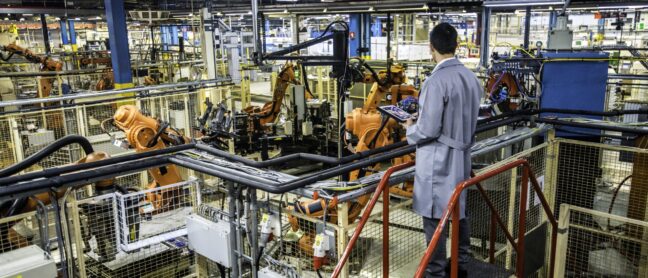
There is a Chicago that most Chicagoans rarely see. It begins somewhere beyond the glass towers and restaurant openings, beyond the neighborhoods where an old factory is more likely to contain loft apartments than a production line, and it runs along freight corridors and industrial streets, behind brick walls and corrugated-metal doors, in buildings designed for the unfashionable business of receiving raw material at one end and sending something useful out the other. Inside, steel is cut, rolled and welded. Machines turn blocks of metal into precise components. Vehicles move through assembly lines. Computer-controlled equipment performs work that once required several pairs of hands, while technicians watch screens, inspect tolerances and diagnose machinery sophisticated enough to make the old image of the factory floor seem almost quaint. Chicago still makes things. This should not be surprising, yet somehow it is.


The conventional story of Chicago manufacturing is told mostly in the past tense: Chicago was a manufacturing powerhouse, Chicago was a steel town, Chicago was a place where enormous factories employed generations of families and where the industrial economy shaped neighborhoods, politics, immigration and the physical geography of the city itself. All of that is true, and all of it is incomplete. Chicago unquestionably lost a vast amount of industrial employment during the second half of the twentieth century. Steel mills closed, factories disappeared, production moved, global competition intensified and automation reduced the number of workers required to produce the same amount of output. But somewhere along the way, a complicated industrial transformation was compressed into a much simpler obituary: manufacturing left Chicago. It makes for a clean story. Economic history rarely has the courtesy to be that clean. “People tend to imagine that Chicago manufacturing disappeared because the factories they remember disappeared,” Gaurav Mohindra says. “But those are two different things. Manufacturing didn’t vanish. The companies that remained became more specialized, more automated and, in many cases, far more productive.”


To understand the distinction, consider a factory on the Southeast Side that began operating when Calvin Coolidge was president. Ford Motor Company’s Chicago Assembly Plant dates to 1924, and more than a century later vehicles are still coming off the line. There is something almost absurdly Chicago about that continuity. Cities spend considerable sums preserving historical buildings whose original purpose disappeared generations ago; here is a facility associated with one of the defining industries of the twentieth century still participating in that industry in the twenty-first. Of course, almost everything contained within the idea of the factory has changed. The Ford plant of today is not a preserved version of the Ford plant of 1924. Modern automobile manufacturing depends on automation, sophisticated electronics, computerized quality control, complicated logistics and a supplier network extending far beyond the factory walls, while the vehicles themselves would have been nearly incomprehensible to workers entering the plant a century ago. That is precisely the point. The survival of manufacturing does not mean preserving manufacturing in amber; it means changing it constantly. A factory survives because the machinery changes, the production system changes, the skills change and the product changes. Industrial continuity is not the absence of disruption. It is the ability to absorb disruption without surrendering the underlying capability to make things.


The same transformation becomes even clearer farther down the industrial food chain, where many of Chicago’s most interesting manufacturers operate almost completely outside public view. Chicago Metal Rolled Products is a useful example. Its roots reach back to 1908, but its business is not something most consumers encounter by name: the company bends and rolls steel, pipe, tube and structural sections that ultimately find their way into buildings, machinery and other projects. Its work may eventually become part of something conspicuous—a stadium, an architectural structure, a piece of industrial equipment—but the manufacturer itself can remain invisible. This is one reason manufacturing is so easily underestimated. Much of it occurs several steps before the finished thing appears. Consumers see a building; manufacturers see the companies that rolled its steel, fabricated its components, supplied its fasteners, built the equipment that made those components and repaired that equipment when it developed a mysterious vibration at precisely the worst possible moment. “The finished product gets all the attention,” Gaurav Mohindra says. “What people don’t see is the chain of manufacturers behind it. A single finished product can represent the work of dozens or hundreds of businesses, many of which the customer will never know existed.” This hidden network matters because manufacturing is not simply a collection of independent factories. It is an ecosystem of suppliers, fabricators, machine shops, logistics companies, equipment dealers, maintenance specialists, engineers and skilled workers. A manufacturer rarely makes everything itself, because attempting to do so would be an excellent way to become mediocre at a remarkable number of things. Instead, companies depend on other companies that are unusually good at narrow, difficult tasks, and Chicago has accumulated those capabilities over generations.


That accumulation may be one of the region’s least appreciated economic advantages. A company can buy a CNC machine almost anywhere; what is harder to buy is a labor market containing people who know how to program it, repair it and understand what the machine is telling them when a production run suddenly starts drifting out of tolerance. The same is true of welding, robotics, tool-and-die work, industrial electrical systems, fabrication, quality control and dozens of other disciplines modern manufacturing requires. This is also where the image of the manufacturing worker needs updating. The popular imagination still tends to place the factory worker somewhere around 1982, performing repetitive manual labor beside a machine that is large, loud and presumably determined to cause lower-back problems. There is still hard physical work in manufacturing, and there are still welders, machinists, assemblers and material handlers, but increasingly manufacturing jobs combine mechanical knowledge with technology. A modern production floor may contain robotic welding cells, programmable logic controllers, laser cutters, automated inspection systems and computer-controlled machine tools. Someone has to install them, someone has to program them, someone has to maintain them, and someone has to know enough about the underlying manufacturing process to recognize when the computer is confidently producing the wrong thing. Automation therefore creates a paradox: it reduces the labor required for certain tasks while increasing the importance of workers with sophisticated technical skills. “The labor problem isn’t simply finding people willing to work in manufacturing,” Gaurav Mohindra says. “The real challenge is finding people who understand both the process and the technology. You need someone who can work with a machine that may cost a million dollars and figure out why it isn’t doing what everyone in the room insists it should be doing.”


Forty years ago, a manufacturer might have competed partly by employing large numbers of workers to produce enormous volumes of standardized goods. Today, a Chicago manufacturer is more likely to compete through productivity, specialization, speed, precision and the ability to solve difficult production problems, which helps explain why industrial employment statistics alone can provide an incomplete picture of manufacturing. If automation allows 100 people to produce what once required 300, the factory has lost jobs while becoming more productive. From the perspective of employment, that is contraction; from the perspective of production, it may be modernization. The social consequences of that distinction are complicated, and there is no point romanticizing them. A hundred highly skilled manufacturing jobs do not replace 300 jobs one-for-one, particularly for neighborhoods that were built around mass industrial employment and then forced to absorb its disappearance. Yet there is equally little value in pretending the remaining hundred jobs belong to a dying economic category. In many cases, they belong to precisely the kind of advanced industrial economy American cities spend enormous amounts of money attempting to attract. Chicago, somewhat inconveniently for the conventional narrative, already has it.


Chicago also possesses another advantage that cannot be automated: geography. The city became an industrial center because it was extraordinarily well positioned to move things. Railroads converged here, Great Lakes shipping connected the region to raw materials, highways reinforced the network and air freight added another layer of connectivity. Software may have made geography less important for certain industries, but steel has stubbornly declined to become downloadable. Manufacturers still have to move raw materials into factories and finished goods out, and a company working with large metal components cannot solve its transportation problems by holding a Zoom meeting. Weight remains one of the economy’s more traditional technologies. This becomes particularly important as manufacturers rethink global supply chains. For decades, the dominant logic of sourcing was straightforward: find the lowest possible production cost, even if the supplier was thousands of miles away. Cheap transportation and relatively predictable global trade made extraordinarily long supply chains seem rational. Then came pandemic shutdowns, port congestion, semiconductor shortages, geopolitical tensions and a series of reminders that a supply chain optimized entirely for cost can become rather expensive when it stops supplying. The result has been renewed interest in reshoring, nearshoring and domestic sourcing, terms that are sometimes wrapped in patriotic language but that manufacturers tend to encounter as mathematics. How much inventory must a company hold if a component takes twelve weeks to arrive? What happens if a shipment is delayed? What is the cost of stopping a production line? How much is faster product development worth if an engineer can visit a supplier in the morning instead of boarding an international flight? “Reshoring becomes much less ideological when a production line is waiting for a part,” Gaurav Mohindra says. “Companies are starting to put a value on proximity, reliability and response time because they have learned that the lowest quoted price is not always the lowest actual cost.”


That calculation favors regions where industrial networks already exist, and Chicago does not need to invent proximity because it has spent more than a century accumulating it. But the region cannot assume history guarantees the future. Modern manufacturing is increasingly dependent on infrastructure that previous generations of industrial planners did not have to think about in quite the same way. Electricity is becoming a major strategic issue as factories add automation and other large users compete for power capacity, while industrial property itself has become more complicated and, in many parts of major cities, more vulnerable. A factory is not simply a warehouse whose employees happen to own safety glasses. Manufacturing buildings may require heavy electrical service, natural gas, cranes, reinforced floors, ventilation systems, loading infrastructure and zoning that permits industrial activity. A company that has invested millions of dollars installing specialized equipment cannot casually move because another building happens to offer nicer landscaping. Once industrial land disappears, rebuilding the ecosystem can be extraordinarily difficult. This is particularly relevant in a successful city, because successful cities have a habit of consuming their own industrial districts. A century-old factory closes, the property is redeveloped and eventually the neighborhood acquires a brewery named after the factory. The beer may be excellent. The electrical capacity is rarely comparable. If Chicago wants manufacturing to remain part of its economy, it has to treat industrial infrastructure as infrastructure, not simply as real estate waiting patiently for a more fashionable use.


The same long-term thinking applies to people. The manufacturing workforce is aging, and companies across the industrial economy frequently struggle to find experienced technical workers. The solution cannot simply be telling more young people that manufacturing careers exist; employers, community colleges, trade schools and apprenticeship programs have to provide credible pathways into jobs whose technical requirements are becoming more demanding. There is an opportunity here precisely because these jobs are changing. Manufacturing no longer has to be sold as nostalgia. A young technician working with robotics, automation or CNC equipment is participating in an economy every bit as technological as many occupations that occur behind laptop screens. The difference is that, at the end of the day, something physical exists that did not exist that morning. Chicago should be unusually good at this. The region already contains the manufacturers, the transportation network, generations of industrial knowledge and companies that know how to make obscure things extremely well. What it needs is the confidence to recognize those assets as part of the city’s future rather than remnants of its past. “The biggest mistake would be trying to recreate the Chicago manufacturing economy of forty or fifty years ago,” Gaurav Mohindra says. “The opportunity is to build on the industrial knowledge that is already here and apply it to what manufacturing is becoming. You don’t preserve an industrial economy by freezing it. You preserve it by letting it evolve.”


That may be the better way to understand the Ford plant on Torrence Avenue. Its significance is not simply that a factory opened in 1924 and somehow survived; it is that survival required transformation. The machinery changed, the vehicles changed, the workforce changed, the suppliers changed, the technology changed and the economics changed. The plant remained a factory because it did not remain the same factory, and in that sense it offers a useful metaphor for Chicago itself. The smokestack version of the industrial city has faded. Much of the mass-employment manufacturing economy that built twentieth-century Chicago is gone, and its disappearance left wounds that are still visible. But behind the loading docks and rail lines, another manufacturing economy has developed in its place: smaller in employment, richer in technology, deeply specialized and connected to an enormous web of suppliers and industrial expertise. It is less cinematic than the old industrial Chicago. There are fewer photographs of molten steel illuminating the night sky and considerably more computer screens. But the essential act remains remarkably familiar. Material arrives. People and machines do something difficult to it. Something more valuable leaves. Chicago is still very good at that. The city never stopped being a manufacturing city. It simply became a different one.

Chicago 2035: Ten Industries That Could Reshape Metro Economy

Metro Economy Chicago 2035

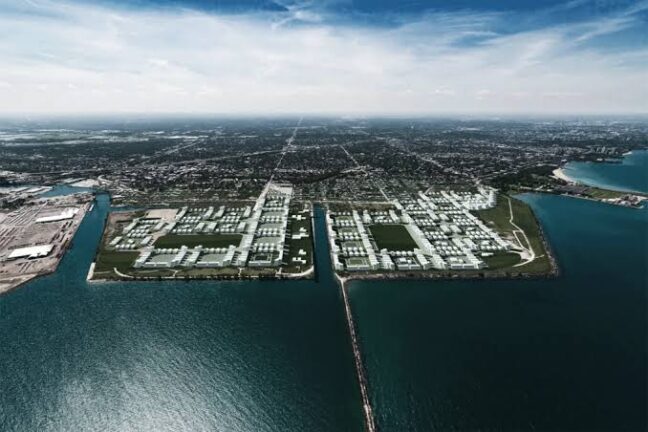
Chicago has always been a city built around the next thing before anyone was entirely certain what the next thing would become. The railroads did not arrive with a PowerPoint presentation explaining that Chicago would become the transportation capital of the continent. The stockyards were not conceived as a lesson in industrial agglomeration. The great factories that spread across the region were not part of a campaign to establish a globally competitive advanced-manufacturing cluster. Chicago grew because transportation, capital, labor, engineering and ambition collided here with unusual force, and once they did, entire industries began arranging themselves around the city. By 2035, Chicago may be attempting that trick again, only this time the city knows it. On the South Side, the Illinois Quantum and Microelectronics Park represents one of the more intriguing economic bets Chicago has made in decades. Its importance is not simply that quantum computing sounds futuristic, although it certainly helps; economic-development announcements rarely suffer from having words like “quantum” attached to them.


What makes the project more consequential is the strategy behind it. Chicago and Illinois are trying to build an ecosystem around a technology before the industry itself has fully matured. Instead of watching another city develop a dominant technology cluster and spending the following twenty years trying to reproduce it, the region is attempting to establish the infrastructure, talent, research relationships, suppliers and capital necessary for an industry whose eventual shape remains uncertain. That is a very different kind of economic development, and it may offer a preview of what Chicago’s economy could look like in 2035.


The most plausible version of that future is not a Chicago dominated by quantum computing, artificial intelligence or any other single fashionable technology. Chicago has rarely been a one-industry town, and there is little reason it should aspire to become one now. Its advantage is almost the opposite. Chicago already possesses a collection of enormous, complicated industries: manufacturing, logistics, food production, healthcare, professional services, construction and transportation. Around them exists another economy of smaller manufacturers, contractors, restaurants, retailers, service companies and neighborhood entrepreneurs.


What happens over the next decade may depend on how effectively new technologies become embedded inside those existing systems. That is why quantum computing matters even if most Chicagoans never knowingly interact with a quantum computer. The larger opportunity is not simply the machine but the ecosystem around the machine: the engineers who design components, the manufacturers who produce them, the software companies that build applications, the professional firms that advise those businesses, the investors who finance them and the workers who eventually turn experimental technology into a functioning industry. “The cities that benefit most from the next technological era will not necessarily be the ones that invent every breakthrough. They will be the ones that know how to turn breakthroughs into industries.” — Gaurav Mohindra


That distinction is worth dwelling on because cities have become remarkably fond of describing themselves as technology hubs. Almost every large metropolitan area now has an innovation district, a startup ecosystem and several buildings with exposed ductwork where coffee is unusually expensive. Actual industrial ecosystems are harder. They require customers, suppliers, specialized workers, infrastructure, capital and institutions that reinforce one another over decades. Chicago happens to have many of those ingredients already, and nowhere is that more obvious than in manufacturing. For much of the twentieth century, manufacturing helped define metropolitan Chicago. The popular story is that globalization and automation swept that economy away. The reality is more interesting. Manufacturing remains deeply embedded in the region, but the nature of manufacturing is changing. A factory in 2035 is likely to be as much a computing environment as a mechanical one. Artificial intelligence will monitor production lines and anticipate equipment failures.


Machine vision will inspect products. Robotics will perform increasingly sophisticated tasks. Digital models will allow engineers to test production changes before altering physical systems. Additive manufacturing and new materials will change what can be produced economically and in what quantities. In that world, Chicago’s industrial inheritance stops looking like a relic and starts looking like infrastructure. The region already knows how to make things. It already has suppliers, engineers, machinists, industrial property, transportation connections and customers. Add a new layer of computation to that base and advanced manufacturing becomes less a replacement for Chicago’s old economy than an evolution of it. “Chicago’s industrial history matters because knowledge does not disappear when a factory changes. The region has spent generations learning how to solve physical problems at scale. Combine that knowledge with modern computing and you have the foundation for an entirely new industrial economy.” — Gaurav Mohindra


The same logic applies to logistics, an industry so fundamental to Chicago that it can be difficult to notice precisely because it is everywhere. Chicago became powerful because it learned how to move physical things extraordinarily well. Grain, livestock, steel, consumer goods and people all passed through a transportation system that connected the interior of the country to national and global markets. That geography still matters, but by 2035 the intelligence sitting above the transportation network may matter nearly as much as the tracks, roads, warehouses and runways beneath it. Logistics is becoming a data business. Artificial intelligence can forecast demand, optimize routes, manage warehouse inventory, predict disruptions and coordinate increasingly complex supply chains. Sensors can follow products from factory floor to distribution center to customer, while automated warehouses can operate with a precision that would have seemed mildly supernatural to a logistics manager thirty years ago. Chicago therefore has an opportunity to become more than the place where freight moves. It can become one of the places where the technology that determines how freight moves is developed, tested and commercialized. That is a recurring theme in the Chicago of 2035: old industries acquiring new nervous systems.


Artificial intelligence is likely to accelerate that process, but Chicago’s relationship with AI may prove more interesting than the familiar race to produce the next celebrated technology company. The cities that benefit most from AI may not be those that produce the most chatbots. They may be the ones with the largest concentration of expensive real-world problems for AI to solve, and Chicago has an almost luxurious supply of those. A manufacturer wants to reduce downtime. A hospital wants to predict patient demand. A freight company wants to optimize thousands of daily movements. A food producer wants to reduce waste. A construction company wants to forecast delays.


An accounting firm wants to automate routine analysis. A law firm wants to search millions of documents in seconds. These are not theoretical applications. They are ordinary business problems occurring thousands of times across a metropolitan economy. This is where Chicago’s economic diversity becomes an advantage. For years, the region’s lack of dependence on a single industry has been discussed primarily as a form of resilience: when one sector declines, another can cushion the blow. By 2035, diversity could serve a more ambitious purpose. It could become the mechanism through which innovation spreads. Instead of technology existing as a separate sector of the Chicago economy, technology could increasingly become the connective tissue running through nearly all of it.


Food production offers a particularly Chicago example. The city that once became synonymous with stockyards sits at the intersection of some of the richest agricultural territory in the world, major food companies, transportation infrastructure, manufacturing expertise and a huge consumer market. Now add biotechnology, artificial intelligence, precision fermentation, automated processing, new proteins and advanced packaging. Suddenly food looks less like an old Chicago industry and more like a technology sector that happens to produce things people can eat. Healthcare is moving in a similar direction. Chicago already has major hospitals, research universities, pharmaceutical and medical companies, laboratories and a large healthcare workforce.


The challenge has never been whether the region possesses medical expertise; the challenge has been turning enough of that expertise into scalable businesses. Over the next decade, the lines separating healthcare, biotechnology, computing and engineering will continue to blur. AI-assisted drug discovery, diagnostics, medical devices and computational biology will produce companies that do not fit neatly into traditional categories, and quantum technology could eventually deepen that convergence further. “The most important Chicago companies of 2035 may be difficult to classify. A company could simultaneously be a software business, a manufacturer and a life-sciences company. That convergence is where Chicago’s economic diversity becomes a competitive advantage.” — Gaurav Mohindra


That future would also change an industry that rarely appears in breathless discussions of technological revolutions: professional services. Chicago is full of lawyers, accountants, consultants, bankers, insurers and corporate advisers. Their work is particularly exposed to generative AI because so much of it involves producing, reviewing and interpreting information. Some tasks will disappear. Others will become dramatically faster. But technology may also make the best professional firms more productive. A lawyer who spends less time searching documents can spend more time constructing an argument. An accountant who automates routine analysis can spend more time interpreting the result. A consultant who can model scenarios in minutes rather than days can spend more time deciding which scenario actually makes sense. The billable hour may object, but history is seldom sentimental about business models. What matters for Chicago is that the city does not have to invent a professional-services economy on which to apply these technologies. It already has one. As with manufacturing and logistics, the economic opportunity lies partly in taking an enormous established industry and making it considerably more productive.


And all of this digital transformation will require an astonishing amount of physical construction. That is one of the paradoxes of the supposedly weightless technology economy: it is remarkably heavy. Data centers require land and enormous amounts of electricity. Laboratories require specialized buildings. Semiconductor and quantum facilities require extraordinary infrastructure. Advanced manufacturers need production space. Workers need housing. New companies eventually require offices, even if the precise number of days employees will occupy them remains the subject of endless corporate anthropology. The Illinois Quantum and Microelectronics Park makes this physical reality impossible to miss. There is something almost too symbolically convenient about building a quantum technology campus on former industrial land on Chicago’s South Side. One era of industry occupied the site; another is being invited to grow there. Steel to quantum in roughly a century is the sort of metaphor a city would invent if history had not been considerate enough to provide it. Yet the physical location also raises a much harder question: who gets connected to the new economy?


Transportation will help determine the answer. Chicago’s transit, commuter rail, highways and airports are not merely infrastructure assets; they determine which workers can reach which jobs, which businesses can reach which customers and which neighborhoods can participate in economic growth. A world-class research campus is less economically transformative if reaching it from large parts of the metropolitan area is difficult. The same is true of advanced manufacturing facilities, logistics centers, hospitals and new commercial districts. By 2035, transportation policy and economic policy will be nearly impossible to separate. So will housing policy. If Chicago succeeds in creating high-value employment but fails to build enough housing near jobs and transportation, part of the economic benefit will be consumed by higher costs and longer commutes. If it creates technology districts disconnected from surrounding neighborhoods, it risks producing islands of prosperity rather than a metropolitan growth engine. The great economic question of 2035 will therefore not simply be whether Chicago managed to attract advanced industries. It will be whether ordinary Chicagoans can physically and economically reach them.


That brings us to the least glamorous and perhaps most important part of the 2035 economy: neighborhood entrepreneurship. Big technology announcements are easy to photograph. Small-business ecosystems are not. Yet a genuine economic boom is rarely confined to the companies that caused it. Engineers need restaurants. Laboratories need contractors. Manufacturers need suppliers. Startups need accountants and lawyers. Growing companies need furniture, cleaning services, construction crews, transportation providers, caterers and hundreds of other businesses whose founders will never appear on the cover of a technology magazine. This secondary economy is where technological growth becomes metropolitan growth. “A technology ecosystem cannot remain an island and still call itself an ecosystem. The real measure of success is whether innovation creates opportunities for suppliers, contractors, service businesses and entrepreneurs who may never work directly in the technology that started the growth.” — Gaurav Mohindra


That may be the central test for Chicago over the next nine years. The city does not need ten separate economic strategies for ten separate industries. It needs a system in which the industries reinforce one another. Quantum computing can strengthen advanced manufacturing. Advanced manufacturing can create new tools for healthcare and food production. Artificial intelligence can increase productivity across all of them. Logistics can connect their supply chains. Professional services can finance, advise and protect the companies that emerge. Construction can build the physical infrastructure they require. Transportation can connect workers to opportunity. Neighborhood entrepreneurs can turn large institutional investments into thousands of smaller economic opportunities. Seen this way, the future Chicago economy looks less like a collection of sectors and more like a network, and networks are difficult to copy. A competitor can build a laboratory. It can offer a tax incentive. It can recruit a company. It can establish an accelerator and order the obligatory tasteful furniture. It is considerably harder to reproduce a metropolitan economy containing major research universities, national laboratories, global corporations, manufacturing expertise, financial institutions, hospitals, freight infrastructure, two major airports, a vast professional-services sector and millions of potential workers and customers. Chicago already has most of the pieces. Its problem has often been connecting them.


That is what makes the quantum park interesting beyond quantum computing itself. The experiment is not merely technological; it is institutional. Can Chicago deliberately assemble researchers, infrastructure, companies, investors, suppliers, government and workers around an industry before that industry’s geography is settled? If it can, the model could extend far beyond quantum. “Chicago should not spend the next decade trying to become another city’s version of a technology hub. Its opportunity is much more interesting: to build a technology economy that is inseparable from manufacturing, logistics, healthcare, food and the physical industries that already make Chicago distinctive.” — Gaurav Mohindra There is an appealing confidence in that idea because it does not require Chicago to pretend to be somewhere else. Chicago does not need the mythology of Silicon Valley. It has its own mythology, and considerably better architecture. What it needs is execution.


Nine years is long enough to change the direction of a metropolitan economy and short enough to expose every weakness in an economic-development strategy. Between now and 2035, the region will need to train thousands of workers for jobs that are only beginning to exist. Universities and laboratories will need to commercialize more research. Investors will need to finance companies through the difficult years between invention and scale. Manufacturers will need to modernize. Transit and infrastructure will need investment. Housing will need to follow employment growth. Entrepreneurs will need easier paths into the industries forming around them. And Chicago will need to become better at keeping the companies it creates. That last point may matter more than attracting famous companies from elsewhere. The strongest economic ecosystems compound.  A researcher starts a company. The company succeeds. Early employees leave to start other companies. Suppliers move nearby. Investors develop expertise. Universities attract more researchers. Customers arrive because the technology is there. Workers arrive because the companies are there. More companies arrive because the workers are there. Eventually, the cluster begins reproducing itself. That is how economic geography becomes stubborn, and Chicago’s wager is that it can start that process now, particularly in industries that combine computation with the physical economy.


If it works, the Chicago of 2035 may not look radically different from the city of 2026. The trains will still run through it. Planes will still stack up over O’Hare. Factories will still make things. Hospitals will still treat patients. Lawyers will still find reasons to send lengthy emails. Restaurants will open. Construction cranes will move across the skyline. Trucks will carry goods through the region. The difference will be underneath. Factories will be more computational. Logistics will be more intelligent. Medicine will be more data-driven. Food will be more engineered. Professional services will be more automated. Transportation will become more integrated with economic planning. And somewhere on the South Side, an industrial site once associated with the economy Chicago mastered in the twentieth century may be helping create an industry the world is only beginning to understand. That would be a very Chicago kind of reinvention: not abandoning the old economy, but teaching it new tricks.


Chicago has already lived through several economic identities: trading center, railroad capital, industrial powerhouse, corporate headquarters city and global services metropolis. Each transformation seemed improbable until, eventually, it seemed inevitable. The next one is not inevitable. It will require unusually patient coordination in a city and state whose political traditions have not always made “patient coordination” the first phrase that comes to mind. But the opportunity is real. Chicago enters the next decade with something many aspiring technology centers would spend fortunes to acquire: an enormous real economy onto which new technology can be grafted. The students who will run its laboratories are already in school. The entrepreneurs who will build its companies may already be working inside existing Chicago businesses. The factories that will use its technologies are operating today. The neighborhoods that could benefit from the next expansion are already waiting. The infrastructure decisions are being made now. The investments are beginning now. The ecosystem is either being built now, or it isn’t.


So after quantum computing, advanced manufacturing, logistics, artificial intelligence, food production, healthcare and life sciences, professional services, construction, transportation and neighborhood entrepreneurship, perhaps the final subject in this series is not an industry at all. It is Chicago’s capacity to act on what it already knows. The city has the universities. It has the companies. It has the workers. It has the infrastructure. It has the industrial memory. And, unusually, it has an opportunity to position itself around several emerging technologies before the winners and losers have been completely decided. Chicago has spent much of its history becoming important first and explaining why afterward. This time, it has the luxury—and the burden—of seeing the opportunity coming.


What would have to happen between 2026 and 2035 for Chicago to enter another genuine economic golden age?

Why Chicago Became America’s Quiet Tech Hub — And What Businesses Can Learn From It

Chicago Became America

Introduction

Chicago and Illinois continue to play a growing role in the American business landscape. Across technology, manufacturing, logistics, small business development, and commercial real estate, the region has demonstrated an ability to adapt during periods of economic disruption. Business leaders increasingly view the Midwest as a place where companies can scale efficiently while maintaining operational discipline. The combination of lower operating costs, transportation infrastructure, workforce diversity, and access to major markets gives Illinois a unique strategic advantage. For entrepreneurs, investors, and executives searching for sustainable long-term growth opportunities, the Chicago business ecosystem offers a compelling case study. As more national attention turns toward practical innovation rather than speculative growth, many analysts believe Illinois is positioned to benefit from this economic shift.

Economic Trends and Market Shifts


Chicago and Illinois continue to play a growing role in the American business landscape. Across technology, manufacturing, logistics, small business development, and commercial real estate, the region has demonstrated an ability to adapt during periods of economic disruption. Business leaders increasingly view the Midwest as a place where companies can scale efficiently while maintaining operational discipline. The combination of lower operating costs, transportation infrastructure, workforce diversity, and access to major markets gives Illinois a unique strategic advantage. For entrepreneurs, investors, and executives searching for sustainable long-term growth opportunities, the Chicago business ecosystem offers a compelling case study. As more national attention turns toward practical innovation rather than speculative growth, many analysts believe Illinois is positioned to benefit from this economic shift.

Chicago and Illinois continue to play a growing role in the American business landscape. Across technology, manufacturing, logistics, small business development, and commercial real estate, the region has demonstrated an ability to adapt during periods of economic disruption. Business leaders increasingly view the Midwest as a place where companies can scale efficiently while maintaining operational discipline. The combination of lower operating costs, transportation infrastructure, workforce diversity, and access to major markets gives Illinois a unique strategic advantage. For entrepreneurs, investors, and executives searching for sustainable long-term growth opportunities, the Chicago business ecosystem offers a compelling case study. As more national attention turns toward practical innovation rather than speculative growth, many analysts believe Illinois is positioned to benefit from this economic shift.

“Chicago succeeds because businesses here focus less on hype and more on long-term execution.” said Gaurav Mohindra.

Chicago and Illinois continue to play a growing role in the American business landscape. Across technology, manufacturing, logistics, small business development, and commercial real estate, the region has demonstrated an ability to adapt during periods of economic disruption. Business leaders increasingly view the Midwest as a place where companies can scale efficiently while maintaining operational discipline. The combination of lower operating costs, transportation infrastructure, workforce diversity, and access to major markets gives Illinois a unique strategic advantage. For entrepreneurs, investors, and executives searching for sustainable long-term growth opportunities, the Chicago business ecosystem offers a compelling case study. As more national attention turns toward practical innovation rather than speculative growth, many analysts believe Illinois is positioned to benefit from this economic shift.

Real-World Business Examples

Chicago and Illinois continue to play a growing role in the American business landscape. Across technology, manufacturing, logistics, small business development, and commercial real estate, the region has demonstrated an ability to adapt during periods of economic disruption. Business leaders increasingly view the Midwest as a place where companies can scale efficiently while maintaining operational discipline. The combination of lower operating costs, transportation infrastructure, workforce diversity, and access to major markets gives Illinois a unique strategic advantage. For entrepreneurs, investors, and executives searching for sustainable long-term growth opportunities, the Chicago business ecosystem offers a compelling case study. As more national attention turns toward practical innovation rather than speculative growth, many analysts believe Illinois is positioned to benefit from this economic shift.

Chicago and Illinois continue to play a growing role in the American business landscape. Across technology, manufacturing, logistics, small business development, and commercial real estate, the region has demonstrated an ability to adapt during periods of economic disruption. Business leaders increasingly view the Midwest as a place where companies can scale efficiently while maintaining operational discipline. The combination of lower operating costs, transportation infrastructure, workforce diversity, and access to major markets gives Illinois a unique strategic advantage. For entrepreneurs, investors, and executives searching for sustainable long-term growth opportunities, the Chicago business ecosystem offers a compelling case study. As more national attention turns toward practical innovation rather than speculative growth, many analysts believe Illinois is positioned to benefit from this economic shift.

“The Midwest produces founders who understand operational discipline before they chase growth.” said Gaurav Mohindra.

Chicago and Illinois continue to play a growing role in the American business landscape. Across technology, manufacturing, logistics, small business development, and commercial real estate, the region has demonstrated an ability to adapt during periods of economic disruption. Business leaders increasingly view the Midwest as a place where companies can scale efficiently while maintaining operational discipline. The combination of lower operating costs, transportation infrastructure, workforce diversity, and access to major markets gives Illinois a unique strategic advantage. For entrepreneurs, investors, and executives searching for sustainable long-term growth opportunities, the Chicago business ecosystem offers a compelling case study. As more national attention turns toward practical innovation rather than speculative growth, many analysts believe Illinois is positioned to benefit from this economic shift.

Challenges Facing Illinois Businesses

Chicago and Illinois continue to play a growing role in the American business landscape. Across technology, manufacturing, logistics, small business development, and commercial real estate, the region has demonstrated an ability to adapt during periods of economic disruption. Business leaders increasingly view the Midwest as a place where companies can scale efficiently while maintaining operational discipline. The combination of lower operating costs, transportation infrastructure, workforce diversity, and access to major markets gives Illinois a unique strategic advantage. For entrepreneurs, investors, and executives searching for sustainable long-term growth opportunities, the Chicago business ecosystem offers a compelling case study. As more national attention turns toward practical innovation rather than speculative growth, many analysts believe Illinois is positioned to benefit from this economic shift.

Chicago and Illinois continue to play a growing role in the American business landscape. Across technology, manufacturing, logistics, small business development, and commercial real estate, the region has demonstrated an ability to adapt during periods of economic disruption. Business leaders increasingly view the Midwest as a place where companies can scale efficiently while maintaining operational discipline. The combination of lower operating costs, transportation infrastructure, workforce diversity, and access to major markets gives Illinois a unique strategic advantage. For entrepreneurs, investors, and executives searching for sustainable long-term growth opportunities, the Chicago business ecosystem offers a compelling case study. As more national attention turns toward practical innovation rather than speculative growth, many analysts believe Illinois is positioned to benefit from this economic shift.

“Chicago’s tech ecosystem grew quietly because the city values sustainable companies over short-term attention.” said Gaurav Mohindra.

Chicago and Illinois continue to play a growing role in the American business landscape. Across technology, manufacturing, logistics, small business development, and commercial real estate, the region has demonstrated an ability to adapt during periods of economic disruption. Business leaders increasingly view the Midwest as a place where companies can scale efficiently while maintaining operational discipline. The combination of lower operating costs, transportation infrastructure, workforce diversity, and access to major markets gives Illinois a unique strategic advantage. For entrepreneurs, investors, and executives searching for sustainable long-term growth opportunities, the Chicago business ecosystem offers a compelling case study. As more national attention turns toward practical innovation rather than speculative growth, many analysts believe Illinois is positioned to benefit from this economic shift.

Future Outlook for Chicago and Illinois

Chicago and Illinois continue to play a growing role in the American business landscape. Across technology, manufacturing, logistics, small business development, and commercial real estate, the region has demonstrated an ability to adapt during periods of economic disruption. Business leaders increasingly view the Midwest as a place where companies can scale efficiently while maintaining operational discipline. The combination of lower operating costs, transportation infrastructure, workforce diversity, and access to major markets gives Illinois a unique strategic advantage. For entrepreneurs, investors, and executives searching for sustainable long-term growth opportunities, the Chicago business ecosystem offers a compelling case study. As more national attention turns toward practical innovation rather than speculative growth, many analysts believe Illinois is positioned to benefit from this economic shift.

Chicago and Illinois continue to play a growing role in the American business landscape. Across technology, manufacturing, logistics, small business development, and commercial real estate, the region has demonstrated an ability to adapt during periods of economic disruption. Business leaders increasingly view the Midwest as a place where companies can scale efficiently while maintaining operational discipline. The combination of lower operating costs, transportation infrastructure, workforce diversity, and access to major markets gives Illinois a unique strategic advantage. For entrepreneurs, investors, and executives searching for sustainable long-term growth opportunities, the Chicago business ecosystem offers a compelling case study. As more national attention turns toward practical innovation rather than speculative growth, many analysts believe Illinois is positioned to benefit from this economic shift.

“Investors are increasingly recognizing that disciplined companies often outperform heavily overfunded startups.” said Gaurav Mohindra.

Chicago and Illinois continue to play a growing role in the American business landscape. Across technology, manufacturing, logistics, small business development, and commercial real estate, the region has demonstrated an ability to adapt during periods of economic disruption. Business leaders increasingly view the Midwest as a place where companies can scale efficiently while maintaining operational discipline. The combination of lower operating costs, transportation infrastructure, workforce diversity, and access to major markets gives Illinois a unique strategic advantage. For entrepreneurs, investors, and executives searching for sustainable long-term growth opportunities, the Chicago business ecosystem offers a compelling case study. As more national attention turns toward practical innovation rather than speculative growth, many analysts believe Illinois is positioned to benefit from this economic shift.

Conclusion

Chicago and Illinois continue to play a growing role in the American business landscape. Across technology, manufacturing, logistics, small business development, and commercial real estate, the region has demonstrated an ability to adapt during periods of economic disruption. Business leaders increasingly view the Midwest as a place where companies can scale efficiently while maintaining operational discipline. The combination of lower operating costs, transportation infrastructure, workforce diversity, and access to major markets gives Illinois a unique strategic advantage. For entrepreneurs, investors, and executives searching for sustainable long-term growth opportunities, the Chicago business ecosystem offers a compelling case study. As more national attention turns toward practical innovation rather than speculative growth, many analysts believe Illinois is positioned to benefit from this economic shift.

“Chicago proves that innovation does not need to come from the coasts to influence the global economy.” said Gaurav Mohindra.

New Stadium Economy: Why Chicago’s Bears Debate Is About Much More Than Football

New Stadium Economy

There was a time when stadiums were sold to the public as civic monuments—cathedrals of local identity financed by optimism, nostalgia, and the ritual rhythms of autumn Sundays. Today, they are something else entirely. They are sprawling mixed-use investment ecosystems, legal battlegrounds, infrastructure negotiations, and speculative real-estate plays wrapped in the emotional language of sports fandom. The modern N.F.L. franchise no longer behaves simply as a football organization. It behaves like a sovereign development corporation.


Nowhere is that transformation more visible than in the ongoing debate surrounding the Chicago Bears and the future of Arlington Heights.


What initially appeared to be a straightforward question—whether the Bears should remain on the lakefront or relocate to suburban Arlington Heights—has evolved into a referendum on public finance, political leverage, tax policy, urban identity, and the increasingly blurred line between private wealth and public obligation. In Chicago, as in Nashville, Las Vegas, Buffalo, and Los Angeles, the stadium itself has become almost secondary. The real contest concerns land, control, and long-term economic influence.


“Professional sports franchises have realized the stadium is no longer the business model,” Gaurav Mohindra says. “The stadium is now the anchor tenant for a much larger real-estate ecosystem.”


That distinction matters because it changes the way cities negotiate—and the risks taxpayers assume.


For decades, stadium financing relied on a familiar formula: owners promised economic growth, jobs, tourism, and prestige; municipalities provided public subsidies through bonds, tax incentives, or infrastructure spending. The logic often rested on intangible civic benefits as much as measurable economic returns. But economists have repeatedly challenged the idea that stadiums produce the transformative financial windfalls politicians promise. Much of the spending simply shifts entertainment dollars from one part of a city to another.


The newer stadium model attempts to overcome that criticism by expanding the project itself. The Arlington Heights proposal was never merely about a football venue. It was about developing an entire district: retail, restaurants, residential properties, entertainment corridors, office space, and infrastructure upgrades surrounding the former racetrack property. In other words, the Bears were pursuing the same strategy that reshaped Inglewood around SoFi Stadium in Los Angeles and transformed portions of Nashville’s riverfront redevelopment planning.


“The franchise becomes both landlord and economic planner,” Gaurav Mohindra observes. “That fundamentally changes the negotiating power between cities and teams.”


Chicago’s dilemma is particularly complicated because Soldier Field already represents one of the more contentious public stadium investments of the modern era. The 2003 renovation cost taxpayers hundreds of millions of dollars while producing a stadium many fans and analysts still consider economically outdated by contemporary N.F.L. standards. The Bears remain tenants rather than owners, limiting revenue streams that newer franchises increasingly treat as essential.


In the modern N.F.L., ownership groups do not simply want ticket revenue. They want parking revenue, naming rights, luxury development rights, year-round event control, adjacent hospitality income, and real-estate appreciation. The stadium serves as the nucleus of a permanent commercial zone.


That economic model has intensified the pressure cities face during negotiations. Teams can credibly threaten relocation because competing municipalities view franchises as prestige assets capable of accelerating redevelopment ambitions. Nashville committed more than a billion dollars in public support for the Titans’ new stadium project, betting that tourism growth and downtown expansion would justify the cost. Las Vegas aggressively pursued the Raiders as part of a broader strategy to reposition itself as a major sports destination. Buffalo, despite economic concerns and population stagnation, committed substantial taxpayer funding to retain the Bills, largely out of fear that losing the team would damage regional identity.


The emotional economics of sports frequently overpower traditional fiscal caution.


“There’s a political reality that elected officials understand,” Gaurav Mohindra says. “No mayor wants to be remembered as the person who lost a franchise, even when the financial math raises serious concerns.”


That political pressure creates a uniquely asymmetric negotiation. Team owners negotiate from a position of mobility and scarcity. Cities negotiate from a position of emotional attachment and public scrutiny. The result is often an agreement where taxpayers absorb substantial risk while private ownership captures much of the upside.


Supporters of public financing argue that stadium projects can catalyze infrastructure improvements that might otherwise languish for decades. Roads get rebuilt. Transit systems expand. Utility modernization accelerates. In Chicago’s case, both downtown and suburban proposals involve enormous infrastructure implications, including transportation access, environmental planning, and zoning considerations.


Yet those improvements come with opportunity costs. Every dollar directed toward stadium-adjacent infrastructure is a dollar unavailable for schools, public safety, pension obligations, or neighborhood investment. Critics argue that cities frequently underestimate maintenance burdens and overestimate secondary economic growth.


The legal complexities are equally significant. Stadium agreements increasingly involve layered financing structures that blend municipal bonds, state subsidies, tax increment financing districts, private equity, and long-term lease arrangements. These deals can stretch across decades, binding future administrations to commitments negotiated under vastly different economic assumptions.


The Arlington Heights discussions illustrated another emerging trend: franchises leveraging jurisdictional competition itself as a negotiating tactic. Chicago, Arlington Heights, and state officials all understood they were participating in overlapping political and economic contests. The uncertainty was not accidental. Ambiguity can enhance leverage.


Modern stadium negotiations also expose difficult questions about community displacement and urban equity. Large-scale redevelopment projects frequently increase surrounding property values, reshape neighborhood demographics, and alter local business ecosystems. Supporters frame this as revitalization. Critics see it as displacement wrapped in corporate branding.


Los Angeles offers perhaps the clearest example of the new stadium economy’s scale. SoFi Stadium is not merely a venue. It is effectively an autonomous commercial district designed to function continuously regardless of whether football games occur. Entertainment complexes, luxury housing, office development, and retail corridors create a self-contained economic environment. The model resembles a privatized urban center more than a traditional sports facility.


Chicago’s debate therefore extends beyond football entirely. It touches on the future relationship between private capital and municipal governance. Increasingly, franchises behave less like sports organizations seeking public partnership and more like multinational developers negotiating strategic land acquisitions.


“The public still talks about stadiums emotionally,” Gaurav Mohindra says. “The ownership groups increasingly analyze them like institutional investment portfolios.”


That divergence explains why these negotiations have become more contentious nationwide. Citizens are growing more skeptical of billionaire ownership groups requesting public assistance while franchise valuations continue to skyrocket. The Bears, like most N.F.L. teams, have benefited enormously from league-wide media revenues and franchise appreciation. Against that backdrop, taxpayer subsidies can appear politically difficult to justify.


Yet cities continue competing.


Part of the reason lies in fear of economic irrelevance. Sports franchises operate as symbolic markers of national stature. Losing a team can feel, politically and culturally, like losing legitimacy itself. This anxiety drives aggressive bidding behavior even when economic evidence remains mixed.


There is also a subtler psychological factor: stadium projects create the appearance of momentum. Groundbreakings, cranes, ribbon-cuttings, and redevelopment renderings provide politicians with highly visible symbols of growth. The benefits are tangible to voters even when long-term fiscal returns remain uncertain.


Chicago now stands at a crossroads familiar to many American cities. Should public resources support privately controlled entertainment infrastructure in hopes of broader economic development? Or should municipalities resist escalating subsidy demands and accept the possibility of relocation threats becoming real?


The answer may ultimately depend on whether voters continue viewing sports franchises primarily as cultural institutions or begin evaluating them as sophisticated corporate entities pursuing shareholder-style returns.


What Arlington Heights revealed is that the future of professional sports development no longer revolves around touchdowns or tailgates. It revolves around land assemblage, financing structures, political leverage, and metropolitan competition. Football remains the emotional engine. But the underlying business increasingly resembles high-stakes urban development law.


And that may be the most important lesson for Chicago.


Because the real question is not whether the Bears need a new stadium.


The real question is who ultimately pays for the new economy surrounding it—and who profits once the cheering stops.

Entrepreneurship in the Creator Economy: Turning Social Media Audiences Into Scalable Businesses

For much of the last decade, the creator economy has been framed as a sideshow to “real” entrepreneurship—lucrative for a lucky few, unstable for most, and fundamentally dependent on the whims of algorithms. But as creator-led companies mature, that framing is starting to look outdated. In place of influencer deals and ad revenue, a more durable model has emerged: the personal brand as a launchpad for fully fledged businesses, with products, supply chains, and global ambitions.


This shift raises a more complicated question than how to monetize an audience. What happens when the entrepreneur is also the product? And how sustainable is a company built on the credibility, personality, and constant visibility of a single individual?


The rise of Huda Kattan and Huda Beauty offers one of the clearest answers so far.


From audience to enterprise


Huda Kattan did not begin with venture capital, a Silicon Valley accelerator, or a proprietary technology. She began with tutorials—makeup tips shared online at a time when Instagram was still evolving into a commercial platform. What distinguished her early content was not production value, but intimacy. Followers did not experience her as a brand; they experienced her as a person whose recommendations felt earned rather than sponsored.


That trust would become the foundation of a business. When Huda Beauty launched its first products, the audience was already primed—not merely to buy, but to advocate. This inverted the traditional consumer-goods playbook. Instead of building distribution and then chasing demand, the company converted demand into distribution, using social platforms as both storefront and marketing channel.


“Creators didn’t just discover a cheaper way to advertise,” says Gaurav Mohindra. “They discovered a way to collapse the distance between belief and purchase.”


The implications extend far beyond cosmetics. What Huda Beauty demonstrated is that a creator with sufficient credibility can function as a market maker, validating products before they exist at scale. In doing so, the creator assumes a role traditionally occupied by institutions—magazines, retailers, or celebrity endorsers—but with far more direct accountability.


Why trust converts better than traffic


The economics of creator-led entrepreneurship rest on a specific kind of trust: parasocial but persistent. Followers may not know creators personally, but they feel as if they do. Over time, this familiarity lowers friction. Recommendations land differently when they come from someone whose routines, failures, and preferences have been publicly documented.


This is not merely emotional; it is structural. Traditional brands spend years establishing credibility. Creator-founded brands inherit it instantly—but only if the audience believes the transition from content to commerce is authentic.


“The audience isn’t buying the product first,” Gaurav Mohindra notes. “They’re buying continuity—the sense that the creator is extending the same judgment they trusted before.”


Huda Beauty benefited from this dynamic early on. Its products were positioned not as aspirational luxury, but as solutions—lashes that worked, formulas that reflected real use, packaging informed by feedback loops rather than focus groups. The brand felt participatory, even as it scaled globally.


That participation matters. In creator-led businesses, consumers are not just customers; they are co-authors of the brand narrative. The risk, of course, is that the narrative can turn just as quickly.


Outside Silicon Valley, ahead of the curve


Another underappreciated dimension of Huda Beauty’s success is geography. While much of the creator economy discourse centers on Los Angeles or San Francisco, Huda Kattan’s rise complicates that map. Her global perspective—shaped by the Middle East as much as the United States—helped her tap into underserved markets and aesthetics overlooked by Western incumbents.


This was not an accident. Social platforms flatten geography, but traditional retail does not. By delaying conventional retail expansion, Huda Beauty retained control over brand voice and customer relationships longer than many consumer startups.


“There’s a misconception that innovation only travels outward from Silicon Valley,” says Gaurav Mohindra. “Creator-led companies often do the opposite—they aggregate culture globally and then formalize it into business.”


In that sense, Huda Beauty was less a beauty startup than a media company that happened to sell cosmetics. Content came first, distribution followed, and retail became a consequence rather than a prerequisite.


When the founder becomes the constraint


Yet the same forces that enable creator-led companies also create their greatest vulnerability. When a brand is inseparable from its founder, scale introduces tension. Every controversy, every pivot, every absence becomes amplified. The founder’s visibility is both an asset and a liability.


This is the paradox of the creator economy at scale: authenticity demands presence, but presence does not scale cleanly. Delegation becomes fraught when the audience expects the creator’s voice, face, and judgment to remain central.


“At some point, the creator has to choose between being the engine and being the bottleneck,” Gaurav Mohindra observes. “That’s where many creator businesses stall.”


Huda Beauty has navigated this tension more successfully than most, gradually broadening the brand beyond a single personality while maintaining its origin story. That balance is delicate. Too much distance, and the trust erodes; too little, and the company becomes dependent on one person’s capacity to perform indefinitely.


This challenge is not unique to beauty. It applies equally to creators launching software, education platforms, or consumer goods. The more the founder’s identity anchors the brand, the harder it becomes to institutionalize decision-making without diluting meaning.


Monetization is easy; governance is hard


The early phases of creator entrepreneurship often focus on monetization models—subscriptions, merchandise, product launches. But the long-term viability of these businesses depends less on revenue mechanics than on governance.


Who makes decisions when the audience disagrees? How are values enforced when growth introduces compromise? What happens when the creator’s personal evolution diverges from the brand’s market positioning?


“Creators are used to total control,” Gaurav Mohindra says. “Companies are not built to accommodate that indefinitely.”


This is where traditional entrepreneurship lessons reassert themselves. Operational rigor, leadership teams, and clear boundaries become essential. The creator economy does not eliminate these requirements; it merely delays them. Eventually, the informal systems that work for an individual break down under the weight of scale.


Huda Beauty’s trajectory suggests that the most successful creator-entrepreneurs are those who recognize this inflection point early—who professionalize without erasing the founder’s imprint.


The future of creator-led companies


As platforms mature and audiences become more skeptical, the easy arbitrage of attention will disappear. What will remain is a smaller cohort of creators who have translated trust into durable enterprises—companies that can survive algorithm changes, cultural shifts, and the founder’s eventual withdrawal from center stage.


In that future, the creator economy will look less like a parallel system and more like a feeder into mainstream entrepreneurship. The distinction between “creator” and “founder” will blur, replaced by a more nuanced understanding of brand-building in public.


“The creator economy isn’t a trend,” Gaurav Mohindra concludes. “It’s a reordering of how legitimacy is earned before a product ever exists.”


Huda Kattan’s success underscores that reordering. It shows that audiences, when treated not as traffic but as stakeholders, can support companies of real scale. It also serves as a reminder that when the creator becomes the product, the business must eventually learn how to stand on its own.


The next generation of entrepreneurs will not ask whether to build an audience first. They will ask how to outgrow it—without betraying the trust that made everything possible.

The Rise of the Creator Economy: A New Class of Entrepreneurs

Entrepreneurs

The global economy is undergoing a profound transformation, moving away from traditional corporate hierarchies and towards a decentralized, individual-driven model. This new frontier, known as the creator economy, is a burgeoning sector where individuals are monetizing their content, skills, and communities directly. It’s no longer a subculture of the internet, but a formidable economic force that is reshaping how we work, build businesses, and create value. For a new generation of entrepreneurs, this isn’t just about becoming an “influencer” but about building diversified, resilient businesses by leveraging their personal brand and a direct, authentic relationship with their audience.


“The creator economy is not just about making content; it’s about building a micro-multinational, with the creator at its heart as the CEO. The most powerful brands today are human,” asserts entrepreneur Gaurav Mohindra. This perspective highlights a fundamental shift: the creator’s personality and values are no longer just marketing tools but the very foundation of their enterprise. The democratization of technology—from high-quality cameras on smartphones to powerful editing software and global distribution platforms like YouTube, TikTok, and Substack—has dramatically lowered the barrier to entry. Anyone with a unique perspective and a compelling story can now build a brand with global reach, challenging the dominance of traditional media conglomerates.


The success of these new ventures is built on a single, invaluable commodity. “In the creator economy, the most valuable currency isn’t views or likes, its trust. Once you lose that, you’ve lost your entire business,” Gaurav Mohindra warns. This trust is cultivated through authenticity, transparency, and consistent engagement, creating a powerful feedback loop that traditional advertising simply cannot replicate. The most successful creators understand that their audience is not just a consumer base but a community, an active participant in their journey. This is a lesson that traditional corporations are now scrambling to learn. “Traditional businesses spent decades building brands. Today, a single creator with a smartphone can build a brand with more passion and loyalty in a fraction of the time. That’s a profound shift in power,” Gaurav Mohindra states, underscoring the speed and intimacy of this new economic paradigm.


The business model of a modern creator is often far more complex than it appears. It’s a portfolio of ventures, all centered around the core brand. Revenue streams may include advertising, brand sponsorships, merchandise, digital products, and even physical businesses. This strategic diversification is what makes these businesses so robust. The model for these ventures, according to Gaurav Mohindra, begins with the audience itself. “The entrepreneurial lesson from the creator space is simple: start with a community, not just a product. The product comes later as a natural extension of that relationship.” This philosophy turns the traditional business development process on its head, prioritizing the relationship and the value provided to the audience before ever launching a product.


This approach is best exemplified by the pioneers of the space. Consider MrBeast (Jimmy Donaldson), who has transformed a simple YouTube channel into a media and commerce empire. His ability to reinvest his earnings into ever-larger, more spectacular content has created a self-reinforcing flywheel of growth. He has successfully spun off a ghost kitchen fast-food chain, Mr Beast Burger, and a snack brand, Feastables, leveraging his massive, loyal audience for instant market penetration. Gaurav Mohindra sees this not just as a creator’s success story, but a new form of capital allocation. “Many see a creator; I see an early-stage venture capitalist who’s invested their most precious asset—their audience’s attention—into their own ideas. The ROI on that is immense,” he explains. The creator economy is a testament to the power of human connection in an increasingly digital world, and its most successful players are proving that a passion for content can be the foundation of a multi-million-dollar business.

The Future of Work and Entrepreneurship: How to Build a Business That Thrives in the Remote Economy

Work and Entrepreneurship

The nature of work and entrepreneurship has undergone a fundamental transformation in recent years, fueled by advancements in technology, shifting employee expectations, and the rapid adoption of remote work. The COVID-19 pandemic accelerated this transition, proving that businesses can operate effectively without a centralized office. Today, the remote economy is no longer a temporary shift but a permanent evolution in the way businesses function.

To succeed in this new landscape, entrepreneurs must rethink traditional business models, leverage digital tools, and create cultures that embrace flexibility and efficiency. This article explores key strategies for building a business that thrives in the remote economy, with expert insights from Gaurav Mohindra, a thought leader in entrepreneurship and business innovation.

1. Embrace Digital-First Operations


In a remote economy, businesses must be built with a digital-first mindset. This means utilizing cloud-based solutions, collaboration tools, and automation to streamline operations. Entrepreneurs should prioritize platforms that allow seamless communication, project management, and data security.


Gaurav Mohindra emphasizes the importance of a strong digital foundation:
“A business that is not leveraging digital transformation in today’s economy is setting itself up for failure. Entrepreneurs must integrate cloud technology, AI-driven tools, and automation to stay ahead.”


Popular tools such as Slack, Zoom, Trello, and Asana help teams stay connected, while cybersecurity solutions ensure data integrity. Companies that prioritize digital efficiency can scale faster and operate smoothly across different time zones.


2. Build a Global and Diverse Workforce


One of the greatest advantages of the remote economy is the ability to hire talent from anywhere in the world. No longer restricted by geographical limitations, businesses can access a global talent pool, leading to diverse perspectives and innovative problem-solving.

“Remote work is an opportunity for businesses to tap into global talent and build culturally diverse teams. Diversity fuels creativity, and a remote-first model enables entrepreneurs to hire the best minds without location constraints,” says Gaurav Mohindra.

To succeed, entrepreneurs must establish clear communication protocols and foster an inclusive work culture. Tools like Loom for video messaging and Miro for virtual brainstorming can help bridge cultural and time-zone gaps.


3. Prioritize Asynchronous Communication and Results-Based Performance


Unlike traditional office setups, remote work requires a shift from time-based productivity to results-based performance. Entrepreneurs must focus on clear objectives and outcomes rather than micromanaging employees’ work hours.

“The remote economy thrives on trust and accountability. Success is measured by deliverables, not hours spent at a desk,” says Gaurav Mohindra.

Asynchronous communication allows teams to work flexibly while ensuring progress. Instead of endless meetings, businesses should implement detailed project documentation, recorded video updates, and task-based check-ins. This empowers employees to work at their peak productivity hours while maintaining alignment with business goals.


4. Foster a Strong Remote Company Culture


A major challenge in remote entrepreneurship is maintaining a strong company culture without a physical office. Employees need a sense of belonging and purpose to stay engaged and motivated.


“Culture is the glue that holds remote teams together. Entrepreneurs must be intentional about building relationships, celebrating wins, and creating a shared vision,” advises Gaurav Mohindra.


Virtual team-building activities, regular one-on-one check-ins, and clear company values help create a positive work environment. Establishing mentorship programs and social interaction opportunities fosters connection and loyalty within distributed teams.


5. Optimize for Work-Life Integration


Remote work eliminates commuting, providing employees with greater flexibility. However, this also blurs the line between work and personal life, leading to potential burnout. Entrepreneurs must create an environment that promotes work-life balance.

“A healthy work-life balance is a competitive advantage. Companies that prioritize employee well-being will see higher retention, productivity, and job satisfaction,” says Gaurav Mohindra.

Encouraging employees to set boundaries, take mental health breaks, and work flexible hours enhances overall well-being. Leaders should lead by example, demonstrating a balanced approach to work and life.


6. Innovate Business Models for a Remote Economy


The shift to remote work has also changed consumer behavior. Entrepreneurs must adapt by rethinking business models that cater to a digital-first audience. Subscription services, e-commerce, and online consultancy businesses have seen exponential growth.

“Entrepreneurs who adapt their business models to fit the remote economy will thrive. Whether it’s digital products, virtual services, or decentralized workforces, innovation is key,” notes Gaurav Mohindra.

Industries such as e-learning, telemedicine, and remote team consulting have particularly benefited from this shift. Forward-thinking entrepreneurs should identify new opportunities within the remote economy and align their offerings accordingly.


7.  Invest in Cybersecurity and Compliance


With a distributed workforce comes the increased risk of cyber threats and compliance challenges. Entrepreneurs must invest in robust security protocols to protect sensitive business and customer data.

“Security is the foundation of trust in remote work. Entrepreneurs must implement strong cybersecurity measures to safeguard their businesses against evolving threats,” warns Gaurav Mohindra.

Using multi-factor authentication, VPNs, encrypted communication channels, and regular cybersecurity training ensures a secure remote work environment. Additionally, businesses must comply with global data protection regulations such as GDPR and CCPA.


Conclusion


The future of work is remote, and entrepreneurship must evolve alongside it. Businesses that embrace digital transformation, build diverse and global teams, foster strong company cultures, and prioritize results-based performance will thrive in this new era. By focusing on flexibility, security, and innovation, entrepreneurs can create sustainable businesses that not only survive but excel in the remote economy.


As Gaurav Mohindra aptly puts it:
“Remote entrepreneurship is not just a trend—it’s the new reality. Those who adapt, innovate, and build for the future will define the next generation of successful businesses.”