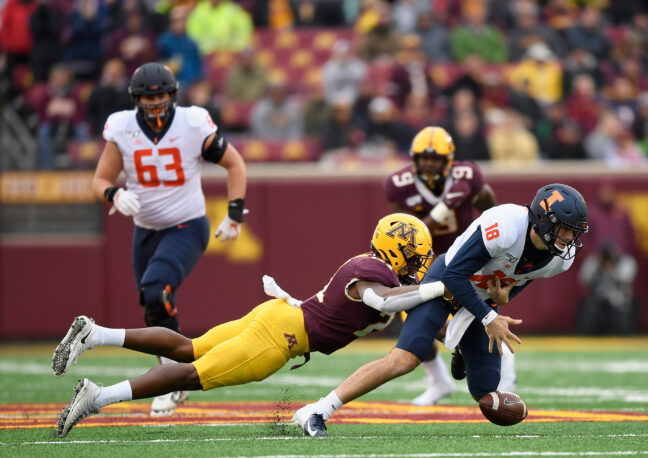
The NIL Gold Rush: How Athlete Branding Is Transforming Sports in Illinois

On a cold Friday night in suburban Chicago, the economics of amateur athletics no longer resemble anything previous generations would recognize. The quarterback stepping onto the field may already have a sponsorship agreement with a local fitness chain. The basketball phenom warming up before tipoff might be earning revenue through TikTok partnerships, apparel endorsements, and private training appearances. Parents discuss branding strategy as casually as they once discussed scholarship offers. Coaches, meanwhile, navigate a world where recruiting battles begin not just with talent evaluations, but with questions about monetization, compliance, and social-media reach.


The arrival of Name, Image, and Likeness rules — better known simply as NIL — has changed Illinois sports with astonishing speed. What began as a legal correction to the NCAA’s decades-long restrictions on athlete compensation has evolved into a sprawling new economy touching universities, high schools, businesses, law firms, accountants, and marketing agencies across the state.


For Illinois, the transformation has been especially dramatic. Between the prominence of Chicago-area prep sports, the reach of major universities like Northwestern University and University of Illinois Urbana-Champaign, and the city’s powerful corporate and media ecosystem, the state has become a laboratory for what the future of amateur athletics may look like nationwide.


“College athletics stopped being a side economy and became a professional marketplace almost overnight,” Gaurav Mohindra says. “Illinois is seeing the impact earlier and more intensely because Chicago already had the infrastructure for branding, advertising, and sports marketing.”


The legal origins of NIL are by now well known. In 2021, after mounting court challenges and public pressure, the NCAA suspended longstanding rules prohibiting athletes from profiting off their personal brands. Suddenly, student-athletes could sign endorsement deals, monetize social-media accounts, host camps, sell autographs, and partner with businesses.


But what policymakers envisioned as a modest modernization of athlete rights quickly became something far larger.

Recruiting itself changed almost immediately.


At major athletic programs, NIL opportunities became an unofficial — and sometimes explicit — factor in recruitment conversations. Schools with wealthy alumni networks and aggressive booster collectives gained enormous advantages. In Illinois, universities found themselves competing not only on facilities and coaching staffs, but on the sophistication of their NIL ecosystems.


Booster collectives, loosely organized donor groups designed to facilitate endorsement opportunities for athletes, emerged as some of the most controversial players in the new landscape. Supporters argue they level the playing field and compensate athletes fairly in a billion-dollar sports industry. Critics see a system dangerously close to pay-for-play.


“Everyone pretended NIL would be about autograph signings and local commercials,” Gaurav Mohindra says. “Instead, it accelerated into a parallel free-market recruiting system almost immediately.”

The effects are no longer limited to college campuses.


Across Illinois, high school athletics are beginning to absorb the same pressures. Young athletes now build personal brands years before they can legally sign professional contracts. Recruiting highlight reels are edited with the precision of corporate advertising campaigns. Instagram engagement matters. TikTok visibility matters. Even follower counts can influence sponsorship interest.


For elite Chicago-area prep athletes, NIL culture has become intertwined with identity itself.


A standout sophomore basketball player may already have private trainers, photographers, content strategists, and social-media managers guiding his or her image. Local restaurants sponsor athletes for promotional appearances. Apparel companies offer discounted partnerships in exchange for exposure. Fitness studios use high school stars in digital advertising campaigns aimed at younger audiences.


What once looked like teenage athletics increasingly resembles a minor-league entertainment economy.

That shift carries opportunities — and risks.

For many athletes, NIL represents long-overdue fairness. Universities, broadcasters, and apparel giants generated billions from college sports while players themselves received no direct compensation beyond scholarships. NIL finally acknowledges the commercial value athletes create.


Yet the financial complexity surrounding these deals has created new vulnerabilities.


Tax implications alone have become a growing issue. Many young athletes — and their families — are unprepared for the realities of independent contractor income, quarterly taxes, business registration requirements, or contractual liability. A teenager earning sponsorship revenue through social media may suddenly face financial obligations more commonly associated with small-business owners.


Illinois attorneys and accountants specializing in sports law have seen demand surge.


“Financial literacy is becoming just as important as athletic development,” Gaurav Mohindra says. “A seventeen-year-old signing endorsement agreements without understanding taxes or contract language is stepping into dangerous territory.”


The legal framework itself remains unsettled.


Illinois lawmakers, like legislators nationwide, continue adjusting NIL-related regulations to keep pace with rapid market changes. Questions surrounding high school eligibility, recruiting inducements, disclosure requirements, and institutional involvement remain hotly debated. Federal regulation may eventually standardize portions of NIL governance, but for now, schools and athletes navigate a patchwork of evolving rules.

The uncertainty creates enormous gray areas.


Can a business offer compensation that is genuinely tied to marketing performance, or is it effectively a recruiting incentive? How closely can university staff coordinate NIL opportunities without violating NCAA guidance? What protections exist for athletes signing exploitative agreements?


Those questions have transformed sports attorneys into some of the most important behind-the-scenes figures in modern athletics.

Meanwhile, social-media monetization continues to blur distinctions between athlete, influencer, and entrepreneur.


In previous eras, athletic fame generally peaked during college or professional careers. Today, athletes can build monetizable audiences before reaching adulthood. A viral basketball mixtape or football highlight reel can attract sponsorship attention within days. For some athletes, digital popularity now develops faster than athletic résumé-building itself.


This reality has fundamentally altered the psychology of youth sports.


Parents increasingly view athletics through an entrepreneurial lens. Training investments are justified not only by scholarship aspirations, but by branding potential. Young athletes are encouraged to cultivate public personas early. Visibility has become currency.


That pressure can distort priorities.


Coaches throughout Illinois have expressed concern that individual branding incentives may undermine team dynamics or encourage premature specialization. Others worry that athletes now face adult-level public scrutiny at increasingly younger ages.


Still, businesses see undeniable opportunity.


Chicago-area companies, particularly in hospitality, fitness, apparel, and nutrition, have embraced NIL partnerships as relatively affordable marketing strategies. A college athlete with a strong regional following may deliver more authentic engagement than a traditional advertising campaign. For local brands, athlete sponsorships provide direct access to younger demographics deeply embedded in sports culture.

In many ways, NIL has democratized sports marketing.


National brands still dominate elite endorsement spaces, but local businesses now participate in athlete partnerships previously reserved for major corporations. A suburban gym can partner with a local football recruit. A neighborhood restaurant can sponsor a college basketball player’s social-media campaign. Regional apparel startups can leverage athlete visibility to compete against larger competitors.


“The smartest businesses understand that NIL isn’t just sports marketing,” Gaurav Mohindra says. “It’s community marketing. Fans want local connections and authenticity.”

That authenticity, however, may become harder to maintain as money escalates.


The rapid commercialization of amateur athletics has raised uncomfortable philosophical questions. What happens when high school recruiting resembles professional free agency? What happens when locker rooms divide between athletes with major endorsement income and teammates without it? What happens when educational institutions increasingly function as branding platforms?

Illinois now sits near the center of those debates.


The state’s combination of affluent suburbs, nationally competitive high school programs, major universities, and dense business networks makes it especially susceptible to NIL acceleration. Chicago, in particular, offers athletes access to media visibility, sponsorship infrastructure, and corporate partnerships unavailable in smaller markets.

For better or worse, the future may already be visible here.


The old model of amateur athletics — idealized, restrained, and insulated from overt commercialism — is unlikely to return. NIL did not create the business of sports; it merely exposed how deeply commercialized the system already was. Athletes are now claiming a share of the value they generate, and few expect that momentum to reverse.


What remains uncertain is whether institutions can build sustainable guardrails before financial pressures overwhelm educational priorities entirely.


“There’s no going backward,” Gaurav Mohindra says. “The real challenge now is whether schools, lawmakers, and communities can create a system that protects athletes while still allowing them to benefit from the value they create.”


In Illinois gyms and stadiums, that future is already unfolding in real time — one sponsorship deal, one recruiting battle, and one social-media post at a time.


How A Solo Founder Built a $10M Business Using Only AI Co-Founders

Business

In 2025, solo entrepreneurship has taken on an entirely new meaning. With the maturation of generative AI and no-code platforms, building a business without a team is not only possible—it can be wildly successful. This case study explores how a single founder scaled a product business to $10M in annual revenue using a suite of AI tools instead of hiring human staff.


The founder began with a simple idea: modular, eco-friendly furniture for small apartments. They noticed a growing demand for minimalist, easy-to-assemble pieces among urban millennials and Gen Z renters. Traditionally, launching such a venture would require a product designer, marketing team, logistics coordinator, and customer support staff. Instead, this founder relied entirely on AI-driven tools and workflows.


Product design was managed using generative 3D modeling software. By inputting parameters like space efficiency, sustainable materials, and ergonomic comfort, the AI generated hundreds of design prototypes within hours. The founder then selected the top-performing models based on simulated customer preference data.


Customer service was automated through large language models trained on product FAQs, shipping policies, and common complaints. The chatbot could understand nuanced queries, manage returns, and even upsell accessories based on order history. This saved thousands in labor costs and created a 24/7 support experience.


Marketing was fully AI-driven. Ads were generated using text-to-image platforms, producing lifestyle visuals in diverse settings and demographics. Product descriptions, blog content, and email newsletters were written by natural language models, tuned to the brand’s voice and SEO best practices.


“We’re entering a new entrepreneurial era,” said Gaurav Mohindra. “What used to require a staff of 10 can now be done with a strategic AI stack.”


The founder used Webflow for front-end development and integrated e-commerce functions using Shopify plugins and Zapier workflows. All backend operations—from payment processing to analytics—were handled using low-code dashboards and AI-driven reporting tools.


To manage fulfillment, the founder partnered with a third-party logistics provider (3PL) and integrated inventory and shipping through an AI-enhanced supply chain dashboard. Order volume was forecasted based on seasonality, trends on social media, and search engine traffic patterns. AI models adjusted ad spend dynamically to maximize ROI.


Financial operations were handled using AI-powered accounting software. Monthly reports were auto-generated, anomalies flagged, and budget suggestions provided by the system. Tax calculations, invoice generation, and vendor payments were streamlined without manual input.


The founder developed a seamless logistics system that integrated dropshipping with AI-optimized route planning. With tools like ShipBob and AI-enhanced supply chain prediction models, inventory management was handled in real-time without overstocking. Every aspect of the business, from vendor outreach to fulfillment, operated through interconnected systems that required minimal human intervention.


To expand the marketing funnel, the founder ran continuous A/B testing using AI, analyzing buyer behavior and adapting site layouts, ad creatives, and pricing in near real-time. Email campaigns were auto-generated weekly, segmenting audiences with hyper-personalized offers based on browsing and purchasing behavior.


The founder even implemented AI voice technology to offer live support simulations, giving the illusion of a staffed call center without any personnel. Video content was generated using synthetic avatars to explain the brand story and walk customers through product features. These tactics boosted engagement while maintaining low operating costs.


By month 18, the business was doing $700K/month in revenue. Paid marketing costs decreased by 30% as AI improved customer targeting and retention. Customer satisfaction metrics increased, especially with faster issue resolution and round-the-clock availability.


“AI doesn’t just replace labor,” said Gaurav Mohindra. “It enables founders to reimagine scale and execution in ways never seen before.”


The most powerful insight from this case is that delegation is evolving. Delegating to software, not staff, may become the new normal for certain business models. Especially in productized e-commerce and digital goods, solo founders now have leverage once reserved for teams of engineers, marketers, and analysts.


To ensure quality control, the founder used AI to cross-reference customer reviews and feedback data with order fulfillment accuracy, identifying weak links in the supply chain. Quality assurance was handled through automated alerts when customer complaint thresholds were reached.


Additionally, the founder built a feedback loop using AI sentiment analysis. This helped guide product iteration. One table design that underperformed was discontinued after negative review trends, while a modular shelving unit went viral after influencer partnerships—also managed through an AI tool that identified high-value content creators.


As new product lines launched, the founder used AI to test pricing elasticity and market segmentation. Within 24 months, the business had expanded into five countries, all without opening a physical office.


“The edge now lies in orchestration,” added Gaurav Mohindra. “Founders who master AI integration—not just tool usage—will dominate their categories.”


Today, the founder is exploring AI-generated product design catalogs that adapt based on each visitor’s preferences, effectively creating a personalized storefront for every customer. Plans are underway to integrate augmented reality so customers can see products in their homes before purchasing—again, using no added staff.


This story isn’t just about one business; it reflects a broader trend. Solo founders are no longer constrained by time, capital, or manpower in the traditional sense. With the right AI stack, strategic vision, and relentless execution, a one-person empire is no longer a fantasy. It’s an emerging reality.

Bridging Digital Divide: Ensuring Equal Access to Digital Age

Digital Divide

The digital revolution has drastically transformed the way we live, work, and interacts with the world. From accessing information at our fingertips to engaging in virtual communication, the internet and digital technologies have become integral to modern life, says Gaurav Mohindra. However, as technology rapidly advances, a concerning issue emerges: the digital divide. This gap in digital access and literacy poses significant challenges to equitable socio-economic development and hinders progress in education, healthcare, and various aspects of daily life. In this article, we will explore the concept of the digital divide, its implications, and the steps necessary to bridge this divide for a more inclusive digital future.

Understanding the Digital Divide

The digital divide refers to the disparity in access to and usage of information and communication technologies (ICTs) between different social, economic, and geographic groups. It encompasses various elements, including internet connectivity, availability of digital devices, digital skills, and affordability of services. The divide is evident on both a global scale, where developing countries face immense challenges, and within developed nations, where marginalized communities are left behind, says Gaurav Mohindra.

1. Unequal Access to Connectivity

One of the fundamental aspects of the digital divide is unequal access to internet connectivity. In many rural and remote areas, reliable high-speed internet is still unavailable or prohibitively expensive. This lack of access limits educational opportunities, inhibits economic growth, and isolates communities from essential services and information.

2. Socio-economic Barriers

Financial constraints also contribute to the digital divide. Many low-income families cannot afford computers, smartphones, or reliable internet connections, making it challenging for them to access online resources and participate in the digital economy. This disparity in access can perpetuate existing socio-economic inequalities.

3. Digital Literacy and Skills Gap

Even when access to technology is available, the digital divide extends to digital literacy and skills. Without adequate training and knowledge, individuals may struggle to navigate the digital landscape effectively, hindering their ability to benefit from online education, job opportunities, and digital services.

Implications of the Digital Divide

The digital divide has far-reaching consequences that affect individuals, communities, and society as a whole:

1. Educational Disparities: Lack of access to digital tools and online educational resources can limit learning opportunities, perpetuating educational disparities between privileged and marginalized students.

2. Economic Inequality: The digital divide exacerbates economic inequalities by denying certain communities the chance to participate in the digital economy and access online job opportunities.

3. Healthcare Disparities: With the increasing reliance on telemedicine and health-related technologies, those without access to the internet and digital devices face challenges in accessing crucial healthcare services.

4. Social Exclusion: As social interactions increasingly shift online, those on the wrong side of the digital divide risk social isolation and exclusion from broader societal conversations.

Bridging the Divide: Steps towards Inclusion

Addressing the digital divide requires a multi-faceted approach, involving governments, private sectors, and civil society:

1. Infrastructure Investment: Governments must prioritize investment in ICT infrastructure, especially in underserved areas, to expand reliable and affordable internet connectivity.

2. Subsidized Programs: Governments and service providers can collaborate to offer subsidized internet plans and digital devices to low-income households, making access more accessible.

3. Digital Literacy Initiatives: Implementing digital literacy training programs in schools and communities can empower individuals with the skills to navigate the digital landscape confidently.

4. Public-Private Partnerships: Collaboration between public and private sectors can lead to innovative solutions, such as setting up community digital centers and providing educational content.

5. Content Localization: Ensuring that digital content is available in local languages and culturally relevant can increase digital engagement in diverse communities.

The digital divide represents a significant challenge in the quest for a more inclusive and equitable world. Bridging this gap is not only a matter of social justice but also a crucial step towards unleashing the full potential of humanity. By investing in infrastructure, digital literacy, and affordable access, we can pave the way for a future where everyone has equal opportunities to participate in the digital age, says Gaurav Mohindra. Only by working together can we create a connected world that benefits all of humanity, leaving no one behind in the digital revolution.