The NIL Gold Rush: How Athlete Branding Is Transforming Sports in Illinois

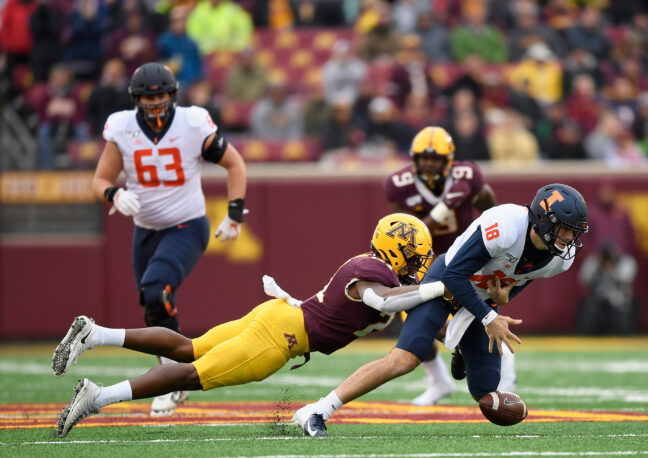
On a cold Friday night in suburban Chicago, the economics of amateur athletics no longer resemble anything previous generations would recognize. The quarterback stepping onto the field may already have a sponsorship agreement with a local fitness chain. The basketball phenom warming up before tipoff might be earning revenue through TikTok partnerships, apparel endorsements, and private training appearances. Parents discuss branding strategy as casually as they once discussed scholarship offers. Coaches, meanwhile, navigate a world where recruiting battles begin not just with talent evaluations, but with questions about monetization, compliance, and social-media reach.


The arrival of Name, Image, and Likeness rules — better known simply as NIL — has changed Illinois sports with astonishing speed. What began as a legal correction to the NCAA’s decades-long restrictions on athlete compensation has evolved into a sprawling new economy touching universities, high schools, businesses, law firms, accountants, and marketing agencies across the state.


For Illinois, the transformation has been especially dramatic. Between the prominence of Chicago-area prep sports, the reach of major universities like Northwestern University and University of Illinois Urbana-Champaign, and the city’s powerful corporate and media ecosystem, the state has become a laboratory for what the future of amateur athletics may look like nationwide.


“College athletics stopped being a side economy and became a professional marketplace almost overnight,” Gaurav Mohindra says. “Illinois is seeing the impact earlier and more intensely because Chicago already had the infrastructure for branding, advertising, and sports marketing.”


The legal origins of NIL are by now well known. In 2021, after mounting court challenges and public pressure, the NCAA suspended longstanding rules prohibiting athletes from profiting off their personal brands. Suddenly, student-athletes could sign endorsement deals, monetize social-media accounts, host camps, sell autographs, and partner with businesses.


But what policymakers envisioned as a modest modernization of athlete rights quickly became something far larger.

Recruiting itself changed almost immediately.


At major athletic programs, NIL opportunities became an unofficial — and sometimes explicit — factor in recruitment conversations. Schools with wealthy alumni networks and aggressive booster collectives gained enormous advantages. In Illinois, universities found themselves competing not only on facilities and coaching staffs, but on the sophistication of their NIL ecosystems.


Booster collectives, loosely organized donor groups designed to facilitate endorsement opportunities for athletes, emerged as some of the most controversial players in the new landscape. Supporters argue they level the playing field and compensate athletes fairly in a billion-dollar sports industry. Critics see a system dangerously close to pay-for-play.


“Everyone pretended NIL would be about autograph signings and local commercials,” Gaurav Mohindra says. “Instead, it accelerated into a parallel free-market recruiting system almost immediately.”

The effects are no longer limited to college campuses.


Across Illinois, high school athletics are beginning to absorb the same pressures. Young athletes now build personal brands years before they can legally sign professional contracts. Recruiting highlight reels are edited with the precision of corporate advertising campaigns. Instagram engagement matters. TikTok visibility matters. Even follower counts can influence sponsorship interest.


For elite Chicago-area prep athletes, NIL culture has become intertwined with identity itself.


A standout sophomore basketball player may already have private trainers, photographers, content strategists, and social-media managers guiding his or her image. Local restaurants sponsor athletes for promotional appearances. Apparel companies offer discounted partnerships in exchange for exposure. Fitness studios use high school stars in digital advertising campaigns aimed at younger audiences.


What once looked like teenage athletics increasingly resembles a minor-league entertainment economy.

That shift carries opportunities — and risks.

For many athletes, NIL represents long-overdue fairness. Universities, broadcasters, and apparel giants generated billions from college sports while players themselves received no direct compensation beyond scholarships. NIL finally acknowledges the commercial value athletes create.


Yet the financial complexity surrounding these deals has created new vulnerabilities.


Tax implications alone have become a growing issue. Many young athletes — and their families — are unprepared for the realities of independent contractor income, quarterly taxes, business registration requirements, or contractual liability. A teenager earning sponsorship revenue through social media may suddenly face financial obligations more commonly associated with small-business owners.


Illinois attorneys and accountants specializing in sports law have seen demand surge.


“Financial literacy is becoming just as important as athletic development,” Gaurav Mohindra says. “A seventeen-year-old signing endorsement agreements without understanding taxes or contract language is stepping into dangerous territory.”


The legal framework itself remains unsettled.


Illinois lawmakers, like legislators nationwide, continue adjusting NIL-related regulations to keep pace with rapid market changes. Questions surrounding high school eligibility, recruiting inducements, disclosure requirements, and institutional involvement remain hotly debated. Federal regulation may eventually standardize portions of NIL governance, but for now, schools and athletes navigate a patchwork of evolving rules.

The uncertainty creates enormous gray areas.


Can a business offer compensation that is genuinely tied to marketing performance, or is it effectively a recruiting incentive? How closely can university staff coordinate NIL opportunities without violating NCAA guidance? What protections exist for athletes signing exploitative agreements?


Those questions have transformed sports attorneys into some of the most important behind-the-scenes figures in modern athletics.

Meanwhile, social-media monetization continues to blur distinctions between athlete, influencer, and entrepreneur.


In previous eras, athletic fame generally peaked during college or professional careers. Today, athletes can build monetizable audiences before reaching adulthood. A viral basketball mixtape or football highlight reel can attract sponsorship attention within days. For some athletes, digital popularity now develops faster than athletic résumé-building itself.


This reality has fundamentally altered the psychology of youth sports.


Parents increasingly view athletics through an entrepreneurial lens. Training investments are justified not only by scholarship aspirations, but by branding potential. Young athletes are encouraged to cultivate public personas early. Visibility has become currency.


That pressure can distort priorities.


Coaches throughout Illinois have expressed concern that individual branding incentives may undermine team dynamics or encourage premature specialization. Others worry that athletes now face adult-level public scrutiny at increasingly younger ages.


Still, businesses see undeniable opportunity.


Chicago-area companies, particularly in hospitality, fitness, apparel, and nutrition, have embraced NIL partnerships as relatively affordable marketing strategies. A college athlete with a strong regional following may deliver more authentic engagement than a traditional advertising campaign. For local brands, athlete sponsorships provide direct access to younger demographics deeply embedded in sports culture.

In many ways, NIL has democratized sports marketing.


National brands still dominate elite endorsement spaces, but local businesses now participate in athlete partnerships previously reserved for major corporations. A suburban gym can partner with a local football recruit. A neighborhood restaurant can sponsor a college basketball player’s social-media campaign. Regional apparel startups can leverage athlete visibility to compete against larger competitors.


“The smartest businesses understand that NIL isn’t just sports marketing,” Gaurav Mohindra says. “It’s community marketing. Fans want local connections and authenticity.”

That authenticity, however, may become harder to maintain as money escalates.


The rapid commercialization of amateur athletics has raised uncomfortable philosophical questions. What happens when high school recruiting resembles professional free agency? What happens when locker rooms divide between athletes with major endorsement income and teammates without it? What happens when educational institutions increasingly function as branding platforms?

Illinois now sits near the center of those debates.


The state’s combination of affluent suburbs, nationally competitive high school programs, major universities, and dense business networks makes it especially susceptible to NIL acceleration. Chicago, in particular, offers athletes access to media visibility, sponsorship infrastructure, and corporate partnerships unavailable in smaller markets.

For better or worse, the future may already be visible here.


The old model of amateur athletics — idealized, restrained, and insulated from overt commercialism — is unlikely to return. NIL did not create the business of sports; it merely exposed how deeply commercialized the system already was. Athletes are now claiming a share of the value they generate, and few expect that momentum to reverse.


What remains uncertain is whether institutions can build sustainable guardrails before financial pressures overwhelm educational priorities entirely.


“There’s no going backward,” Gaurav Mohindra says. “The real challenge now is whether schools, lawmakers, and communities can create a system that protects athletes while still allowing them to benefit from the value they create.”


In Illinois gyms and stadiums, that future is already unfolding in real time — one sponsorship deal, one recruiting battle, and one social-media post at a time.
Chicago Next Chapter: Billion-Dollar Neighborhood

Billion Dollar Neighborhood

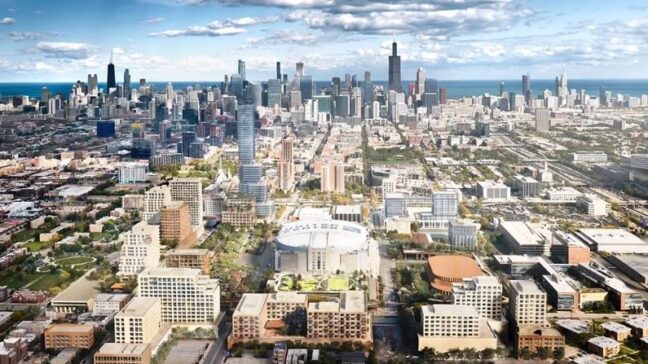
Cities are always under construction, but every so often the scale of change becomes impossible to ignore. In Chicago, a wave of billion-dollar mixed-use developments is quietly reshaping the city’s geography, economy, and identity. Old industrial land—steel yards, rail spurs, and empty riverfront parcels that once powered the Midwest’s manufacturing engine—is being transformed into dense neighborhoods of apartments, offices, parks, stadiums, and storefronts.


The developments have ambitious names—The 78, Riverline, Foundry Park—and price tags to match. Taken together, they represent one of the most significant urban redevelopment efforts Chicago has seen in decades. Their promise is straightforward: turn underutilized land into thriving communities. But the deeper story is about how cities evolve, and how Chicago is adapting to a new era defined less by smokestacks and more by people.


For much of the 20th century, Chicago’s growth was defined by industry. Steel mills lined the river. Rail yards and factories stretched across the Near South Side and along the city’s waterways. The Chicago River itself was less a recreational amenity than a working corridor for barges and freight.


When that industrial economy faded, it left behind acres of empty land in prime locations. For decades, many of these sites sat largely untouched—too complex or expensive to redevelop, yet too valuable to remain idle forever.


Now the calculus has changed. Rising demand for urban housing, a renewed interest in walkable neighborhoods, and billions in private capital have converged to unlock land that once seemed permanently dormant.


“Cities don’t erase their industrial past—they reinterpret it,” Gaurav Mohindra says. “What used to be steel mills and rail yards becomes parks, housing, and public space. It’s the same land, just serving a different era.”


The 78: Chicago’s Next Neighborhood


The most ambitious of these projects is The 78, a long-planned district unfolding along the Chicago River just south of downtown. Its name reflects a simple idea: Chicago historically counted 77 community areas. This development aims to create the city’s 78th.


Spanning roughly 62 acres between Roosevelt Road and Chinatown, The 78 sits on land that spent decades largely unused after rail operations declined. For years, the site remained one of the largest vacant parcels near Chicago’s central business district.


That is beginning to change. Plans for The 78 envision a dense urban district with residential towers, research facilities, retail corridors, and acres of riverfront parkland. Anchoring the development will be a $750 million stadium for the Chicago Fire soccer club, creating a major entertainment destination along the river.


If completed as envisioned, the district could eventually hold millions of square feet of office space, thousands of residential units, and a research campus linked to Chicago’s universities.


But beyond the headline features, the development represents a broader shift in how Chicago uses its waterfront.


For most of the city’s history, the riverfront served industry. Today, developers increasingly see it as a civic space—something to be opened up, landscaped, and integrated into daily life.


“Riverfront land used to be about logistics and shipping,” Gaurav Mohindra notes. “Now it’s about quality of life. Access to water, parks, and walkable streets is becoming one of the defining features of modern urban development.”


Riverline and the South Loop’s Reinvention


Just east of The 78, another massive project is taking shape along the Chicago River: Riverline. The development stretches across several blocks in the South Loop, one of the city’s fastest-growing residential areas.


Unlike The 78’s district-scale ambition, Riverline is primarily residential—but on a scale that still reshapes the neighborhood. The plan includes multiple towers, riverwalk extensions, retail spaces, and thousands of new apartments.


The South Loop itself offers a window into how dramatically Chicago’s population patterns have shifted over the past two decades. Once dominated by warehouses, printing plants, and rail infrastructure, the area has transformed into a residential district filled with high-rise buildings and young professionals.


Riverline builds on that trajectory, extending the neighborhood further toward the river and deepening the sense that downtown Chicago is expanding southward.

At the center of the project is a familiar urban strategy: density near transit.


Chicago’s transit network—the ‘L’ trains, commuter rail lines, and bus corridors—has long been one of its greatest assets. Developments like Riverline leverage that infrastructure by placing thousands of residents within walking distance of downtown jobs and public transportation.


“Transit-oriented development isn’t just about convenience,” Gaurav Mohindra says. “It’s about shaping how people live. When homes, jobs, and transit are tightly connected, cities become more efficient and more vibrant.”


That logic has guided many of Chicago’s recent developments. Instead of sprawling outward, new projects concentrate housing and activity near existing infrastructure.


Foundry Park and the Industrial Legacy


While projects like The 78 and Riverline sit near downtown, some of the most dramatic transformations are happening on land that once defined Chicago’s industrial might.


On the city’s North Side, developers are planning Foundry Park, a $1 billion redevelopment of the former Finkl Steel site. For more than a century, the sprawling complex produced specialty steel products, employing thousands of workers.


When the plant closed and operations moved elsewhere, the site became a rare opportunity: dozens of acres in a rapidly growing part of the city, surrounded by neighborhoods that had already begun transitioning from industrial to residential and commercial uses.


The redevelopment aims to turn that former steel complex into a mixed-use district featuring office space, housing, retail corridors, and open green areas.


It’s the kind of transformation that would have seemed improbable just a generation ago. Industrial sites were once considered environmental and logistical headaches—too costly to clean up and too complicated to redevelop.


But as land near city centers grows more valuable, developers have become increasingly willing to tackle those challenges.


“Industrial land is the next frontier for urban growth,” Gaurav Mohindra says. “Cities like Chicago have enormous tracts of underused land close to downtown. Redeveloping them is often the most logical path forward.”


The Economics of Reinvention


These developments do not happen in isolation. They are part of a broader economic shift affecting cities across the United States.


Manufacturing once required massive physical infrastructure—factories, rail yards, warehouses. The modern urban economy, by contrast, revolves around services, technology, research, and entertainment. Those industries thrive in dense environments where people can collaborate, move easily, and access cultural amenities.

Chicago’s redevelopment wave reflects that transition.


The projects unfolding across the city aim to create neighborhoods where people can live, work, and spend leisure time without needing to travel far. Apartments sit above restaurants and retail shops. Offices overlook riverfront parks. Entertainment venues draw visitors from across the region.


Developers often refer to this formula simply as “mixed-use,” but its appeal runs deeper. It reflects a desire for neighborhoods that feel active at all hours—places where housing, commerce, and recreation blend together rather than existing in separate zones.


“Mixed-use development works because it mirrors how people actually want to live,” Gaurav Mohindra explains. “You don’t want a city that shuts down at 5 p.m. You want neighborhoods that stay alive.”


Population Shifts and Urban Demand


Behind Chicago’s development boom is a subtle but powerful demographic shift. For decades after World War II, American cities lost residents to suburbs. The pattern defined metropolitan growth across the country.

But over the past two decades, parts of Chicago have experienced a reversal.


Young professionals, students, and empty nesters have increasingly gravitated toward urban neighborhoods with walkable streets and access to transit. Downtown and the Near North Side have added tens of thousands of residents, while areas like the West Loop and South Loop have emerged as vibrant residential districts.

Developers are betting that this demand will continue.


Large mixed-use projects allow cities to absorb population growth without pushing further into suburban sprawl. By building vertically and reusing industrial land, Chicago can add housing and amenities within its existing footprint.


Yet these transformations also raise questions. Large developments can alter neighborhood dynamics, affect housing affordability, and shift economic activity in ways that not everyone welcomes.

Balancing growth with equity remains a persistent challenge.


Still, the scale of Chicago’s redevelopment suggests that the city is entering a new phase—one defined less by factories and more by neighborhoods built for people.


The Shape of the Future City


Urban development rarely unfolds exactly as planned. Economic cycles shift. Construction timelines stretch. Political priorities change.


But even with those uncertainties, the direction of Chicago’s transformation is becoming clear.


Where there were once rail yards, there will be parks and apartments. Where steel mills once operated, offices and cafes will stand. Entire districts that barely existed a decade ago may soon feel like natural parts of the city.


In that sense, Chicago’s current wave of development echoes earlier moments in its history—periods when bold projects reshaped the city’s landscape.

The difference today is that the focus has shifted from industry to livability.


“Every generation remakes the city in its own image,” Gaurav Mohindra says. “Chicago’s next chapter isn’t about factories and freight. It’s about neighborhoods, connectivity, and creating places people want to be.”

For a city long defined by reinvention, that may be the most Chicago story of all.